

Tenant improvement budgeting gets hard when the HVAC needs real work. Old rooftop units, weak fresh air, and tired controls can add a lot to a build-out. If you plan for them early, they are just line items. If you find them late, they can blow up the budget. This guide shows how to plan money for HVAC replacement, better ventilation, and other mechanical upgrades. We will also cover allowances, cushions, phasing, and lease terms.
Tenants, landlords, and brokers can all use these steps to build a budget that holds up.

Step 1: Read the Lease First
Good tenant improvement budgeting starts with the lease. First, it tells you who owns the HVAC. Second, it says who pays if a unit dies. Some leases even promise working units on day one.
So read these parts closely. Some leases put big repairs on the landlord. Others put them on the tenant. Many split the cost. In short, the lease can change your budget more than any bid.
Step 2: Get the Systems Checked
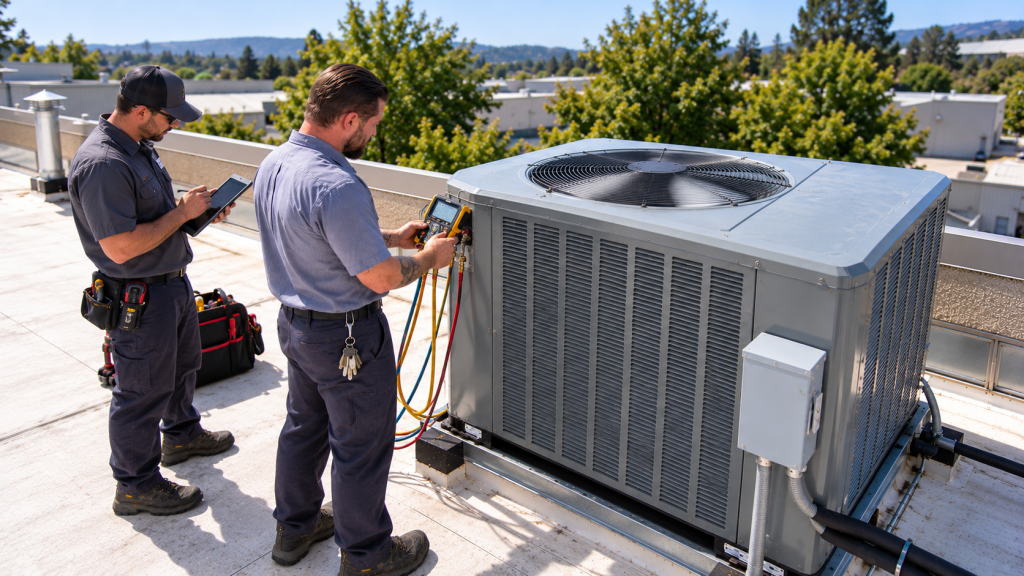
Next, have a mechanical pro look at the space. The pro should check each rooftop unit for age, wear, and refrigerant type. Ducts, fans, and thermostats need a look too. Finally, compare the fresh air with today’s code.
After the visit, ask for a short written report. It should say what to keep, what to fix, and what to replace. With that report, you can price each item with confidence.
Step 3: Tenant Improvement Budgeting for Old Units
If a unit is near the end of its life, plan to replace it. Do not just budget for the box itself, though. Also include:
- The crane and street permit
- A curb adapter or a new curb
- Power hookups and a new disconnect
- New thermostats or controls
- The permit and inspection
- Start-up and balancing
A build-out is a great time to do this. The ceiling is open, the crew is on site, and the space is empty. Plus, the new tenant starts with fresh gear and a new warranty. For help with the choice, see our guide to retrofit vs. replacement.
Step 4: Tenant Improvement Budgeting for Fresh Air
Many older systems bring in less fresh air than the code now asks for. When a space gets more people or a new use, the fresh air may need to go up. In addition, more tenants now want cleaner indoor air.
Common fresh air upgrades include bigger outdoor air dampers, energy recovery units, better filters, and carbon dioxide sensors. Each one adds cost, yet each also adds comfort. The rules come from codes that draw on ASHRAE standards.

Step 5: Plan for Other Mechanical Work
Some tenants need more. A clinic may need extra exhaust. A café needs a kitchen hood and makeup air. An office may want a smart building system. Each of these adds design time, parts, and labor. So list them early, and rank them by need. Then you can decide what to do now and what can wait.
Tenant Improvement Budgeting and the TI Allowance
Most leases give the tenant a TI allowance. It helps pay for the build-out. However, the rules vary. Some allowances only pay for hard construction. Others also cover design and permits. A few will not pay for gear that stays with the building.
So ask the landlord exactly what the allowance covers. Then build your budget around the real number. Brokers can also use a clear HVAC budget to ask for a bigger allowance or a landlord-paid unit swap.
Tenant Improvement Budgeting With a Cushion
Every mechanical budget needs a cushion. Hidden problems turn up on almost every job. For example, old ducts above the ceiling may be crushed. The electrical panel may be full. The roof under a unit may be rotten. A cushion pays for these surprises without stopping work.
Older buildings need a bigger cushion. Newer suites with healthy gear need less. Ask your contractor what makes sense after the system check. A clear number up front beats a scramble later, and it keeps everyone calm when surprises appear.
Phasing When Money Is Tight
Sometimes the full upgrade does not fit the budget. That is okay. You can phase the work. For instance, replace the worst unit now. Next, add new controls to the others. Then plan the next swap for a later year. Phasing works best when you plan it from the start, so today’s work sets up tomorrow’s.
Energy Savings Help Pay the Bill
New, efficient units use less power. Smart controls cut run time at night and on weekends. Over a long lease, these savings add up. In some cases, they pay back a good share of the cost. Also, many power companies offer rebates for efficient gear. Ask your contractor to check before you buy. The ENERGY STAR list is a good place to start.
Timing in Tenant Improvement Budgeting
When you do the work matters. Ordering units early avoids rush fees. Doing swaps in spring or fall avoids renting temporary cooling or heat. Setting several units with one crane visit costs less than many visits. These simple moves trim the budget without cutting quality.
Talk to the Landlord Early
Landlords care about their buildings. New units and better air add value they keep after you leave. So many landlords will share the cost, especially for big items like rooftop units. Ask early, before the lease is signed. Bring the system report and a clear price. A good case can turn a large cost into a shared one.
A Sample Budget List
- New rooftop units
- Duct changes
- Fresh air upgrades
- Controls and zones
- Exhaust fans
- Crane and roof work
- Power hookups
- Design and permits
- Balancing
- Cushion for surprises
Common Tenant Improvement Budgeting Mistakes
- Thinking old units will last through the lease
- Ignoring new fresh air rules
- Leaving out crane, roof, and power costs
- Skipping the cushion
- Not checking what the allowance covers
What to Do Right After Move-In
The budget does not end on opening day. New units still need care. So set aside money for a yearly service plan. It covers filter changes, coil cleaning, and safety checks. This small cost protects the warranty and keeps the system running well. In the long run, it also keeps surprise repair bills low.
A Quick Example
Picture a 5,000-square-foot office suite. Two of its three rooftop units are twenty years old. The new tenant plans more desks than the last one. During tenant improvement budgeting, the team prices two new units, more fresh air, and new smart thermostats. They also add a cushion for the old ducts. The landlord agrees to pay for one unit. As a result, the tenant opens on time with a clear, fair budget and no mid-job shocks.
FAQ on Tenant Improvement Budgeting
Who pays to replace HVAC in a build-out?
That depends on the lease. The landlord, the tenant, or both may pay.
How big should the cushion be?
It depends on the age and state of the building. Your contractor can suggest an amount after the system check.
Build a Budget You Can Trust
Planning ahead turns HVAC upgrades from a shock into a plan. See our rooftop replacement services, or book a mechanical check today.