
HVAC retrofit vs replacement is one of the biggest decisions a commercial building owner faces. Equipment ages, energy prices rise, and tenants expect better comfort. Should you upgrade the system you have, or tear it out and start fresh? Both paths can make sense. The right choice depends on equipment age, condition, efficiency, refrigerant, downtime, and budget. This guide explains each factor in plain terms so you can decide with confidence.
Owners, asset managers, and facility teams can use it to frame the conversation with their contractors.
What Is a Retrofit?
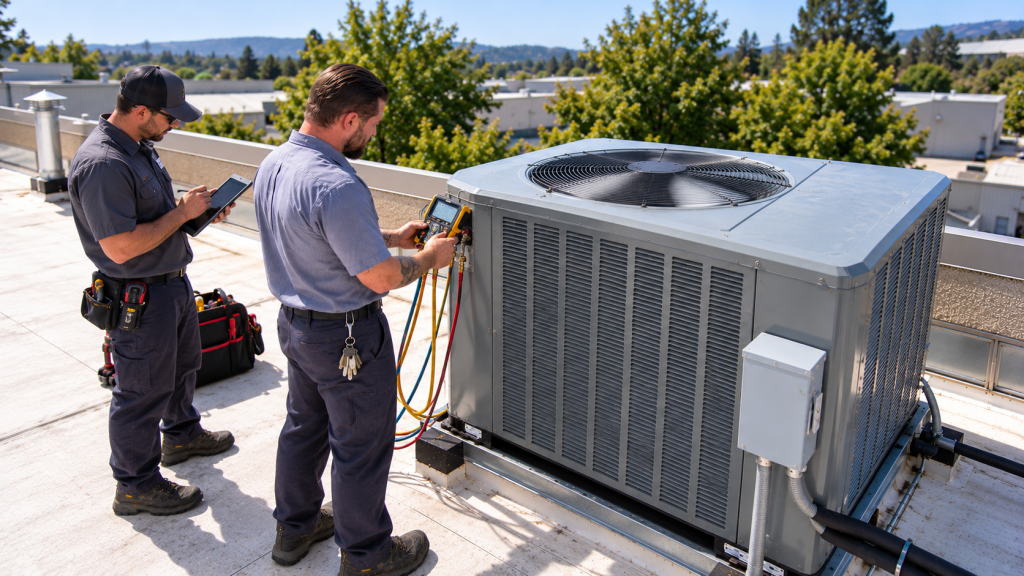
In simple terms, a retrofit upgrades parts of a system but keeps the main unit. Common retrofits include:
- For example, adding variable speed drives to fans and pumps
- Installing new controls or a building automation system
- Adding economizers to rooftop units
- Replacing motors with high-efficiency models
- Sealing and insulating ductwork
- Adding demand-controlled ventilation
As a result, retrofits usually cost less up front and cause less disruption. However, they cannot fix a unit that is worn out at its core.
What Is a Replacement?
By contrast, a replacement takes out old gear and puts in new units. For example, an owner might swap aging rooftop units for new high-efficiency models. Replacement resets the equipment life, brings new warranties, and often delivers the biggest efficiency gains.
On the other hand, it costs more and takes more planning, too. Crane lifts, curb adapters, electrical changes, and permits all add steps.
Factor 1: Equipment Age
Age is the first question in any HVAC retrofit vs replacement decision. Equipment near the end of its expected life is a poor candidate for major retrofits. Spending heavily on a unit that may fail in a year or two rarely pays off.
By contrast, newer equipment with good bones may benefit greatly from controls or efficiency upgrades.
Factor 2: Condition in HVAC Retrofit vs Replacement
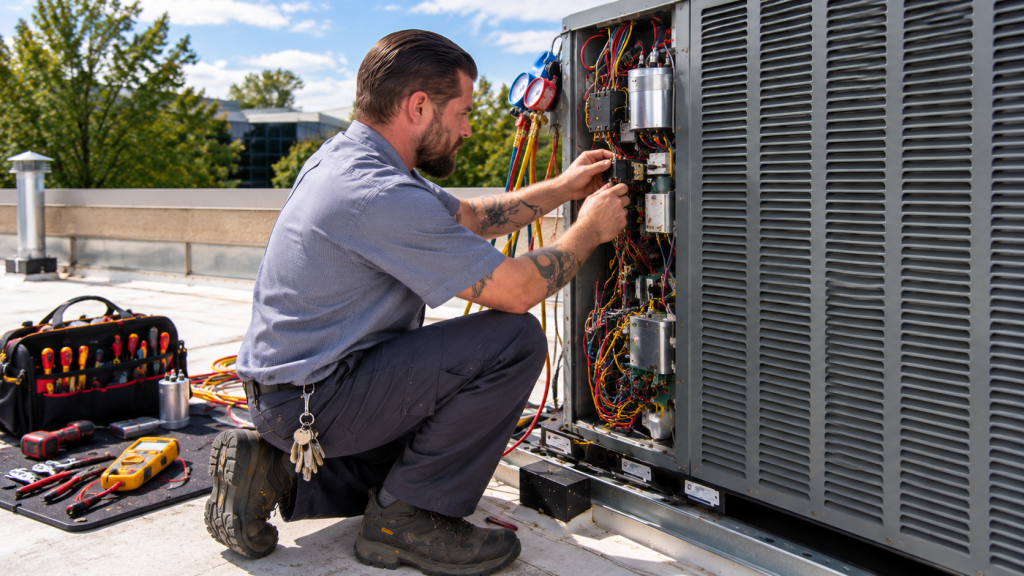
Still, age is not everything. A well-maintained older unit may outlast a neglected newer one. So have a skilled tech inspect the equipment. They should check compressors, coils, heat exchangers, cabinets, electrical parts, and refrigerant circuits.
However, heavy rust, cracked heat exchangers, failing compressors, or repeated refrigerant leaks usually point toward replacement.
Factor 3: Efficiency
In general, new units use much less power than old ones. If your units are old and inefficient, replacement may cut utility bills enough to offset part of the cost. The ENERGY STAR program lists high-efficiency commercial equipment.
Likewise, retrofits can also improve efficiency. Controls, variable speed drives, and economizers often deliver strong savings at lower cost. A simple energy analysis helps compare the options.
Factor 4: Refrigerant Rules
Meanwhile, federal rules are phasing down certain refrigerants. As supplies shrink, servicing older units may get more expensive. The EPA explains this transition.
If your equipment uses a refrigerant that is being phased down, replacement may protect you from rising service costs. In contrast, newer units already use updated refrigerants.
Factor 5: Downtime and Tenant Impact
Typically, retrofits happen with little downtime. Many can be done one component at a time. Replacements, however, require shutting down units, crane lifts, and sometimes roof work.
Therefore, in occupied buildings, plan replacements for mild seasons and off-hours. Phasing one unit at a time keeps part of the building conditioned while crews work.
Factor 6: HVAC Retrofit vs Replacement Costs
Naturally, retrofits usually cost less up front. Replacements cost more, yet they may reduce repair and energy costs over time. To compare fairly, look at the total cost of ownership over ten to fifteen years. Include energy, maintenance, repairs, and expected equipment life.
Also, utility rebates may apply to either path. Ask your contractor to check.
Factor 7: Future Plans
Next, think about your plans for the building. If you expect to sell soon, a modest retrofit may be enough. If you plan to hold long term, replacement may add more value. Likewise, if a major tenant improvement is coming, it may be smart to replace equipment at the same time, while ceilings are open.
HVAC Retrofit vs Replacement: A Quick Checklist
- Is the equipment near the end of its life? If yes, lean toward replacement.
- Is the core equipment in good condition? If yes, a retrofit may work.
- Does it use a refrigerant being phased down? Consider replacement.
- Are energy bills high? Compare retrofit and replacement savings.
- Can tenants tolerate downtime? Plan accordingly.
- How long will you hold the building? Longer holds favor replacement.
Hybrid HVAC Retrofit vs Replacement Plans
Sometimes, though, the best answer is both. For example, an owner might replace the oldest rooftop units now and retrofit newer ones with controls and economizers. This approach spreads costs over time while tackling the biggest problems first.
Getting a Professional Assessment
Ideally, a skilled contractor checks your units, reads your bills, and runs the numbers. They should provide a written comparison with costs, savings, and risks. Then use that report to decide.
A Plain-Language Rule
So if you want a quick rule for HVAC retrofit vs replacement, try this. Old and tired? Replace it. Young and healthy? Retrofit it. In the middle? Get a pro to look and run the numbers. This simple test works for most rooftop units and small systems. Big central plants need a deeper study, yet the same idea holds.
HVAC Retrofit vs Replacement by Building Size
Clearly, size changes the math. In a small building with a few rooftop units, replacement is simple. A crane, a day or two, and the job is done. In a big tower with a central plant, though, replacement is a major project. It may take months and cost a great deal. So big buildings often lean toward retrofits that improve the parts around the core.
For example, a tower might keep its chillers but add new controls, new drives, and new air handler parts. Then, years later, it replaces the chillers when they truly wear out. This step-by-step path spreads the cost and keeps tenants happy.
What Tenants Notice
Tenants do not see your equipment. Instead, they feel it. They notice hot rooms, cold drafts, loud fans, and stale air. A retrofit with better controls can fix many of these issues. However, a failing unit will keep causing trouble no matter what you add to it. So listen to tenant complaints. They often point to the right choice.
Timing the Work
Of course, season matters. In hot climates, avoid big replacements in peak summer. In cold climates, avoid deep winter. Spring and fall are best for most work. Also, line up the work with lease events. A vacant suite is the perfect time to replace its units.
Ask for a Written Plan
Whatever you choose, get it in writing. Ideally, a good plan lists each unit, its age, its state, and the advice for it. It also shows the cost now and the savings later. In addition, it lists the risks of waiting. With this plan in hand, you can budget well and make the case to partners or lenders. Plus, it gives you a clear roadmap for the next ten years.
Common Mistakes
- Pouring money into retrofits on worn-out equipment
- Replacing units without checking capacity for current use
- Ignoring refrigerant phase-down risks
- Scheduling replacements in peak summer heat
- Comparing only upfront costs
FAQ on HVAC Retrofit vs Replacement
Is HVAC retrofit vs replacement mainly about cost?
Cost matters, yet age, condition, efficiency, refrigerant, and downtime all play a role.
Can controls upgrades really save energy?
Yes. Better scheduling, setbacks, and economizer control often deliver strong savings.
Make the Right Call
Whether you retrofit or replace, a clear plan protects your building and budget. See our rooftop unit replacement services, or request an equipment assessment.