
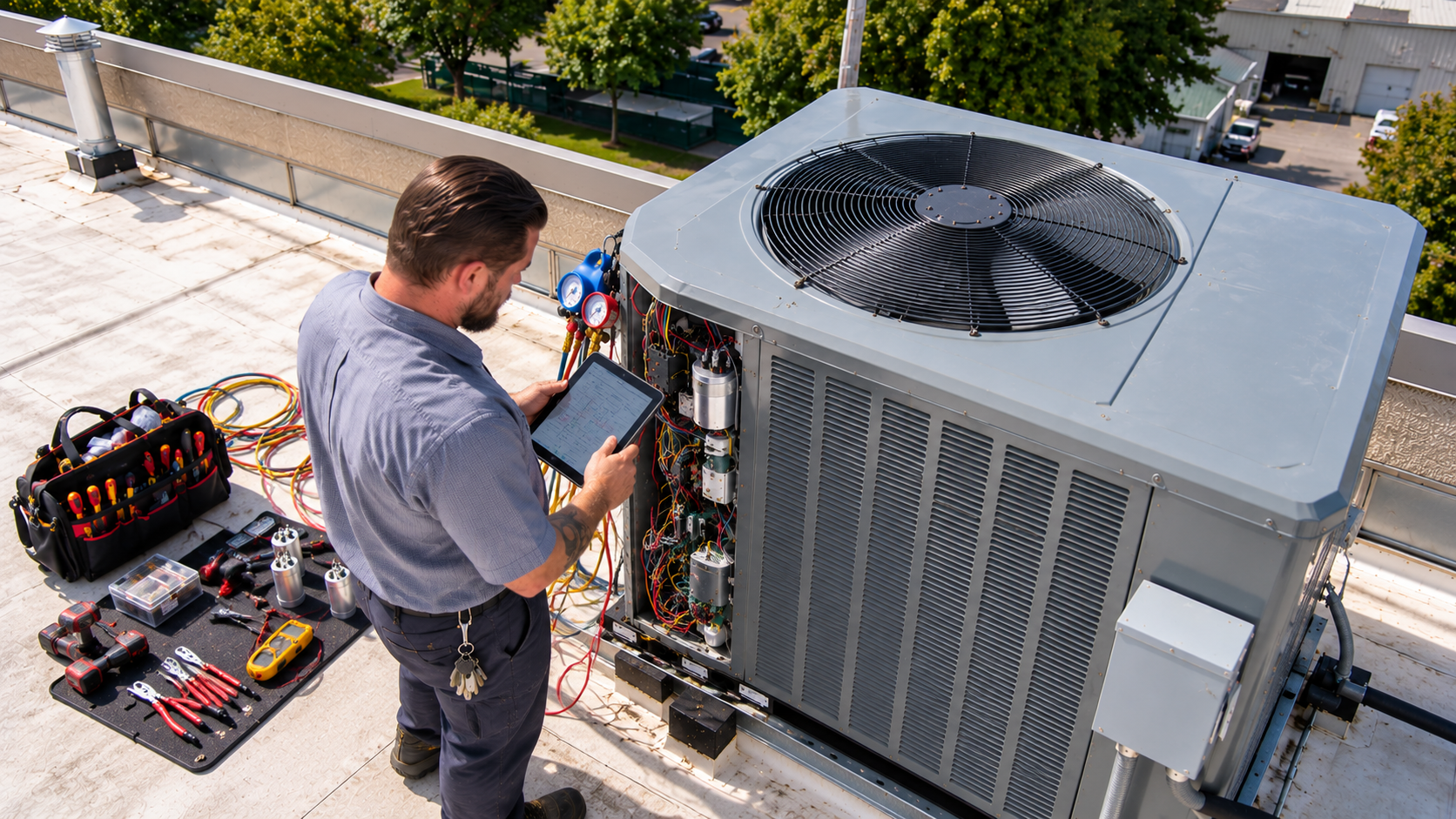
Austin restaurant HVAC has to keep up with a booming hospitality scene and some of the most punishing heat and humidity in Texas. New restaurants, bars, food halls, and coffee shops open across the city all the time. Each one needs a kitchen that vents safely, a dining room that stays cool when it is packed, and often a patio that guests actually want to sit on in August. This guide covers the mechanical side of hospitality build-outs in Austin, from kitchen exhaust to makeup air, bars, patios, permits, and fast-track schedules.
Owners, operators, designers, and builders can use these tips to open on time and stay comfortable.
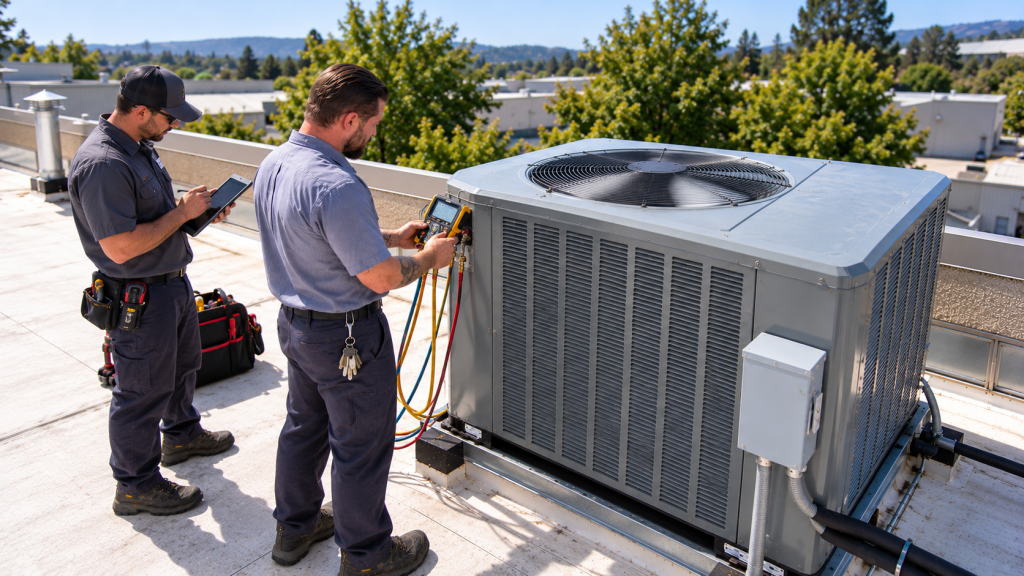
Austin’s Hospitality Boom
Today, Austin’s food and drink scene draws locals and visitors alike. East Austin, South Congress, Rainey Street, and the Domain are packed with restaurants and bars. New food halls and mixed-use projects keep adding more. As a result, mechanical contractors stay busy, and lead times can stretch.
Heat and Humidity
Of course, Austin summers are long and hot, with plenty of humid days. That combination makes HVAC work harder. Equipment must remove both heat and moisture. Otherwise, dining rooms feel sticky even when the thermostat reads cool.
So Austin restaurant HVAC design often includes units with good dehumidification, careful sizing, and strong controls. Oversized units can actually make humidity worse, since they cool quickly and shut off before removing enough moisture.
Kitchen Exhaust in Austin Restaurant HVAC
In any Austin restaurant HVAC system, the kitchen is the heart. Hoods capture heat, smoke, and grease from the cooking line. Type I hoods go over grease-producing equipment like fryers and grills. They connect to welded grease ducts that run to exhaust fans on the roof.
However, Austin’s barbecue culture adds a twist. Smokers and solid-fuel cooking produce heavy smoke and creosote. They often need special exhaust systems, separate ducts, and more frequent cleaning. Plan these early with the kitchen designer and mechanical engineer.
Makeup Air for Austin Restaurant HVAC
Every bit of air the hood removes must come back as makeup air. In Austin, that air is hot and humid much of the year. Bringing it in untreated can make the kitchen miserable and push humidity into the dining room.
For this reason, many restaurants use makeup air units with cooling or dehumidification. That way, the kitchen stays bearable on the hottest days. Others temper the air partially and rely on dining room units to handle the rest. The right choice depends on menu, budget, and kitchen size.

Dining Room Comfort
Likewise, dining rooms see big swings in load. A packed Saturday night brings much more heat than a quiet weekday lunch. Large windows and open doors add more. So dining room rooftop units need enough capacity for full houses, plus good zoning and controls.
Bars and Patios
Similarly, bars pack people close together and run ice machines and glass washers. Crowds and ice machines make bars run hot. Meanwhile, patios are a big draw in Austin, yet summer heat can keep guests indoors. Shade structures, ceiling fans, and misting systems help. Roll-up doors that connect patios to dining rooms create sudden load changes, so plan HVAC capacity and controls with that in mind.
Building Pressure
Good Austin restaurant HVAC keeps the kitchen slightly negative compared with the dining room, so smoke and smells stay back. At the same time, the building should stay slightly positive to the outdoors, so hot, humid air does not rush in every time a door opens. Achieving this balance takes careful design and testing.
Permits and Codes
Most restaurant projects need permits from the City of Austin, including mechanical permits and fire review of hood suppression systems. Health department approval is also required for food service. Texas licenses air conditioning contractors through the Texas Department of Licensing and Regulation, so confirm your contractor’s license.
Fast-Track Schedules
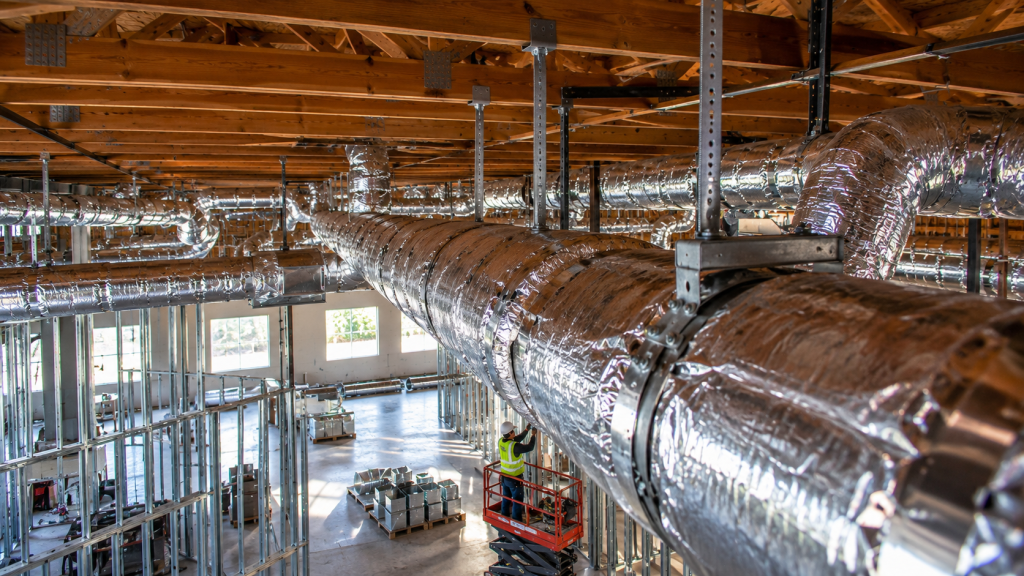
Typically, hospitality projects run on tight timelines. Owners want to open before a big season or event. To keep Austin restaurant HVAC on track:
- Finalize the menu and equipment list early.
- Order hoods, fans, makeup air units, and rooftop units during permit review.
- Book crane lifts and roof work early.
- Schedule grease duct inspections before wrapping or enclosing.
- Plan balancing and suppression testing before final inspection.
Austin Restaurant HVAC Energy Costs
Naturally, restaurants use a lot of energy, and Austin summers push cooling costs higher. Smart controls help. Variable speed hood fans slow down when cooking is light. Makeup air units can match hood speed automatically. High-efficiency rooftop units cut cooling costs in the dining room.
Austin Restaurant HVAC for Food Halls
Food halls are popular in Austin. Many small vendors share one building. Each stall may have its own hood, or several may share a system. That makes design tricky. The shared exhaust and makeup air must work for every vendor, even when only a few are cooking. So these projects need careful planning and smart controls. Also, each vendor’s lease should spell out who maintains which parts.
Austin Restaurant HVAC for Coffee Shops
Not every spot is a full restaurant. Coffee shops and juice bars often cook very little. They may not need a grease hood at all. Instead, they need good cooling, steady fresh air, and exhaust for dishwashers. As a result, their HVAC costs are much lower. Still, check local rules before you skip the hood. Ovens and some equipment may still need one.
Keeping Staff Comfortable
Kitchens in Austin can feel like ovens in July. Hot cooks work slower and make more mistakes. So cooling the kitchen matters, not just the dining room. Spot cooling near the line, cooled makeup air, and good air movement all help. A comfortable kitchen also helps with hiring, since cooks talk about where they like to work. In a tight job market, that edge matters. Plus, cooler cooks stay safer around hot oil and open flames.
A Quick Example
Picture a new taco spot on East Cesar Chavez. It has a flat-top grill, two fryers, and a small smoker out back. The team plans one hood for the line and a separate system for the smoker. Next, they pick a makeup air unit that cools and dries the air. Then they size the dining room unit for a packed Friday night. As a result, the kitchen stays bearable, the dining room stays dry, and guests linger on the patio. That is good Austin restaurant HVAC at work. It is simple, smart, and built for Texas heat.
Common Mistakes
- Oversized units that cannot control humidity
- Untreated makeup air in a humid climate
- No plan for barbecue smokers
- Patio doors that overwhelm the dining room HVAC
- Late equipment orders
Choosing an Austin Partner
Look for a contractor with recent Austin hospitality experience. Ask about humidity control, smoker exhaust, makeup air options, and fast-track scheduling. Check references from other restaurant owners. Learn more on our Austin HVAC page.
FAQ on Austin Restaurant HVAC
Do Austin restaurant HVAC systems need dehumidification?
Often, yes. Humidity control keeps dining rooms comfortable and protects finishes.
Can barbecue smokers share the main hood?
Usually not. Solid-fuel cooking often needs its own exhaust system.
Open Your Austin Spot on Time
Smart planning keeps Austin guests cool and cooks safe. See our kitchen exhaust work, or call our Texas team today.