
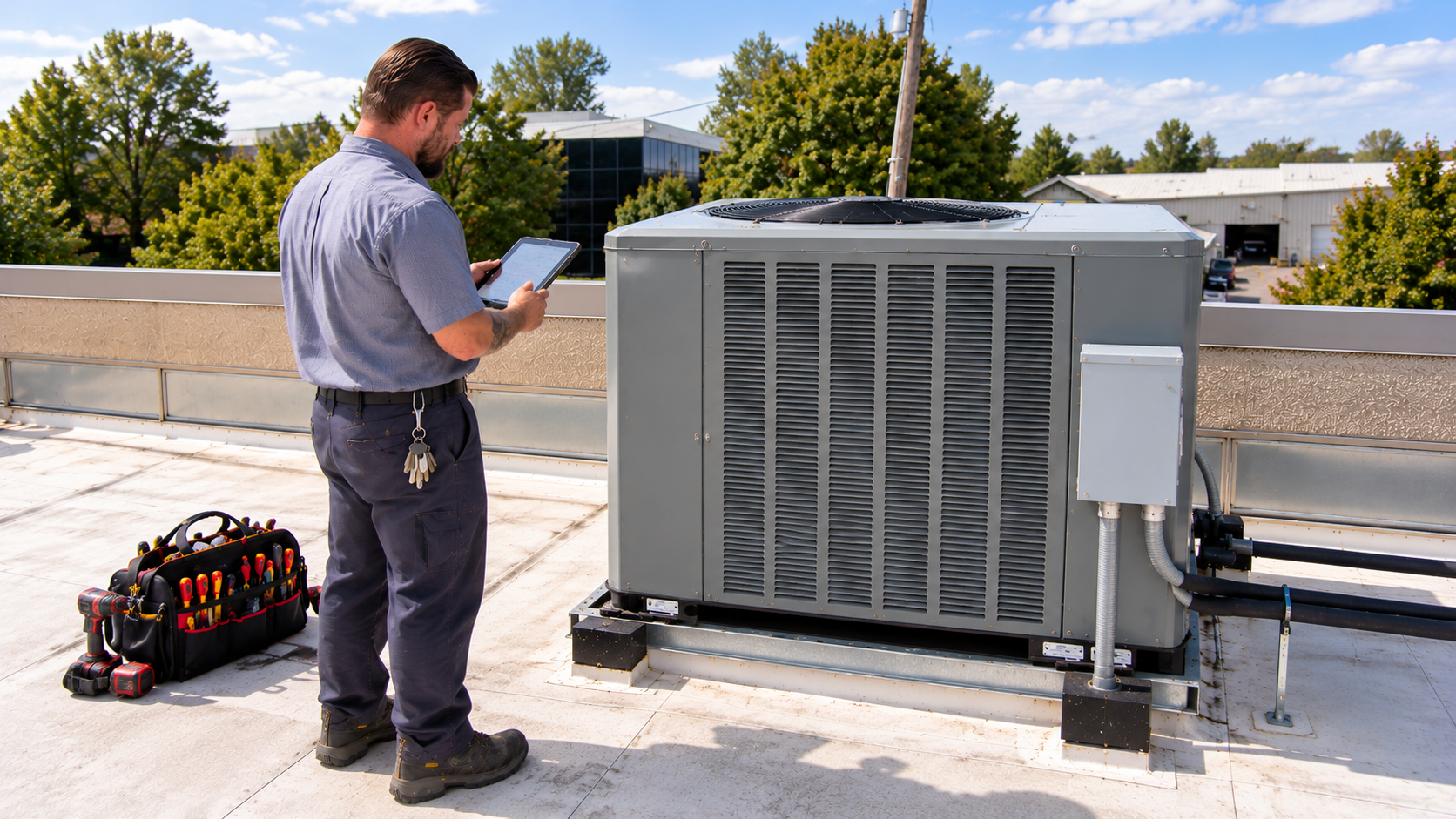
Denver commercial HVAC installation has to handle a climate that can swing from a warm afternoon to a snowstorm in the same week. On top of that, the city sits a mile above sea level, where thin air changes how equipment performs. Add hail, strong sun, and a demanding energy code, and every tenant improvement needs careful mechanical planning. This guide covers what makes Denver different, how installations work, and how to keep your project on schedule.
Tenants, landlords, and builders can use it to plan HVAC for offices, shops, clinics, and restaurants across the metro area.
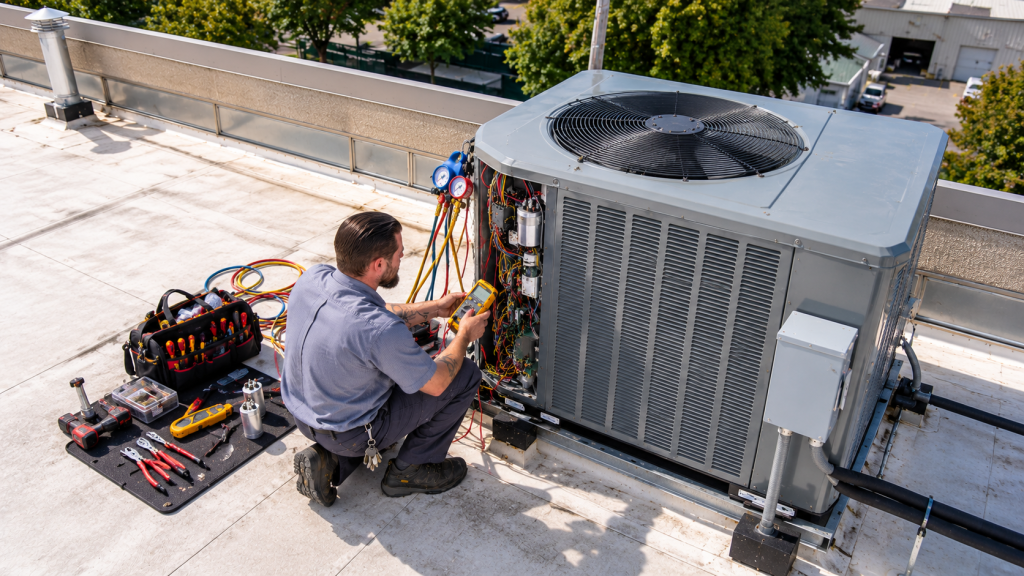
Why Denver Is Different
First, Denver’s climate is dry, sunny, and full of surprises. For example, summers bring hot days and cool nights. Winters, on the other hand, bring cold snaps and sudden snow. Then spring brings hail. Meanwhile, the high altitude affects air density, combustion, and fan performance.
Because of these factors, gear that works well in a sea-level city may need adjustments here. A local mechanical team knows how to plan for them.
Altitude and Equipment Performance
At a mile high, of course, the air is thinner. That has two main effects on HVAC equipment.
First, gas-fired heating equipment needs the right setup for altitude. Burners must get the correct mix of gas and air to burn cleanly and safely. Makers often specify high-altitude adjustments or derating. Second, fans move less mass of air at the same speed, which can affect capacity. Engineers account for this in their calculations.
So make sure every unit in a Denver commercial HVAC installation is selected and set up for local altitude.
Heating in a Denver Commercial HVAC Installation
Also, Denver winters can be harsh, even if they are often sunny. Commercial spaces need reliable heat for cold mornings and snowy weeks. Most rooftop units use gas heat, though heat pumps are becoming more common as technology improves and energy goals shift.
Entry vestibules and air curtains help keep heat inside busy stores and lobbies. In addition, good controls can warm the space before staff arrive without running all night.
Cooling and Economizers
By contrast, summers can be hot, yet nights often cool off nicely. That makes economizers especially useful. An economizer brings in cool outdoor air instead of running the compressor when conditions allow. In Denver’s dry climate, economizers can cut cooling costs a lot during spring, fall, and cool summer nights.
In fact, energy codes often require economizers on larger units anyway. Make sure they are installed, wired, and tested correctly.
Hail Protection for Denver Commercial HVAC Installation
Meanwhile, the Front Range sees frequent hailstorms. Hail can bend condenser coil fins and damage equipment. Hail guards are metal screens that protect coils on rooftop units. They add modest cost but can prevent expensive repairs. Many owners in the area consider them a smart standard.
Strong Sun and UV
In addition, high altitude means stronger sunlight. UV exposure ages roofing, sealants, and some equipment parts faster. So use UV-resistant materials where possible. Also, check roof flashing and seals around curbs regularly.
Denver Commercial HVAC Installation Steps
A typical installation follows this sequence:
- Survey the space, roof, and electrical service.
- Calculate loads using Denver design conditions and altitude.
- Select equipment with altitude adjustments and hail guards.
- Design ductwork, zones, and ventilation.
- Submit plans for permit.
- Order equipment early.
- Install curbs, set units, and run ductwork.
- Start up, test, and balance the system.
- Pass final inspection.
Permits and Energy Codes
Most work needs a mechanical permit through the city’s Community Planning and Development department. Denver updates its building and energy codes regularly, and its energy rules can be stricter than in many cities. Expect review of equipment efficiency, economizers, controls, and ventilation.
Suburban cities like Aurora, Lakewood, and Englewood have their own processes. Local experience helps in each.
Older Buildings and Renovations
Similarly, Denver has many converted warehouses and older office buildings. These spaces often have outdated equipment, limited roof structure, or tight ceilings. Renovations may require new rooftop units, structural reinforcement, or creative duct routing.
For example, exposed ductwork is popular in creative spaces like those in RiNo and LoDo. It looks great but requires neat installation and often painting. Our page on commercial ductwork covers exposed duct options.
Restaurants and Breweries
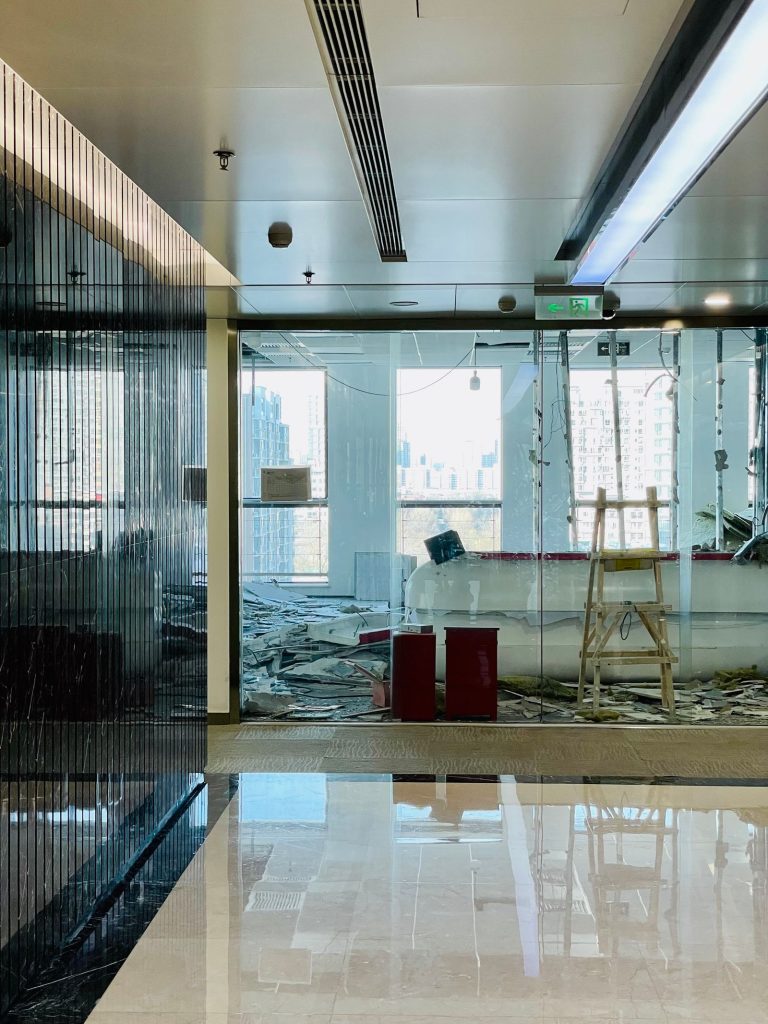
Denver’s food and craft beer scene keeps growing. Every Denver kitchen needs a hood, a roof fan, and replacement air. When it is freezing outside, that replacement air must be warmed, which adds cost. Breweries may need process exhaust and extra ventilation for fermentation areas.
Scheduling Through the Seasons
Naturally, weather affects schedules. Snow and wind can delay crane lifts and roof work. Therefore, plan exterior work for mild periods when possible. Interior duct work can continue year-round once the space is enclosed. Order equipment early, since winter storms can slow deliveries.
Denver Commercial HVAC Installation Costs
Overall, costs depend on use, building age, roof structure, and energy code rules. Altitude adjustments, hail guards, economizers, and heated makeup air can add cost. However, efficient equipment and smart controls often pay back through lower utility bills.
Snow and Ice in a Denver Commercial HVAC Installation
In winter, snow piles up on flat roofs. As a result, it can bury low equipment and block air intakes. So units should sit on tall enough curbs or rails. Also, intakes should face away from drifts. In addition, crews should plan a safe path to each unit for winter service. A tech cannot fix a unit they cannot reach.
Ice is another issue, too. Condensate lines can freeze if they run outside. Therefore, route them inside when you can, or add heat tape. These small steps prevent winter shutdowns.
Heat Pumps in Denver
Lately, more Denver buildings use heat pumps. Fortunately, newer models work well even in cold weather. They heat and cool with one unit and can cut gas use. However, they need enough electrical power. So check the panel early. Some projects pair heat pumps with a small backup heat source for the coldest days. Your engineer can help you weigh the options.
A Simple Planning Checklist
- Pick units set up for high altitude.
- Add hail guards on rooftop coils.
- Plan heat for the coldest mornings.
- Use economizers for free cooling.
- Keep condensate lines from freezing.
- Order gear early before winter storms.
Follow this list, and your Denver commercial HVAC installation will be ready for every season.
A Quick Story
Here is how it can go. A new café opens in an old brick building near downtown. The team picks units set up for high altitude. Next, they add hail guards. Then they plan heated makeup air for the kitchen. In January, a cold snap hits. The café stays warm, the hood works, and the doors close easily. Meanwhile, a shop down the street with sea-level gear struggles. Its heater keeps tripping. That is the difference good local planning makes.
Choosing a Denver Contractor
Look for a team with recent Denver commercial HVAC installation experience. Ask how they handle altitude, hail, and cold-weather start-up. Confirm licensing with the city and state, and check references. Visit our Denver HVAC page for more about our local work.
FAQ on Denver Commercial HVAC Installation
Does altitude really affect Denver commercial HVAC installation?
Yes. Gas equipment and fans need proper setup for thin air.
Are hail guards worth it?
Many owners think so, given how often hail hits the Front Range.
Plan Your Denver Project
The right planning keeps your Denver space comfortable all year. Contact our Denver team to talk through your build-out.