
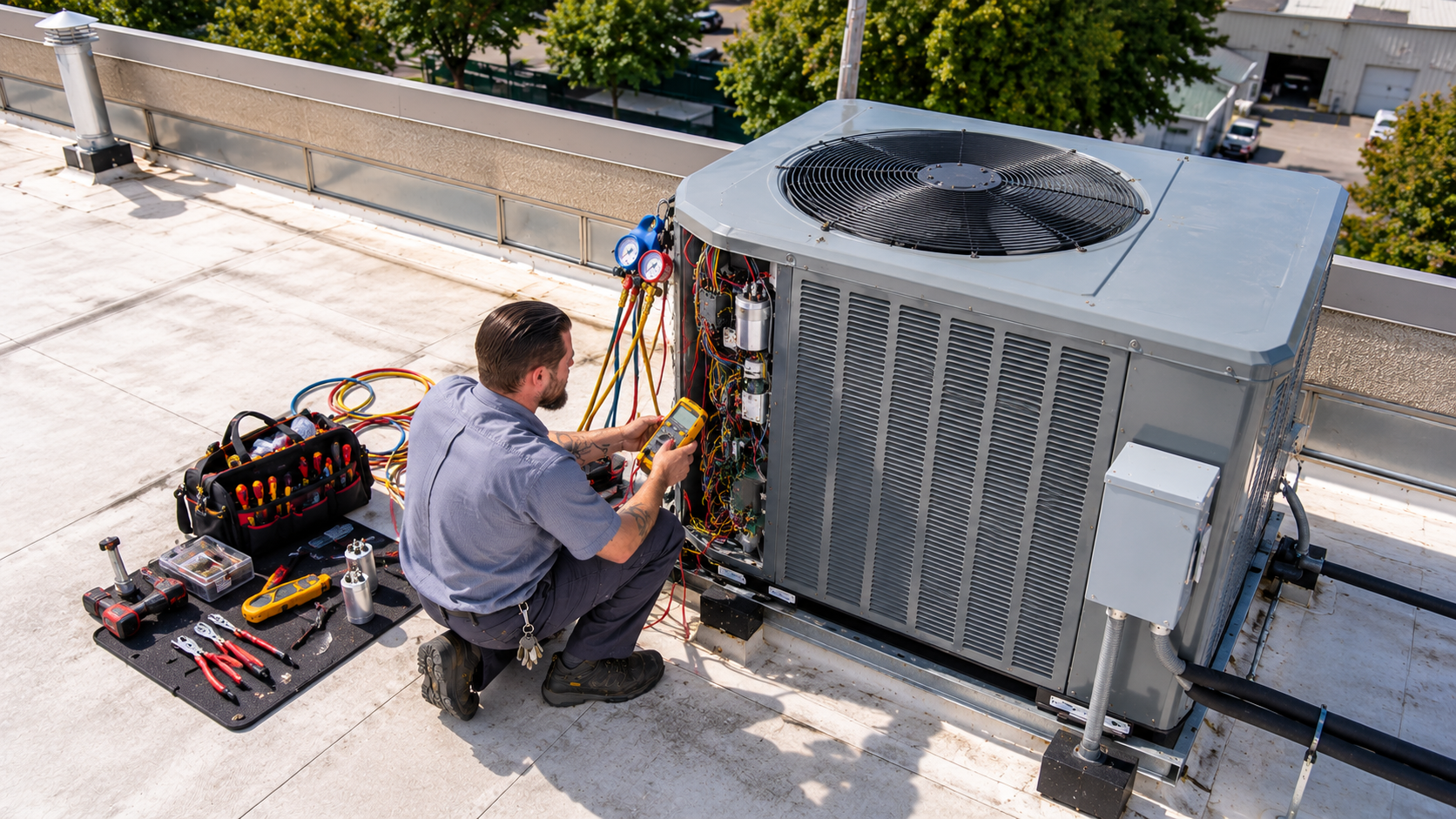
Phoenix HVAC replacement is a common part of tenant renovations. Valley rooftop units work hard, so they wear out sooner. When a new tenant moves in, old gear often has to go. This guide explains when to replace, what the process looks like, and how to handle refrigerant changes, crane lifts, roof curbs, and summer timing.
Building owners, property managers, and tenants can use it to plan replacements with fewer surprises.
Why Equipment Wears Out Faster in Phoenix
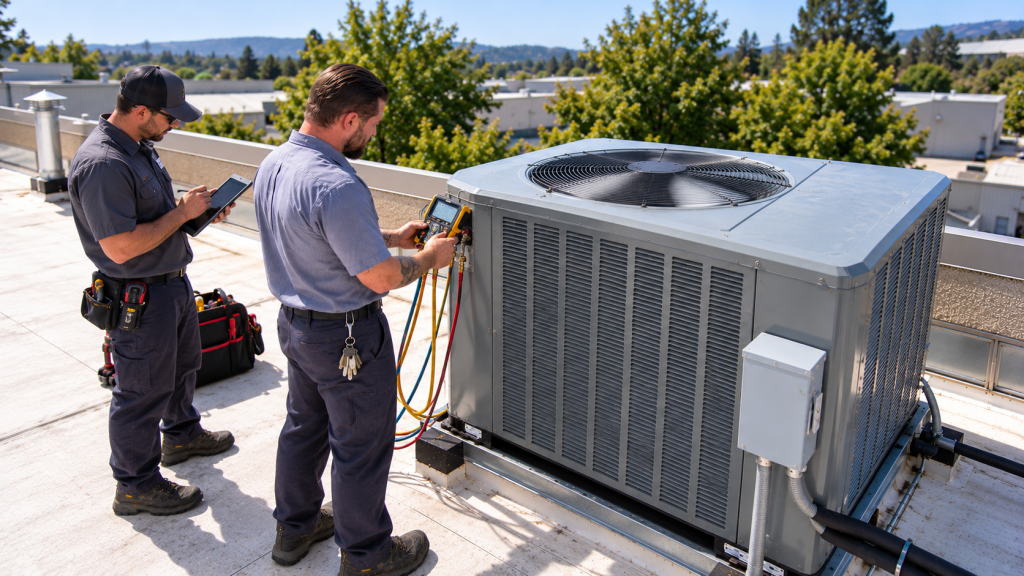
First, desert heat is hard on HVAC equipment. Compressors run long hours from spring through fall. Condenser coils sit on roofs that can get extremely hot. Dust storms clog filters and coat coils. As a result, many rooftop units in the Valley reach the end of their useful life sooner than the same units in milder climates.
Signs It Is Time for Phoenix HVAC Replacement
So watch for these warning signs:
- Frequent breakdowns, especially in summer
- Rising repair bills year after year
- Units that cannot keep the space cool on hot days
- Rust on cabinets, curbs, or coils
- Refrigerant leaks that keep coming back
- Equipment that uses refrigerants being phased down
- Very high utility bills compared with similar spaces
Of course, any one sign may justify a repair. However, several together usually point to replacement.
Phoenix HVAC Replacement or Repair?
Naturally, repairing a unit is cheaper in the short run. Still, repeated repairs on an old unit add up. A common approach is to compare the repair cost with the value of a new unit. If repairs are large and the unit is old, replacement usually wins.
Efficiency matters too, especially in a Phoenix HVAC replacement. Newer units use far less power, which saves money every month in Phoenix summers. Furthermore, new equipment comes with a fresh warranty. For a deeper comparison, read our guide on retrofit vs. replacement.
Refrigerant Changes
At the same time, federal rules are phasing down certain refrigerants used in older equipment. New units now use refrigerants with a lower climate impact. The EPA explains the transition.
For owners, this means a few things. First, servicing older units may get more costly over time. New units may need technicians trained on newer refrigerants. Also, some new refrigerants have specific safety and installation rules, so hire a qualified contractor.
Planning a Phoenix HVAC Replacement
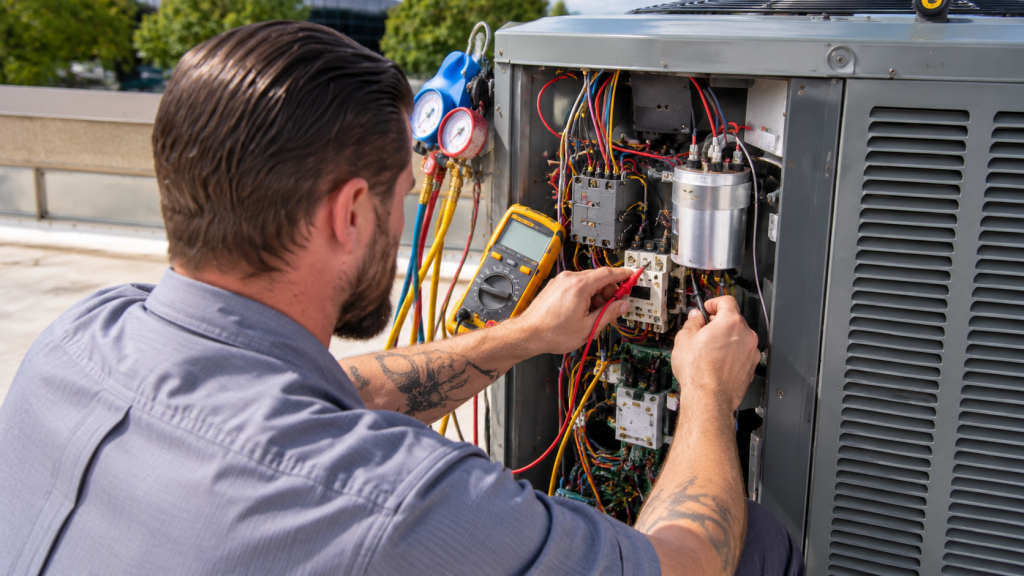
Above all, good planning keeps a Phoenix HVAC replacement smooth. Key steps include:
- Inspect the existing units, curbs, and roof.
- Confirm the load for the current or new use.
- Select new units with the right capacity.
- Check electrical service and wiring.
- Plan curb adapters or new curbs.
- Submit for a mechanical permit.
- Schedule the crane and roof work.
Sizing for the New Use
However, do not assume the old size is right. A space that held a quiet office may now host a busy gym or salon. Each use has different heat loads. So the engineer should recalculate before ordering. Oversized or undersized units both cause comfort problems.
Curbs and Adapters
Unfortunately, new rooftop units rarely match old curbs exactly. In many cases, a curb adapter bridges the difference. It sits on the old curb and supports the new unit. Adapters save the cost and roof disruption of a new curb. However, if the roof or curb is damaged, a new curb may be the better choice.
Crane Day for a Phoenix HVAC Replacement
Typically, most rooftop replacements need a crane. Crews remove the old unit and set the new one in a single day when possible. That keeps downtime short. In Phoenix, crane lifts often happen at first light, before heat and wind build.
Also, plan for street permits, traffic control, and a safe lift zone. Notify tenants and neighbors ahead of time.
Timing Your Phoenix HVAC Replacement
Clearly, summer is the riskiest time to replace equipment. If a delay happens, the space may go without cooling in dangerous heat. Moreover, contractors are busiest in summer, so schedules are tight.
Many owners plan replacements for spring or fall. If a unit fails in summer, a temporary portable cooling unit can bridge the gap until the new equipment arrives.
Mechanical Construction Beyond the Unit
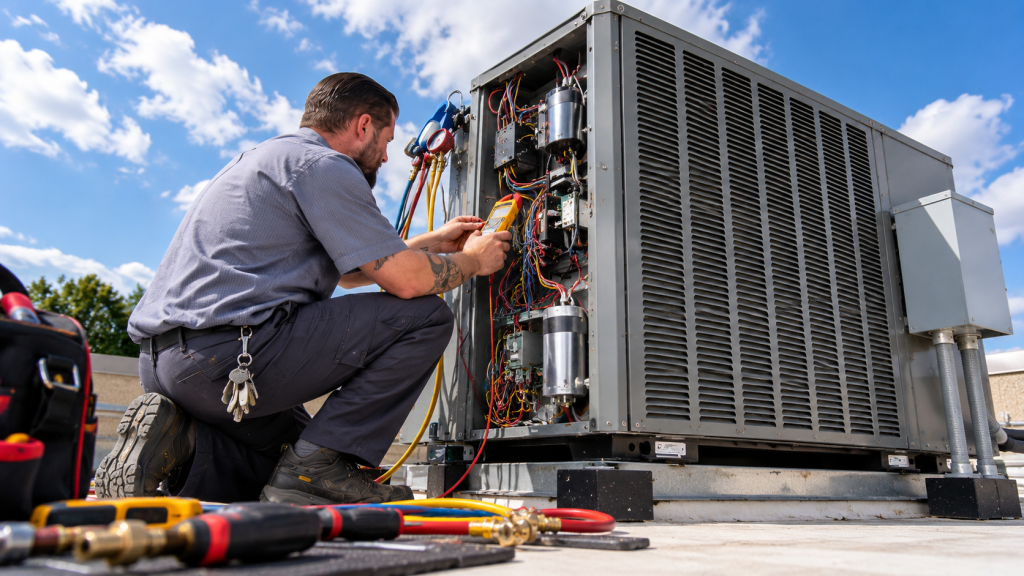
In addition, a replacement often triggers other work. Ductwork may need resizing or sealing. Thermostats may need upgrading. Economizers may need repair or replacement. Electrical disconnects and wiring may need updates for new equipment. During a tenant renovation, these items fit naturally into the larger scope.
Permits and Inspections
Phoenix typically requires a mechanical permit for rooftop unit replacement. The city’s development office reviews equipment and may require structural checks for heavier units. An inspector will confirm the installation before final approval.
Costs to Expect
Overall, costs depend on unit size, efficiency level, curb work, crane time, electrical changes, and ductwork updates. Utility rebates may offset some of the cost for high-efficiency units. Ask your contractor to check available incentives.
A Quick Example
Picture a small office in north Phoenix. The rooftop unit is eighteen years old. It broke down twice last summer. The new tenant is a dental office with more equipment and more people. So the owner calls for a Phoenix HVAC replacement. First, the engineer runs a new load. As a result, the new unit is a bit bigger. It also needs a curb adapter and a new disconnect. Then the crane comes at 5 a.m. By noon, the new unit is cooling. The dentist opens on time, and the owner stops paying for summer repairs.
Keeping Tenants Comfortable During the Work
Replacements in occupied buildings need care. The space will lose cooling for a short time while crews swap units. So plan the work for early morning, when the building is still cool from the night. Tell tenants ahead of time. If the work runs long, bring in portable coolers for key areas like server rooms.
Many owners replace one unit at a time in a multi-unit building. That way, part of the space keeps cooling while crews work on another part. This phased approach takes a little longer, yet it keeps businesses running.
Disposal and Recycling
Meanwhile, old units contain refrigerant, metal, and oil. Federal rules require proper refrigerant recovery before disposal. A good contractor captures the refrigerant with certified equipment. Then they recycle the steel, copper, and aluminum. Ask for documentation of proper recovery and disposal.
Warranties and Start-Up
Finally, new equipment comes with a maker’s warranty. Some require registration within a short time. Others require start-up by a factory-trained tech. So ask your contractor to handle the paperwork. Keep the start-up report with your building records. It proves the unit was set up right and protects your warranty.
Choosing a Replacement Contractor
Above all, look for a contractor with commercial rooftop experience in the Valley. Ask about crane planning, curb adapters, refrigerant training, and warranty support. Confirm their Arizona license and insurance.
FAQ on Phoenix HVAC Replacement
How long does a Phoenix HVAC replacement take?
The crane lift and set often take one day. Start-up and controls may add a day or two.
Can I keep my old curb?
Often, yes, with a curb adapter, as long as the curb and roof are in good shape.
Plan Your Replacement
The right timing and plan keep your tenants cool and your costs in check. Visit our rooftop replacement page, or schedule an equipment assessment today.