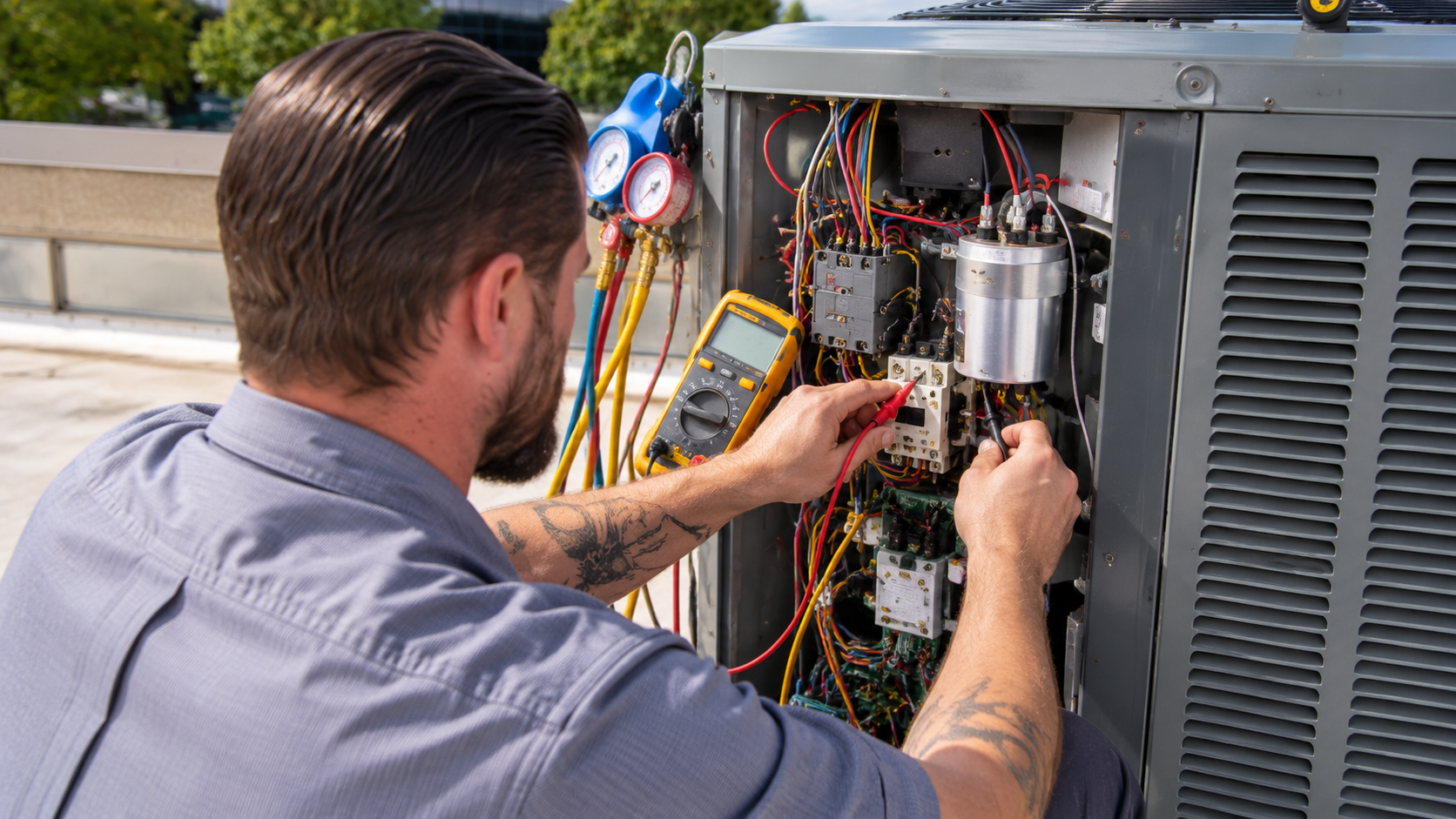
HVAC controls procurement is the process of defining, buying, delivering, installing, and programming the brains of a building’s mechanical system. On paper it looks like a small line item. In practice, it touches the schedule from submittals to final inspection. When teams handle it late or loosely, controls become the last thing standing between a finished space and occupancy. This guide walks builders through the full procurement path and shows how to fit it into the construction schedule.
General contractors, mechanical subcontractors, and owners’ reps can use these steps on projects of any size.
What HVAC Controls Include
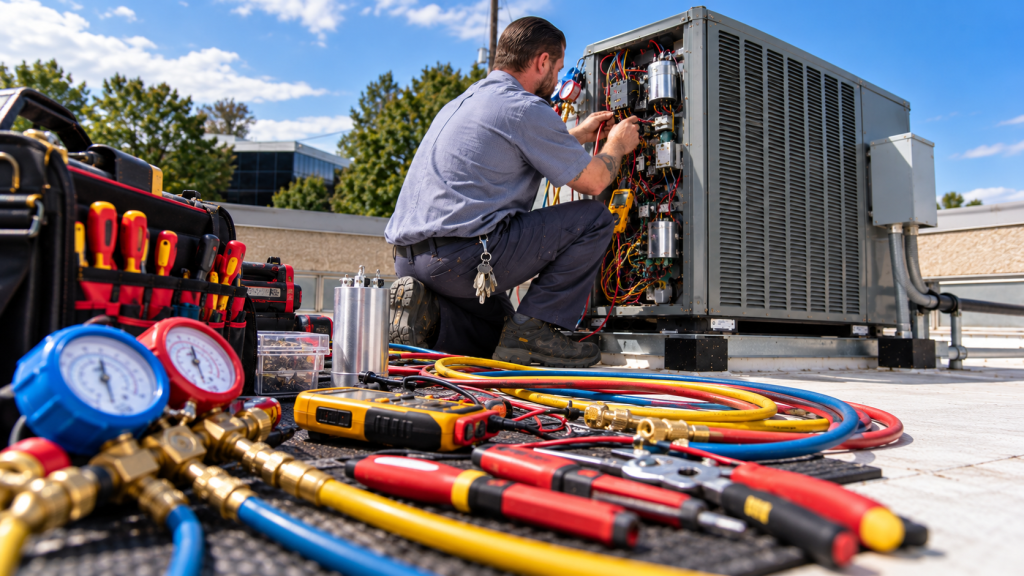
In short, controls cover every device that tells HVAC gear what to do. A typical tenant improvement may include:
- Thermostats and space temperature sensors
- Unit controllers on rooftop units and air handlers
- VAV box controllers and damper actuators
- Carbon dioxide and humidity sensors
- Network devices and gateways
- A building automation system front end
- Control wiring and low-voltage conduit
- Programming, graphics, and owner training
For example, simple spaces may use only smart thermostats. By contrast, larger spaces often tie into a full building system.
Step 1: Define the HVAC Controls Procurement Scope
HVAC controls procurement starts with a clear scope. First, which firm supplies the controls? Next, which trade pulls the wiring? Then, who programs the system? Finally, who ties it into the landlord’s system? These questions often fall between the mechanical contractor, the controls contractor, and the electrician.
Then write the answers into a scope matrix. Then attach it to each subcontract. This simple step prevents finger-pointing when the job gets busy.
Step 2: Confirm the Sequence of Operations
Put simply, the sequence of operations explains how the system should act. For example, when does each unit turn on? How do setbacks work at night? How does the economizer respond to outdoor temperature? What happens when a smoke detector trips?
After all, programmers need a final sequence before they can finish. Therefore, lock it down early in design. Late changes mean reprogramming and retesting.
Step 3: Prepare and Review Submittals
The controls contractor submits product data, wiring diagrams, panel layouts, point lists, and the sequence of operations. The GC reviews the package for completeness, then sends it to the engineer.
So push this submittal early, alongside equipment submittals. Controls often lag, and that lag can push the whole schedule. Our post on reducing controls lead times covers more tactics.
Step 4: Place HVAC Controls Procurement Orders
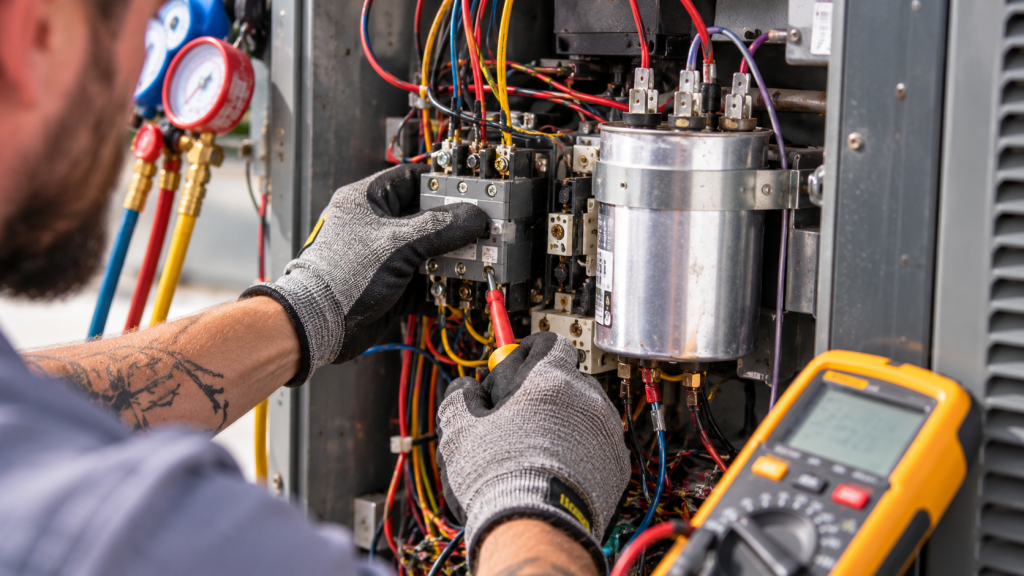
Once the engineer approves submittals, order parts right away. Separate long-lead items, such as custom panels and specialty sensors, from common stock items. In some cases, the engineer may allow early release of long-lead parts before full approval.
Also, confirm whether rooftop units will ship with factory-mounted controllers. If so, coordinate with the equipment supplier so the controller matches the system.
Step 5: Track HVAC Controls Procurement Deliveries
Next, keep a procurement log with each item, order date, promised ship date, and status. Review it in weekly meetings. If a date slips, look for alternatives early rather than late.
Step 6: Install Field Devices
In practice, controls installation happens in stages. During rough-in, crews mount sensors, actuators, and VAV controllers. They pull low-voltage wire through the ceiling. Then, once crews set the equipment, they connect unit controllers.
Coordinate this work with ceiling installers. Crews must install and test many devices before the ceiling grid closes.
Step 7: Program and Check Out
Next, programmers load the sequences into controllers. Then technicians perform point-to-point checkout. They confirm each sensor reads correctly and each actuator moves as commanded.
Often, this step reveals wiring errors or mislabeled points. Fixing them early keeps balancing on schedule.
Step 8: Support Testing and Balancing
The balancing technician needs working controls to set airflows. For example, they must command VAV boxes to minimum and maximum positions. So controls must be programmed and checked before balancing starts. Learn more on our controls and balancing page.

Step 9: Functional Testing and Inspection
Some jurisdictions require functional testing of controls for energy code compliance. Inspectors may verify economizer operation, setbacks, and demand-controlled ventilation. Plan for this step in the final weeks.
Step 10: Training and Closeout
Finally, the controls contractor trains the owner’s staff. They show how to read alarms, adjust schedules, and change setpoints. Closeout documents include as-built wiring diagrams, point lists, sequences, passwords, and warranties.
Fitting HVAC Controls Procurement Into the Schedule
Map each controls milestone onto the master schedule:
- Scope defined during bidding
- Submittals within the first weeks after award
- Orders placed right after approval
- Field devices installed during rough-in
- Programming during finishes
- Checkout before balancing
- Functional testing before final inspection
- Training before move-in
Then work backward from the opening date. If any step looks tight, act now. Small fixes early are far cheaper than rush fixes at the end.
HVAC Controls Procurement on Simple Jobs
Not every job needs a big system. A small shop may only need two smart thermostats. In that case, HVAC controls procurement is quick. Buy the thermostats with the rooftop units, mount them, and set the schedules. Still, keep the same habits. Write down who buys them, who wires them, and who sets them up. Even small gaps can cause a late opening.
Big Jobs, Big Systems
Large offices, clinics, and schools need more. They may have dozens of zones, many sensors, and a full building system with screens and alarms. Here, the controls sub is a key partner. Bring them into early meetings. Share the full schedule. Give them a clear date for each step. With a plan, even a big system can go in on time.
Why Controls Arrive Late
Controls often show up last for a few simple reasons. First, they get ordered last, because teams focus on the big units. Second, many parts use computer chips, and chip supply can be tight. Third, programming waits until the end, so any problem lands right before opening. Fortunately, each cause has a fix. Order early, pick parts that ship fast, and book the programmer ahead of time. With these steps, HVAC controls procurement stops being a surprise.
A Plain Summary
Here is the short version. Know who does what. Set the sequence early. Send the paperwork fast. Buy the parts as soon as you can. Track every order. Put sensors in before the ceiling closes. Program and test before balancing. Train the staff before move-in. Do these things, and controls will not hold up your job.
What Owners Should Ask For
Owners should ask for a few things at the end. First, a list of every point in the system. Second, the final sequence of operations. Third, all passwords and login details. Fourth, training for staff. Finally, a warranty period with support. These items make the system easy to run for years.
Common Mistakes
- Leaving controls out of early coordination meetings
- Unclear scope between trades
- Late sequence of operations
- Programming started after balancing
- No training for building staff
Working With the Landlord’s System
In multi-tenant buildings, the landlord may already have a building automation system. Tenants may need to integrate with it. That can require specific brands, protocols, or approved contractors. Ask about these rules early, because they affect pricing and lead times.
FAQ on HVAC Controls Procurement
Who is responsible for HVAC controls procurement?
Usually the mechanical contractor or a controls subcontractor, under the general contractor.
Can controls be ordered before submittal approval?
Sometimes, for long-lead items, if the engineer agrees in writing.
Keep Controls on Track
Planned procurement keeps controls from becoming the last-minute bottleneck. Visit our HVAC subcontractor page, or plan your controls scope with our team. The ASHRAE community also offers guidance on building automation.