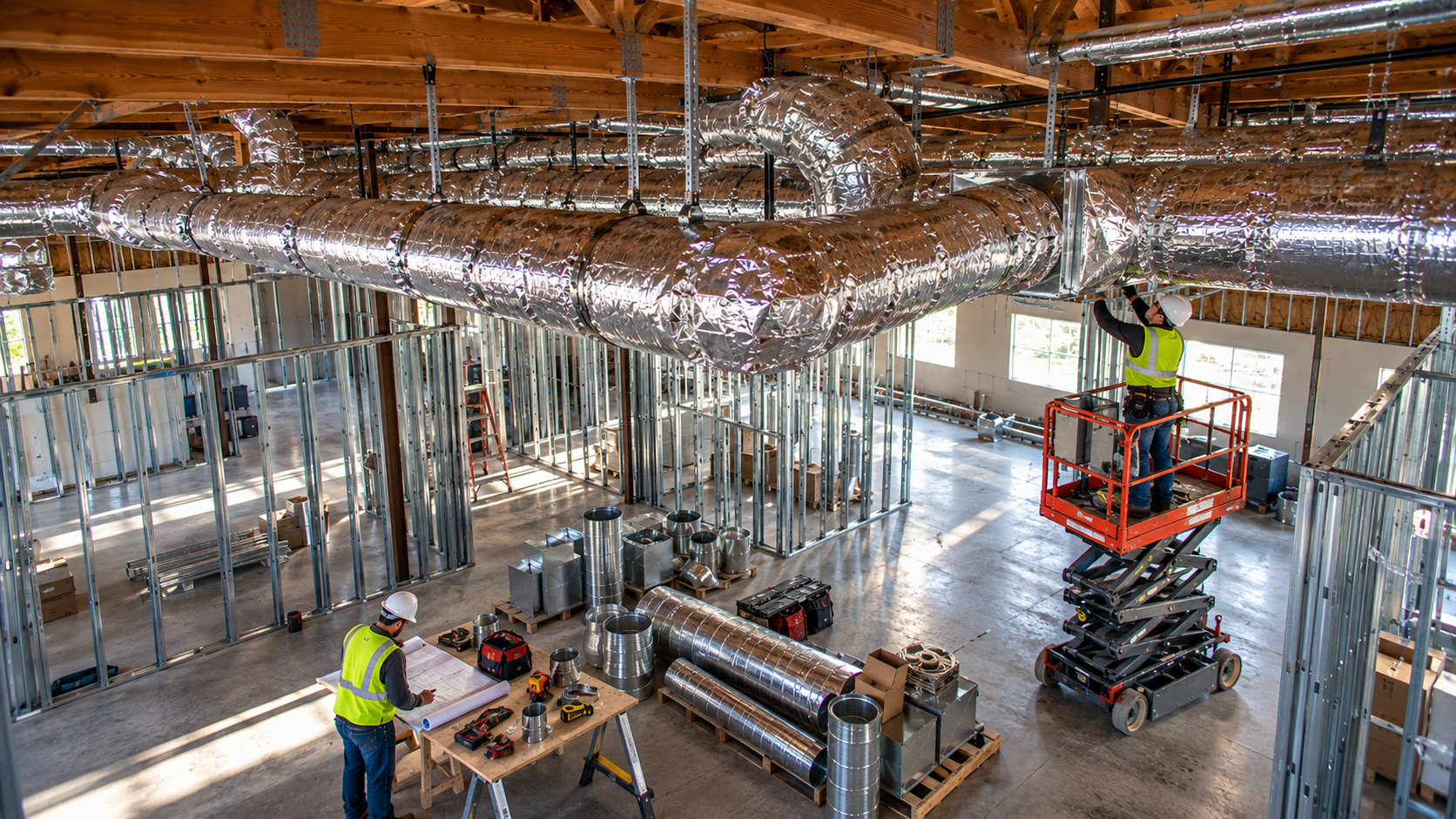
Phoenix HVAC systems vary a lot depending on what happens inside the building. An office full of people and laptops, a retail store with big glass fronts, and a warehouse with dock doors all heat up in different ways. Each one needs a different approach to cooling, ventilation, and controls. This guide compares the right systems for office, retail, and industrial tenant improvements in the Valley, so you can match the equipment to the space.
Along the way, we will touch on costs, maintenance, and the local conditions that shape every choice.
Why One Size Does Not Fit All
First, heat comes from many sources. For offices, most heat comes from people, lights, and computers. Stores, by contrast, gain heat from sunny glass fronts and doors that open all day. Warehouses take it in through the roof, dock doors, and machines.
Because the sources differ, the best systems differ too. Picking the wrong type can mean high bills, uneven comfort, or equipment that wears out early.
Common Phoenix HVAC Systems
Here are the system types you will see most often:
- Packaged rooftop units (RTUs): All-in-one units on the roof. The most common choice for single-story retail and office.
- VAV systems: Rooftop units or air handlers feeding variable air volume boxes for better zoning.
- Split systems: Indoor air handlers with outdoor condensers, common in smaller or older suites.
- Central plants: Chillers and cooling towers serving larger towers and campuses.
- Evaporative coolers: Water-based cooling for warehouses and shops in dry heat.
- Exhaust and ventilation fans: For restrooms, kitchens, and industrial spaces.
Phoenix HVAC Systems for Office Spaces
Above all, offices need steady comfort, good air quality, and quiet operation. People sit in one place for hours, so drafts and hot spots are easy to notice.
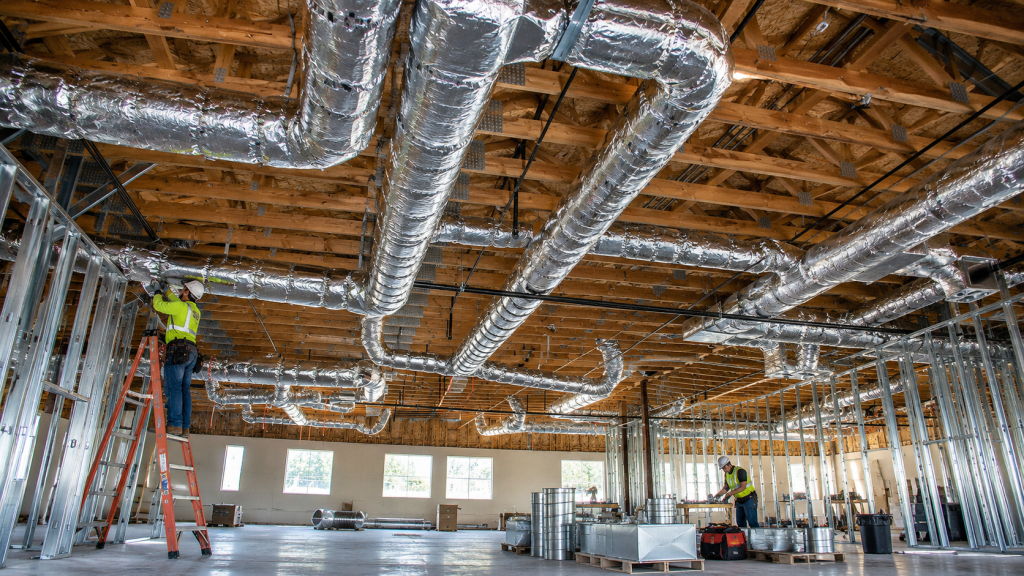
Many Phoenix offices use rooftop units with VAV boxes. Each zone gets its own thermostat, so a sunny corner office and an inner conference room can both stay comfortable. In smaller suites, multiple single-zone rooftop units may work just as well.
In addition, offices often have server rooms or IT closets that need cooling around the clock. A small dedicated split system or ductless unit usually handles these spaces best.
Phoenix HVAC Systems for Retail
By contrast, retail spaces face big swings in load. Customers come and go, doors open constantly, and sun pours through storefront glass. As a result, retail systems need strong capacity and quick response.
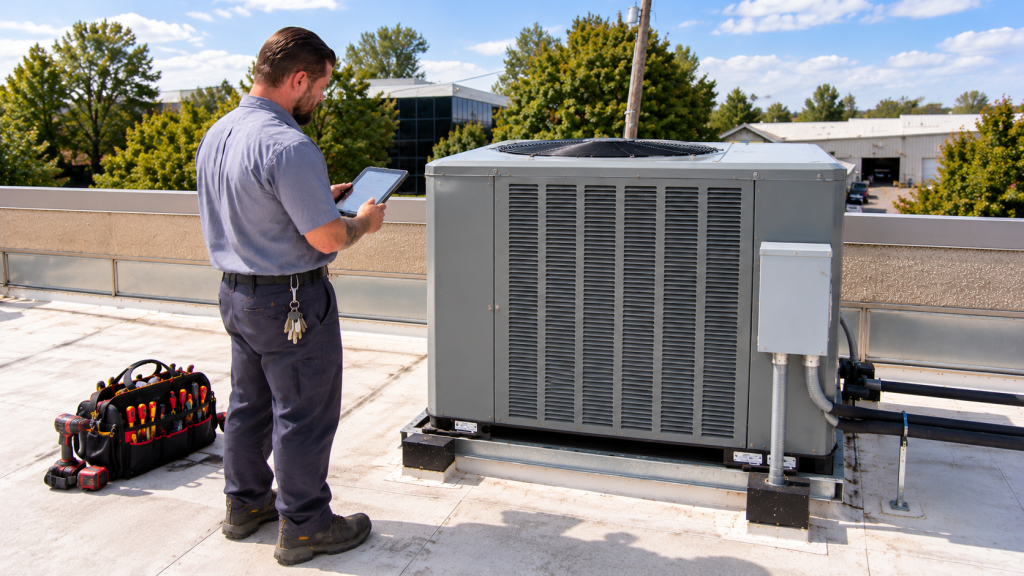
Most single-story retail uses packaged rooftop units. Larger stores may divide the floor into zones with separate units. Air curtains at entries can reduce hot air entering the store. Meanwhile, low-E storefront glass and awnings cut solar heat before it reaches the floor.
Phoenix HVAC Systems for Industrial Buildings
Meanwhile, industrial spaces bring the biggest variety. A distribution warehouse, a light manufacturing shop, and a lab each need something different.
For warehouse floors, many owners choose evaporative coolers or high-volume fans. These options cool workers at a fraction of the cost of refrigerated air. However, they work best when outdoor humidity is low. During monsoon season, their effect drops.
Office areas inside the warehouse usually get refrigerated rooftop units. Manufacturing areas may need spot cooling, process exhaust, or dust collection. Labs and clean areas need precise temperature and humidity control.
Ventilation and Air Quality
Of course, every space needs fresh outdoor air. Codes set minimum ventilation rates based on use and occupancy. Standards from ASHRAE guide many of these rules.
Bringing in hot outdoor air adds load, though. Energy recovery ventilators can help by pre-cooling incoming air with outgoing air. In dusty Phoenix conditions, good filtration also protects coils and indoor air quality.
Controls and Zoning
Finally, smart controls tie everything together. Programmable thermostats, scheduling, and building automation systems help systems run only when needed. For instance, retail units can set back after closing, and offices can cool zones only when occupied.
Equipment Placement and the Roof
Rooftop units need structural support, curbs, and safe access for service. Larger units may require roof reinforcement. In addition, landlords often have rules about unit placement and screening.
Costs by Building Type
In general, warehouses cost the least per square foot to cool, especially with evaporative systems. Retail falls in the middle. Offices with many zones cost more. Specialty spaces, like labs and restaurants, cost the most. For more detail, see our HVAC cost per square foot page.
Maintenance in the Desert
Phoenix HVAC systems face heat and dust that shorten equipment life. So maintenance matters for every building type. Change filters often, clean condenser coils before summer, and check electrical parts each spring. Evaporative coolers also need pad changes and water treatment.
Flex Space and Mixed Uses
Many Phoenix tenants lease flex space. It mixes a front office with a warehouse or shop in the back. That mix makes HVAC tricky. The office needs quiet, steady cooling. The shop needs to move a lot of air, and it may make heat or dust.
So most flex spaces use two systems. Refrigerated rooftop units serve the office. Fans, evaporative coolers, or a separate unit serve the back. A wall or door between them keeps cool office air from leaking into the shop. As a result, each area gets the right comfort at the right cost.
Upgrading Older Phoenix HVAC Systems
Older buildings often have tired equipment. Units may be fifteen or twenty years old. Some still run on refrigerants that federal rules are winding down. They may also lack modern controls.
During a tenant improvement, it is often smart to replace these units. New equipment runs more efficiently and comes with a fresh warranty. Plus, the work is easier while the ceiling is open. Our rooftop unit replacement page explains the process.
Choosing the Right System
To begin, start with how the space will be used. Then consider budget, energy goals, and lease length. A tenant on a short lease may favor lower upfront cost. A long-term owner may invest in efficiency. Either way, a good engineer can lay the options out side by side.
Noise and Comfort Details
Comfort is about more than temperature. Noise matters too. A loud diffuser above a desk can drive staff crazy. So designers size ducts and diffusers to keep air speeds low near people. They also place rooftop units away from quiet rooms when they can.
Drafts matter as well. Cold air dumping on a reception desk feels just as bad as a hot spot. Good diffuser choice and careful balancing fix both problems. In the end, the best Phoenix HVAC systems are the ones nobody notices.
Quick Comparison
- Office: RTUs with VAV or multiple zones, plus IT cooling.
- Retail: RTUs sized for door traffic and glass, with air curtains if needed.
- Industrial: Evaporative cooling or fans on the floor, refrigerated air in offices.
FAQ on Phoenix HVAC Systems
Which Phoenix HVAC systems are cheapest to run?
Evaporative cooling for warehouses usually costs the least. For offices, high-efficiency rooftop units with good controls save the most.
Can a warehouse use rooftop units?
Yes, but cooling a large open floor with refrigerated air is costly. Many owners mix systems instead.
Find the Right Fit
The right system keeps your people comfortable and your costs in check. Explore our build-out HVAC services, or ask our engineers to compare options for your Phoenix space.