
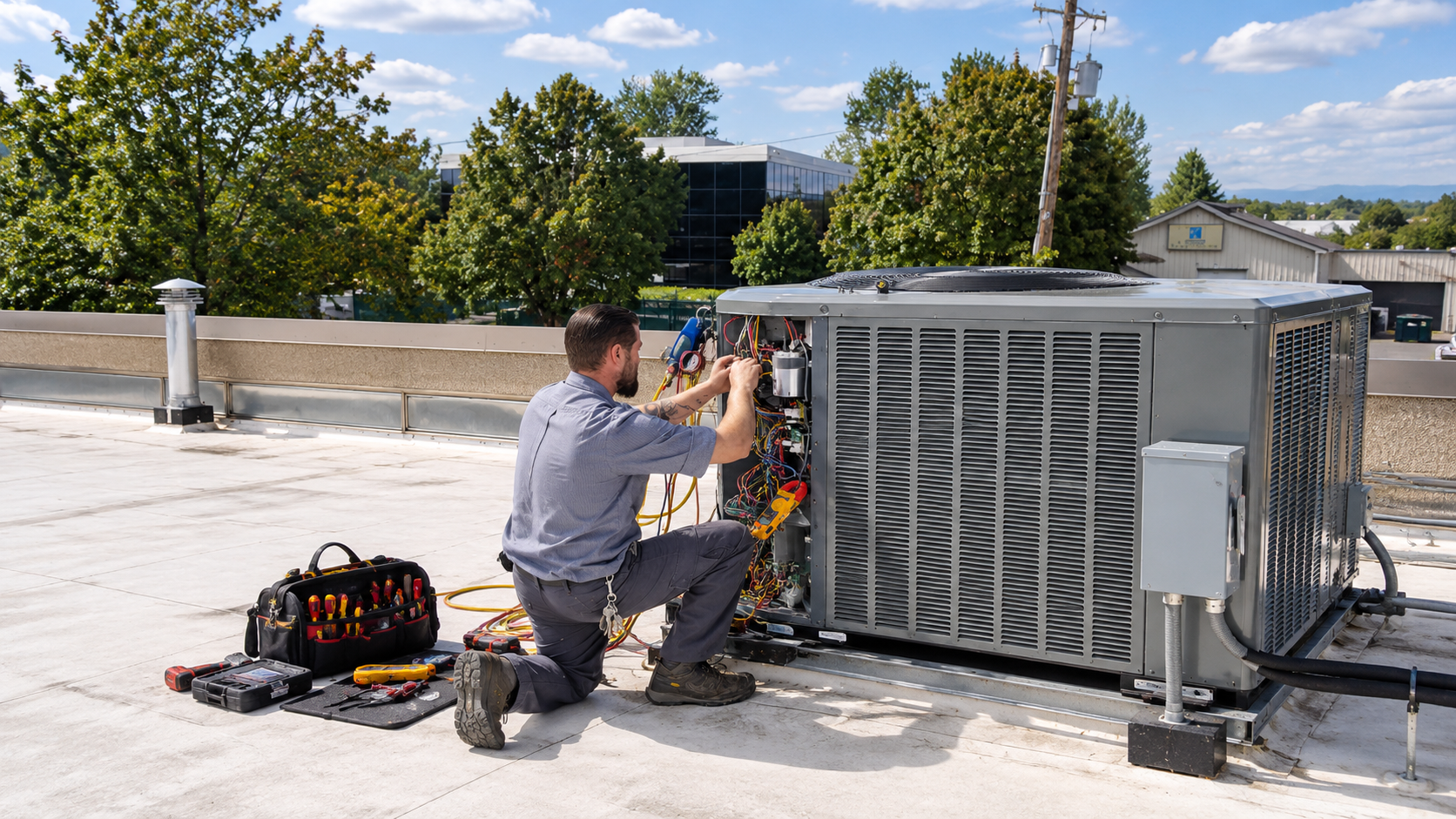
Kitchen ventilation repair costs can catch restaurant owners off guard. Hoods, exhaust fans, and grease ducts work hard every service, and they wear out in ways that are easy to miss until something fails. A dead fan belt on a Friday night can shut down the line. A clogged duct can become a fire risk. This guide explains what drives repair costs, the warning signs to watch for, how maintenance lowers costs, and when replacement makes more sense than repair.
Restaurant owners, operators, and facility managers can use it to plan budgets and avoid surprises.
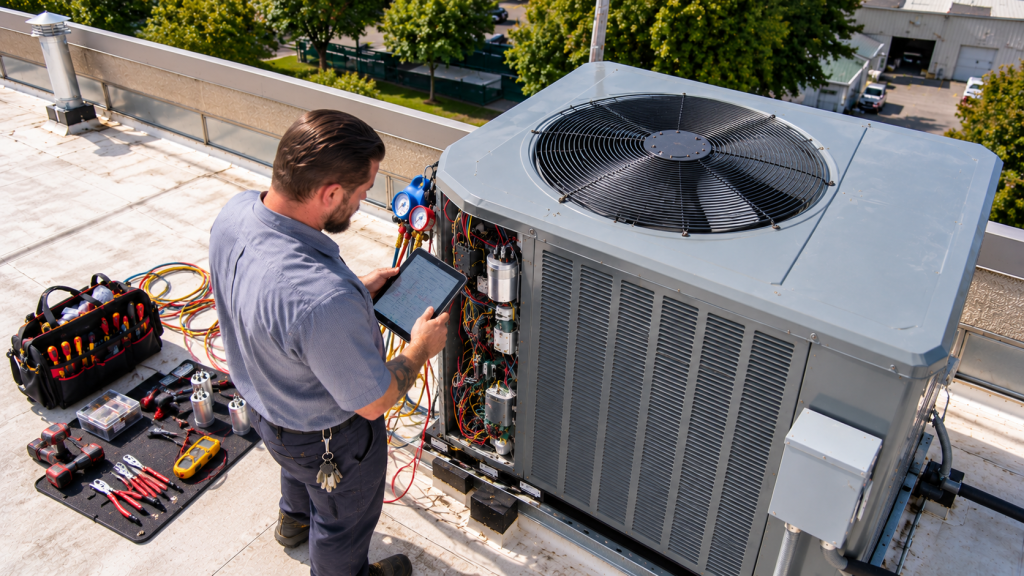
The Parts of a Kitchen Ventilation System
First, to understand costs, it helps to know the parts. A typical system includes:
- Hood: the canopy over the cooking line, with grease filters
- Grease duct: welded steel duct from the hood to the roof
- Exhaust fan: usually on the roof, pulling air through the hood
- Makeup air unit: brings fresh air back into the kitchen
- Fire suppression: nozzles and controls that fight grease fires
- Controls: switches, sensors, and interlocks
As a result, each part can fail in its own way, and each has its own repair cost.
Exhaust Fans and Kitchen Ventilation Repair Costs
In most kitchens, exhaust fans are the first thing to break. They run long hours in hot, greasy air. Common repairs include:
- Replacing worn belts and pulleys
- Replacing motors that overheat or burn out
- Replacing bearings that squeal or seize
- Cleaning grease from fan blades and housings
- Repairing hinges and grease containment boxes
Fortunately, belts and bearings are fairly cheap. Motors cost more, especially larger ones or those with variable speed drives. Full fan replacement costs the most.
Hood Repairs
By contrast, hoods are sturdy, yet they still need repairs. Filters bend, crack, or go missing. Lights burn out. Grease gutters leak. Seams can separate over time. In general, most hood repairs are modest. However, if the hood is damaged, undersized, or no longer meets code for new equipment, replacement may be needed.
Grease Ducts and Kitchen Ventilation Repair Costs
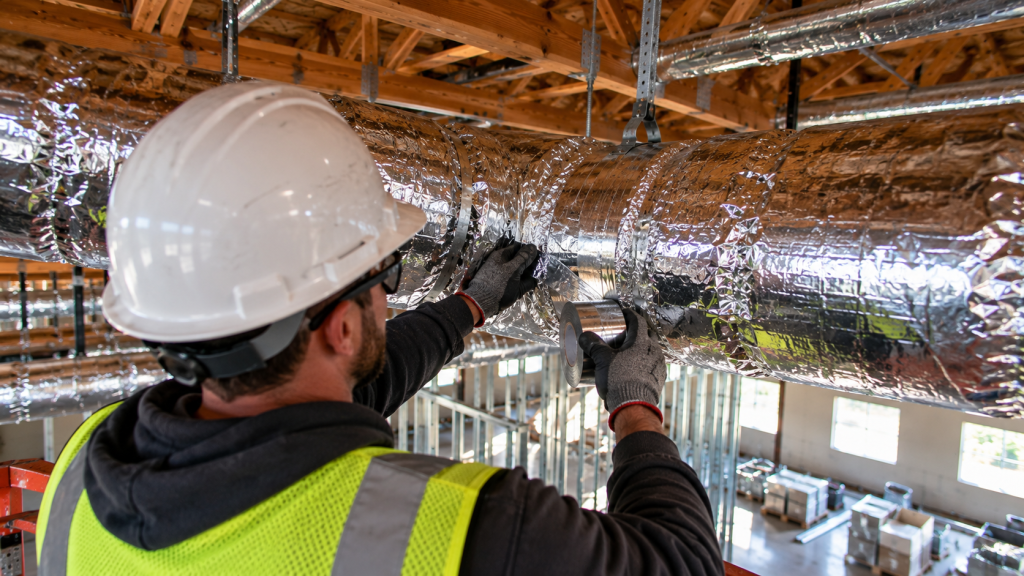
However, grease duct repairs can be expensive. Leaks at seams let grease drip into ceilings and walls, which is a fire hazard. Damaged fire wrap must be replaced. Access panels may warp or lose their gaskets. Because grease ducts must stay liquid-tight and welded, repairs often require skilled welders and inspections.
Makeup Air Unit Repairs
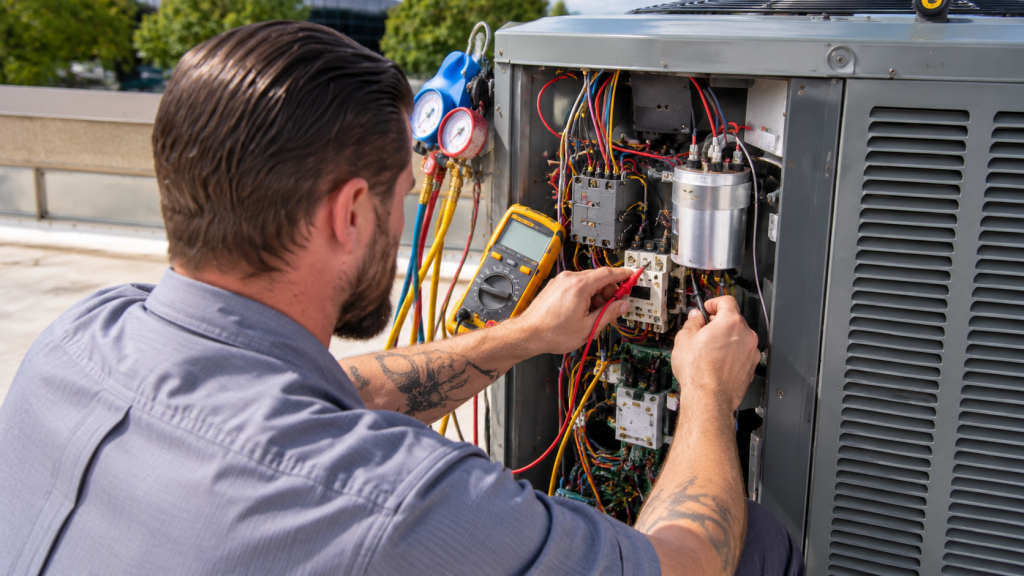
Meanwhile, makeup air units bring fresh air back into the kitchen. A failed unit starves the room of air, so smoke spills from the hood and exterior doors fight back. Common repairs include motors, belts, burners, igniters, and controls. In hot climates, units with cooling may also need refrigerant work.
Fire Suppression Service
Also, suppression systems need regular inspection, usually by a licensed fire protection company. Repairs may include replacing fusible links, recharging tanks, or replacing nozzles. These costs are usually modest, yet skipping them can lead to failed inspections or worse.
What Drives Kitchen Ventilation Repair Costs
Several factors push costs up or down:
- Access: Tall buildings and hard-to-reach fans cost more to service.
- Timing: Emergency calls at night or on weekends cost more.
- Grease buildup: Heavy grease makes every repair slower.
- Parts: Specialty motors and controls may take time to arrive.
- Code issues: Repairs that reveal code problems can grow in scope.
- Age: Older systems have more worn parts.
Warning Signs to Watch
Above all, catching problems early keeps kitchen ventilation repair costs down. Watch for:
- Smoke escaping the hood into the kitchen
- Squealing, grinding, or rattling from the roof fan
- Grease dripping from the hood or ceiling
- Doors that are hard to open or slam shut
- A hot, stuffy kitchen even with the hood on
- Strong cooking smells in the dining room
So any of these deserves a prompt service call.
How Maintenance Lowers Costs
In fact, regular maintenance is the best way to control kitchen ventilation repair costs. A good plan includes:
- Cleaning hood filters often, usually daily or weekly.
- Professional hood and duct cleaning on a set schedule.
- Checking fan belts and bearings regularly.
- Servicing makeup air units before peak seasons.
- Inspecting fire suppression systems as required.
Cleaning frequency depends on how much grease the menu produces. Busy kitchens with charbroilers or woks need cleaning more often than light-duty kitchens. Standards from NFPA guide these schedules.
Repair or Replace?
Eventually, though, repair stops making sense. Consider replacement when:
- The fan or makeup air unit is old and failing often
- The hood no longer fits the cooking equipment
- The grease duct has multiple leaks or code problems
- The menu has changed and needs more capture
- Energy costs are high and new controls could help
Replacement costs more up front, yet it can lower repair bills and energy use. Our post on restaurant HVAC design explains how a new system fits together.
Budgeting for Kitchen Ventilation Repair Costs
Therefore, set aside money each year for ventilation repairs and maintenance. Older systems and high-volume kitchens need a larger reserve. In addition, consider a service agreement. It often includes regular checks and faster response for emergencies.
A Simple Example
Picture a busy diner with a fifteen-year-old roof fan. The belt squeals every morning. The owner ignores it. Then, during a Saturday rush, the belt snaps. Smoke fills the kitchen, and the line shuts down for the night. The emergency call costs far more than a planned belt swap would have. Plus, the diner loses a night of sales.
Now picture the same diner with a service plan. A tech spots the worn belt during a routine visit and changes it on a Tuesday afternoon. The fix is quick and cheap. That is the real value of steady care. Small, planned fixes almost always beat big, sudden ones.
Signs Your System Is Too Small
Sometimes the problem is not a broken part. Instead, the system is simply too small for the menu. This often happens when a restaurant adds new equipment or changes concepts. If smoke spills even when everything works, the hood or fan may be undersized. In that case, repairs will not help. A redesign is the real fix.
Questions to Ask Before You Approve a Repair
- Is this a one-time fix or a sign of a bigger problem?
- How old is the part, and how long will the new one last?
- Would a bigger or newer unit cost less over time?
- Does the repair need a permit or inspection?
- Can the work happen after closing to avoid lost sales?
Good answers help you spend wisely and plan ahead. They also help you compare one contractor against another on more than price alone. They also show whether your contractor is thinking about your business, not just the next invoice.
Choosing a Repair Contractor
Look for a contractor experienced with commercial kitchen exhaust. Ask about emergency response, parts inventory, and welding capabilities for grease duct repairs. Also, confirm licensing and insurance.
FAQ on Kitchen Ventilation Repair Costs
What is the most common kitchen ventilation repair?
Exhaust fan belts, bearings, and motors.
Can cleaning really lower kitchen ventilation repair costs?
Yes. Clean systems run cooler, wear less, and are safer.
Keep Your Kitchen Running
A healthy ventilation system protects your staff, guests, and business. Visit our kitchen exhaust services, or schedule a ventilation check.