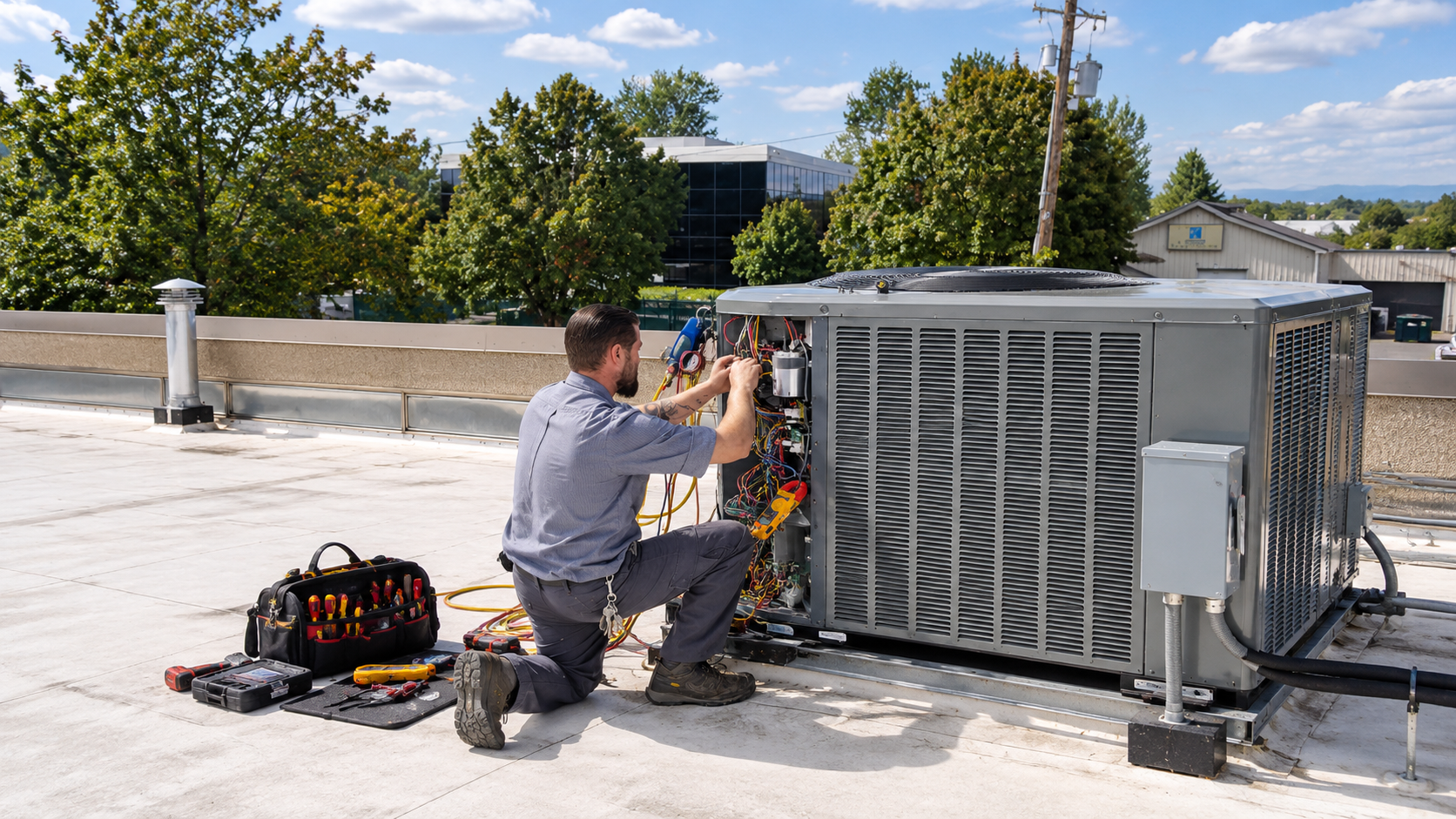
Serra Mesa rooftop HVAC equipment deserves a close look whenever a tenant renovation begins. Serra Mesa sits in central San Diego near I-15 and I-805. Small shopping centers, offices, and light industrial buildings line Aero Drive and Murphy Canyon. Many roofs here hold units that have run for fifteen to twenty-five years. A renovation is the best time to decide each unit’s fate: keep, repair, or replace. This post explains how to evaluate rooftop equipment during a Serra Mesa tenant renovation.
Here is a clear process for making smart equipment decisions.
Why Evaluate During a Renovation
During a renovation, ceilings are often open and the roof is accessible. Crews are already on site, and the space is empty. In addition, the new tenant’s layout may change how much cooling the space needs. Replacing a unit now avoids disrupting the new tenant later. So the renovation window is the ideal time to evaluate.
Start Serra Mesa Rooftop HVAC Reviews With a Unit List
Begin by writing down each rooftop unit that serves the space. Record the brand, model, tonnage, serial number, and install year from each data plate. Next, note the refrigerant type and heating type. In addition, gather any service records the landlord has. This inventory forms the basis of every decision.
Checking Age and Refrigerant
Rooftop units often last fifteen to twenty years. Past that age, a unit is living on borrowed time. Many older units also run on refrigerants the industry is phasing down, which drives service costs up. So age and refrigerant type alone often point toward replacement.
Serra Mesa Rooftop HVAC Condition Checks
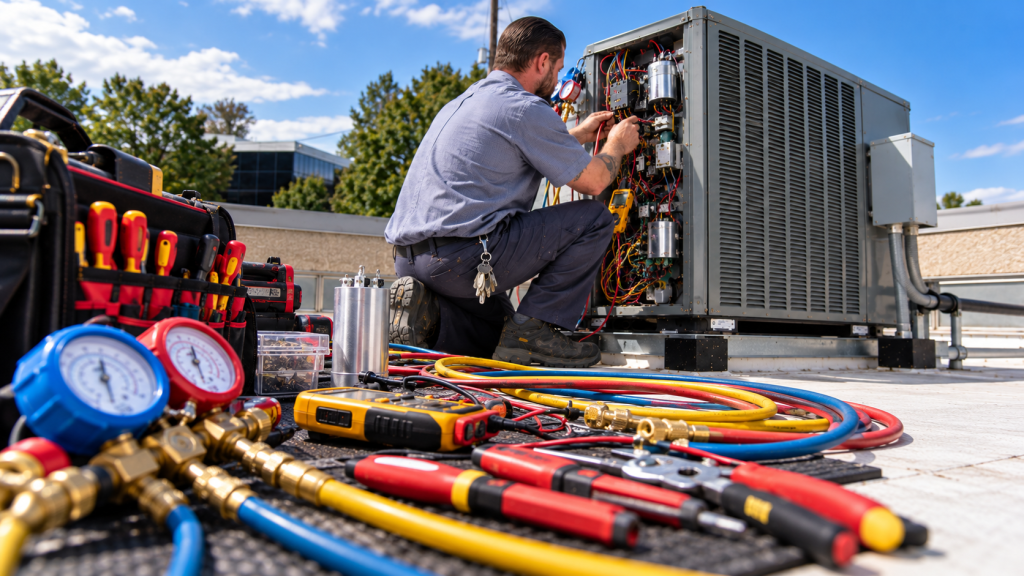
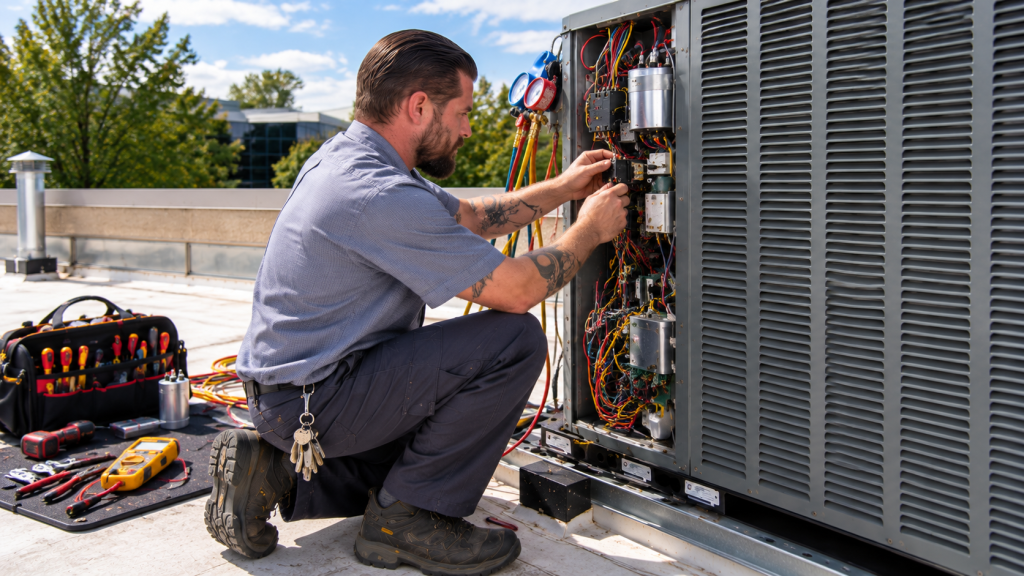
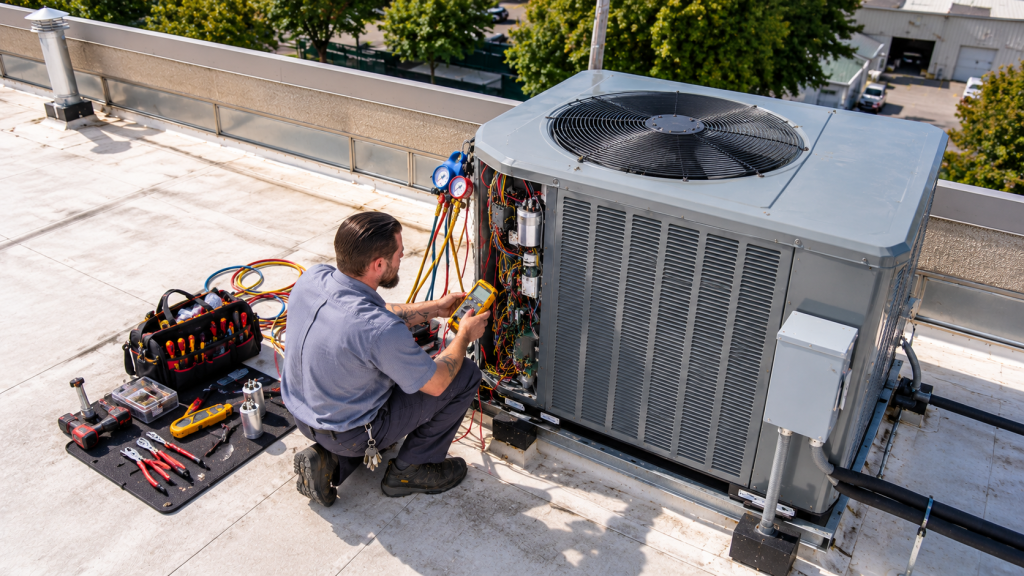
A technician climbs up and inspects each unit. They look for corroded coils, rusted cabinets, damaged fan blades, and leaking drain pans. They test compressors, contactors, and capacitors. In addition, they measure refrigerant pressures and temperature drop across the coil. These checks show how well each unit performs today.
Matching Capacity to the New Use
A unit in good shape may still be the wrong size. A new tenant with more people, more equipment, or a different use may need more cooling. Meanwhile, an oversized unit may short-cycle and leave the air clammy. So the designer sizes the load for the new layout and checks it against what the roof already holds.
Sorting the Units
The review puts each unit in one of three groups. Some need only cleaning and tune-ups. Others benefit from new fans, controls, or coils. The rest need replacing. For the pros and cons, read our retrofit versus replacement article.
Serra Mesa Rooftop HVAC Efficiency and Title 24
State rules set a floor for efficiency and controls on new rooftop gear. Most new units also need economizers. In addition, controls must support setbacks and other energy features. The California Energy Commission lists these rules. Meeting them also lowers energy bills.
Curbs, Roofs, and Structure
New units may not fit old curbs. In that case, the crew uses an adapter curb or builds a new one. The roofer then seals and flashes the curb. A heavier unit may also call for an engineer’s look at the roof framing. Older Serra Mesa roofs may need repairs, and the renovation is a good time to do them.
Crane Lifts
Most rooftop swaps involve a crane. Ahead of time, the crew maps out the lift, the street or lot closure, and the timing. Morning lifts avoid traffic and heat. In addition, the crew removes and recycles old equipment properly, including recovering refrigerant.
Wiring and Gas Lines
Replacement units may need new breakers, wiring, or disconnects. Gas-fired units need proper gas connections and pressure tests. So the electrician and gas fitter coordinate with the HVAC crew. Planning these items early avoids delays on crane day.
Permits in San Diego
Rooftop swaps in Serra Mesa need a San Diego mechanical permit. Reviewers may ask for unit size, weight, and energy forms, and the Development Services website walks through the steps. Inspectors check the installation before final approval.
Keeping Tenants Comfortable During the Swap
If the renovation happens in phases, part of the building may stay open. In that case, plan swaps for weekends or early mornings. Portable coolers can help if a unit is down for a day. Clear notices keep tenants informed.
Utility Incentives
High-efficiency units may qualify for incentives. SDG&E lists business programs. Ask your contractor which models qualify. Incentives can reduce the net cost of a better unit. Your contractor can help with the paperwork.
Serra Mesa Rooftop HVAC Budget
Costs depend on the number and size of units, curb work, crane time, electrical and gas changes, and controls. One small swap costs far less than several big ones. However, efficient new units lower bills for years. Our rooftop unit replacement page lists the price factors.
Timeline
Inspection and design take a week or two. Equipment orders can take several weeks. Permits run in parallel. Then the crane lift and startup happen in a day or two per unit. Plan the swap before the new tenant’s finishes go in.
Startup and Balancing
After installation, the technician starts up each unit, checks charge and airflow, and tests safety controls. A balancing check then confirms airflow to each room. In addition, Title 24 acceptance tests confirm controls work. These steps make sure the new equipment delivers.
Serra Mesa Rooftop HVAC Controls Upgrade
New units work best with new thermostats. Smart controls let the tenant set schedules and check temperatures from a phone. In addition, they can send alerts if a unit fails. Pair each new rooftop unit with a modern thermostat for the best results.
Plan for Maintenance
Regular service stretches the life of new equipment. Change filters, clean coils, and check belts and drains on a schedule. A maintenance plan protects the investment and keeps the new tenant happy.
Serra Mesa Rooftop HVAC for Light Industrial Tenants
Some Serra Mesa buildings house light industrial users, such as print shops, labs, or small manufacturers. These tenants may produce more heat than an office. So their rooftop units may need more capacity or dedicated exhaust. In addition, dust from production can clog filters fast. Plan for heavier-duty filters and more frequent service.
Serra Mesa Rooftop HVAC and Coastal Air
Serra Mesa is inland enough to stay warm, yet close enough to the coast for some salt air. Over years, salt and moisture corrode coils and cabinets. So ask for coated coils on new units. In addition, rinse coils during routine service. Small steps help units last longer.
Tips for Landlords
- Inventory every rooftop unit
- Replace units near the end of their life during renovations
- Check capacity against the new tenant’s needs
- Fix roofs while curbs are open
- Set up a maintenance plan
Serra Mesa Rooftop HVAC Checklist
- Log each unit’s age, size, and refrigerant
- Check each unit’s condition up top
- Size the cooling load for the new tenant
- Decide on repair, retrofit, or replacement
- Plan curbs, crane, electrical, and gas
- Get city permits
- Start up, balance, and maintain
Start the Lease With Reliable Equipment
A careful rooftop review during a Serra Mesa renovation prevents breakdowns, lowers bills, and keeps the new tenant comfortable. With the right decisions now, your property will be ready for years of service. Visit our tenant improvement HVAC page, or book a rooftop review.