Fountain Hills HVAC replacement decisions often come up the moment a new tenant signs a lease. Fountain Hills is a small town east of Scottsdale, known for its famous fountain, its views of the McDowell Mountains, and a compact commercial core along Avenue of the Fountains and Saguaro Boulevard. Many of its shops, offices, and clinics sit in buildings from the 1980s and 1990s. The rooftop units on those buildings may still run, yet they may not suit the next business. Before spending money on new equipment, owners and tenants should find out whether the existing system can do the job.
The steps below help landlords, tenants, and builders make that call with real data instead of guesses.
Why the Question Matters
New rooftop equipment is a big expense, and lead times can stretch for weeks. On the other hand, keeping a worn-out unit can lead to breakdowns in the middle of a July heat wave. So the goal is balance. Keep what still works well, and replace what will not hold up. A careful review protects both the budget and the opening date.
Start Fountain Hills HVAC Replacement Reviews With the Tenant’s Needs
First, list how the new tenant will use the space. A fitness studio, salon, or restaurant needs far more cooling than a quiet accounting firm. In addition, count the people, computers, lights, and equipment that will add heat. Then note any special rooms, such as server closets or treatment rooms. This list becomes the basis for every Fountain Hills HVAC replacement decision that follows.
Fountain Hills HVAC Replacement Starts With Unit Age
Every rooftop unit has a data plate with its model, serial number, and often its build date. Most commercial packaged units last about fifteen to twenty years in mild climates. However, Arizona heat shortens that life. A unit older than fifteen years in Fountain Hills deserves a close look. Older units may also use refrigerant that costs more to service.
Fountain Hills HVAC Replacement and Cooling Capacity
Next, compare the capacity of the existing units to the new tenant’s load. Contractors measure capacity in tons of cooling. A technician or engineer runs a load calculation using the floor area, people, lights, equipment, windows, and roof insulation. If the old units fall short, the space will feel warm on hot afternoons. In contrast, oversized units cycle on and off too often and leave the air clammy.
Inspect the Condition on the Roof
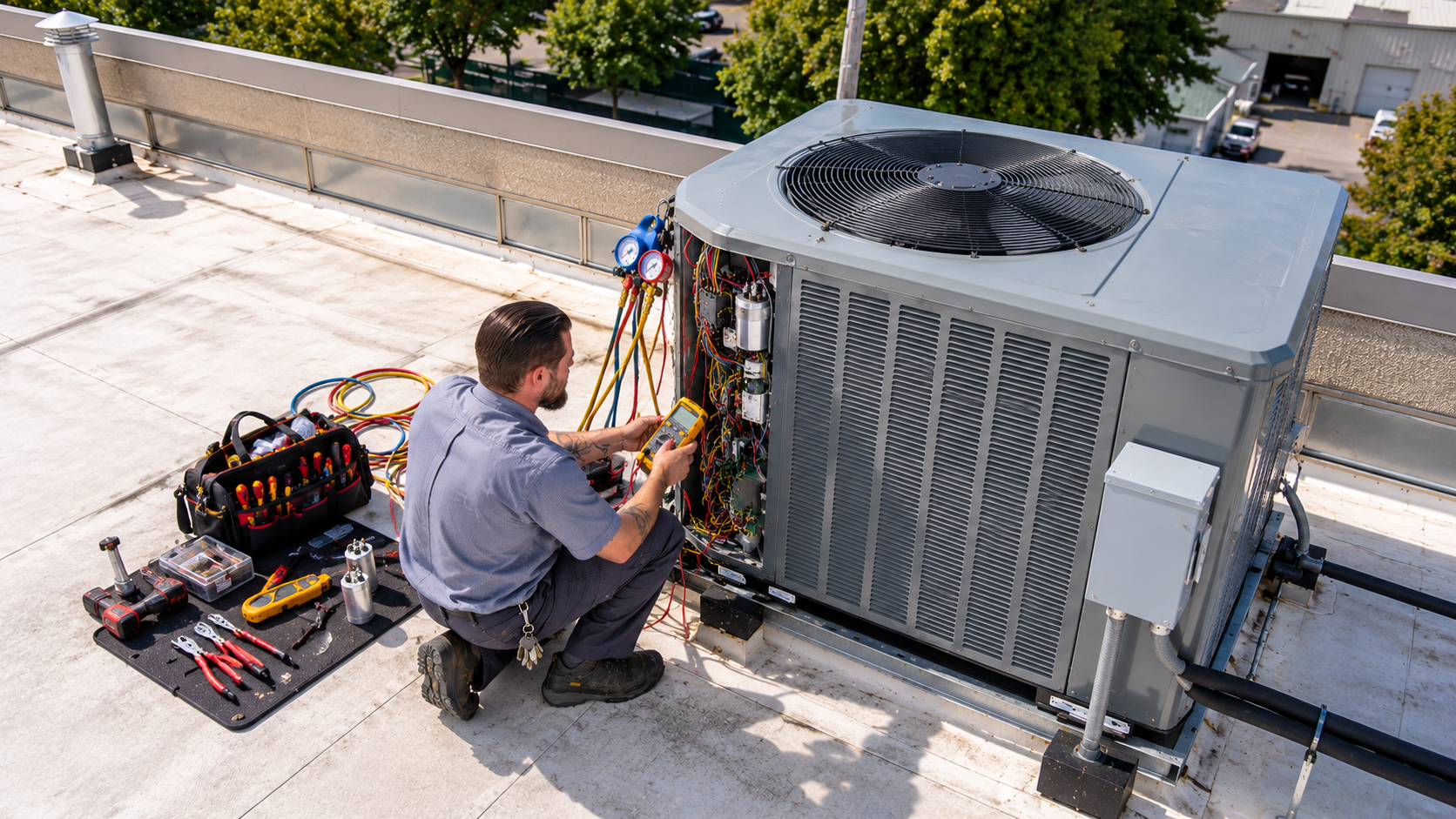
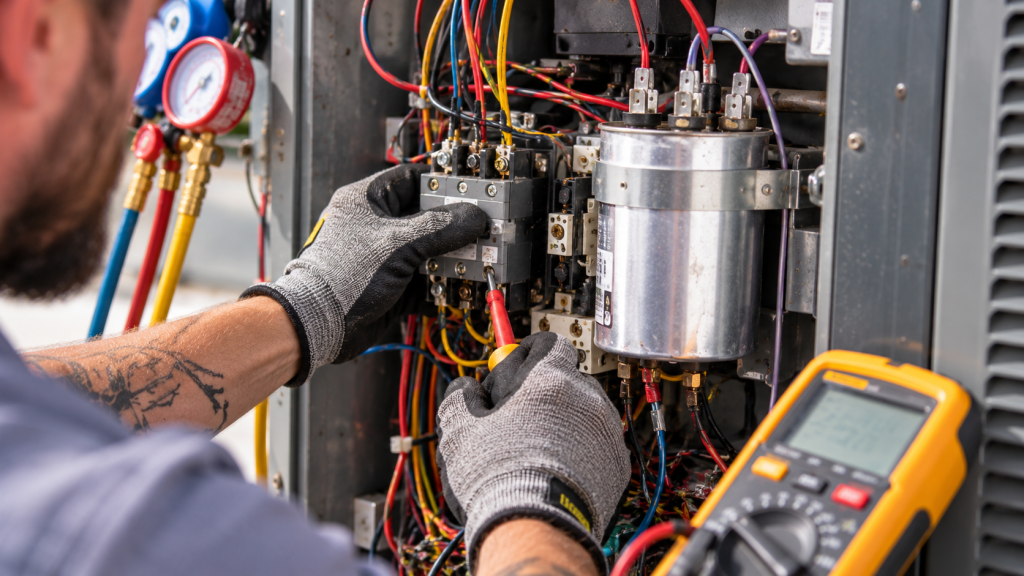
A technician should climb up and inspect each unit. They check coils for dirt and damage, look for rust in the cabinet and drain pan, and test the compressors. In addition, they measure refrigerant pressures and electrical readings. Loose panels, oil stains, and corroded wiring all point to trouble. This inspection shows how much life each unit has left before any Fountain Hills HVAC replacement.
Look at Ductwork and Airflow
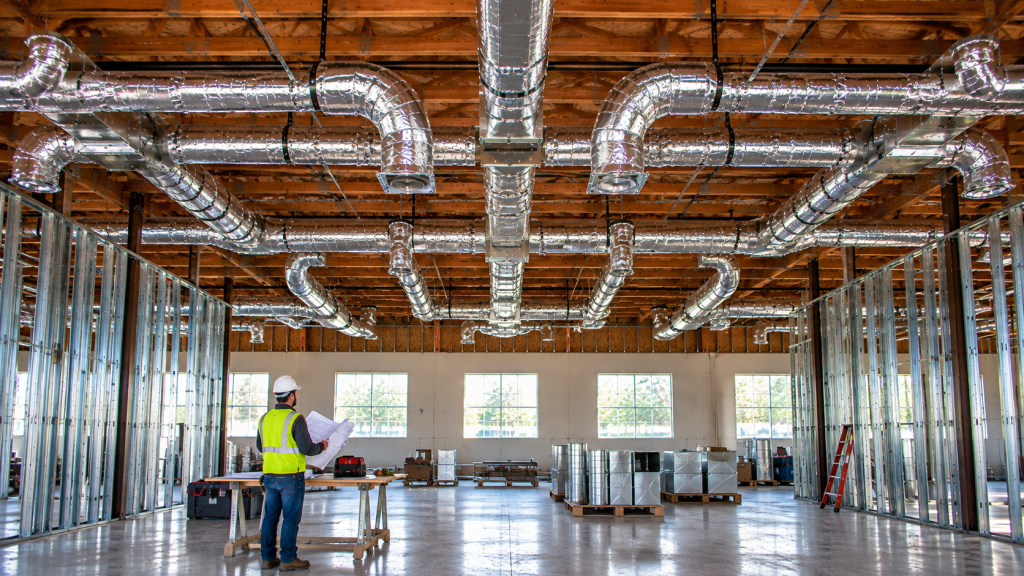
Even a good unit cannot cool a space well if the ducts fall short. So the technician checks duct size, leaks, and insulation. Old flex duct often sags or tears. In addition, new walls in the tenant layout may block airflow to some rooms. In many Fountain Hills HVAC replacement projects, the duct review matters as much as the unit review.
Electrical Service and Disconnects
Replacement units sometimes need different electrical service than the old ones. For example, a higher-efficiency unit may use a different breaker size. So check the electrical panel, wiring, and disconnects at each unit. Planning electrical changes early prevents surprises on install day.
Fountain Hills HVAC Replacement for Efficiency
Older units often use far more energy than modern ones. New equipment with higher efficiency ratings can cut cooling bills by a noticeable amount. In addition, variable-speed fans and two-stage compressors keep rooms more comfortable. You can compare rated models on the ENERGY STAR website. Lower bills help both tenants and owners.
Repair, Retrofit, or Replace?
After the review, each unit falls into one of three groups. Some need only routine service. Others benefit from a retrofit, such as a new fan motor, new controls, or a coil replacement. The rest need replacement. Our post on retrofit versus replacement explains the trade-offs in more detail.

Fountain Hills HVAC Replacement and Roof Curbs
New units may not match the old roof curb. When that happens, an adapter or a fresh curb bridges the gap. In addition, heavier units may need a structural check of the roof. Fountain Hills buildings with older roofs should also get a roof inspection, since curb work is a good time to fix leaks.
Crane Day and Logistics
Swapping a rooftop unit usually requires a crane. The crew plans the lift, closes part of the parking lot, and sets the new unit in a single day. Morning lifts avoid the worst heat and wind. Also, the crew coordinates with neighbors so deliveries and customers can still get through.
Permits in Fountain Hills
The Town of Fountain Hills reviews mechanical permits for most equipment replacements. Expect the town to ask for the unit’s size, weight, and electrical data along with curb details, followed by an inspection at the end. In addition, the landlord may have rules about roof access and contractors.
Gas Heat and Winter Needs
Fountain Hills sits higher than Phoenix, so winter mornings can turn chilly. Many rooftop units include gas heat or heat pumps. So the review should test the heating side too. Cracked heat exchangers and worn igniters are common in older gas units. A safe, reliable heating section matters for comfort and safety.
Lease Terms and Who Pays
The lease decides who pays for HVAC replacement. Some landlords cover new units as a capital cost. Others pass the cost to the tenant or share it. In addition, some leases require the tenant to maintain the units. So read the HVAC clauses closely before signing. A clear answer avoids disputes over Fountain Hills HVAC replacement costs later.
Budgeting the Project
Unit count and tonnage drive most of the price, followed by curb changes, crane rental, wiring, and duct fixes. Replacing one small unit costs far less than swapping several large ones. In addition, adding controls or zoning raises the price but improves comfort. Our HVAC pricing guide shows typical ranges.
Timeline Considerations
Equipment lead times vary by brand and size. Some units ship within days, while others take several weeks. So order early if replacement is likely. In addition, plan the swap before summer if possible. Spring work avoids the risk of running a failing unit through the hottest months.
Tips for Owners and Tenants
- Share the tenant’s use and headcount with the HVAC contractor
- Photograph each unit’s data plate
- Ask for a written load calculation
- Check ductwork, not just equipment
- Plan swaps for spring, not July
Fountain Hills HVAC Replacement Checklist
- Define the tenant’s cooling needs
- Record unit ages and capacities
- Inspect units on the roof
- Review ducts and electrical service
- Sort units into repair, retrofit, or replace
- Check curbs, roof, and crane access
- Confirm permits and lease terms
Make the Right Call for Your Space
Not every old unit needs replacement, and not every running unit should stay. A careful review of capacity, condition, and efficiency shows the smartest path for your Fountain Hills space. Learn about our rooftop unit replacement service, or schedule an equipment review with our team.