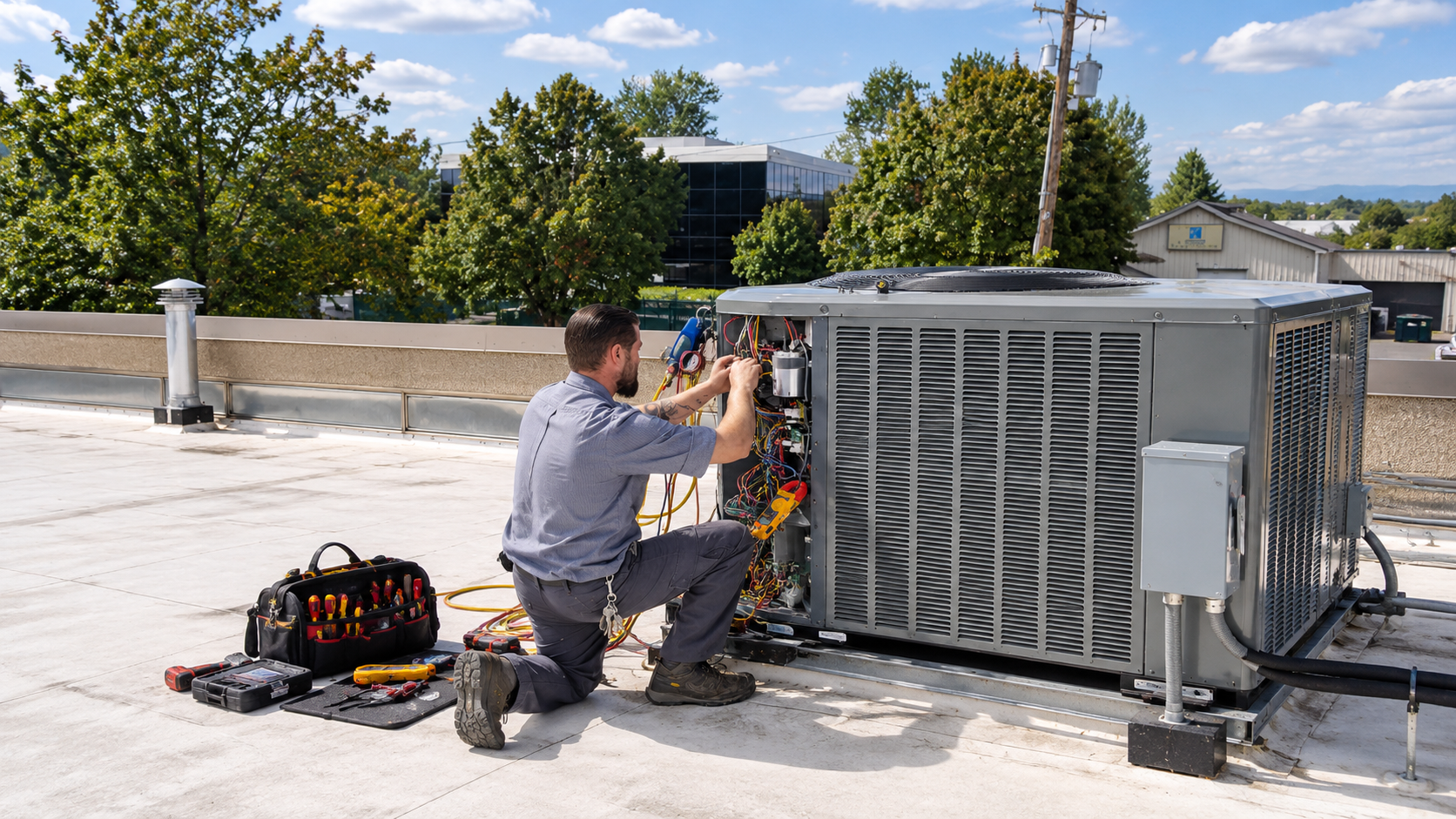
Sun Valley rooftop HVAC replacement works best when it is treated as part of the tenant build-out, not as a separate job squeezed in at the end. Sun Valley is a hard-working Los Angeles neighborhood in the east San Fernando Valley, near Hollywood Burbank Airport. Its commercial and industrial buildings along San Fernando Road, Glenoaks Boulevard, and Sunland Boulevard house warehouses, production shops, studios, auto businesses, and offices. Many of these buildings carry aging rooftop units that struggle in the Valley heat. When a new tenant moves in, replacing them often makes sense. This guide explains how to coordinate a rooftop unit swap with a build-out.
Here is how to keep a unit swap from slowing down your opening.
Why Replace Units During a Build-Out
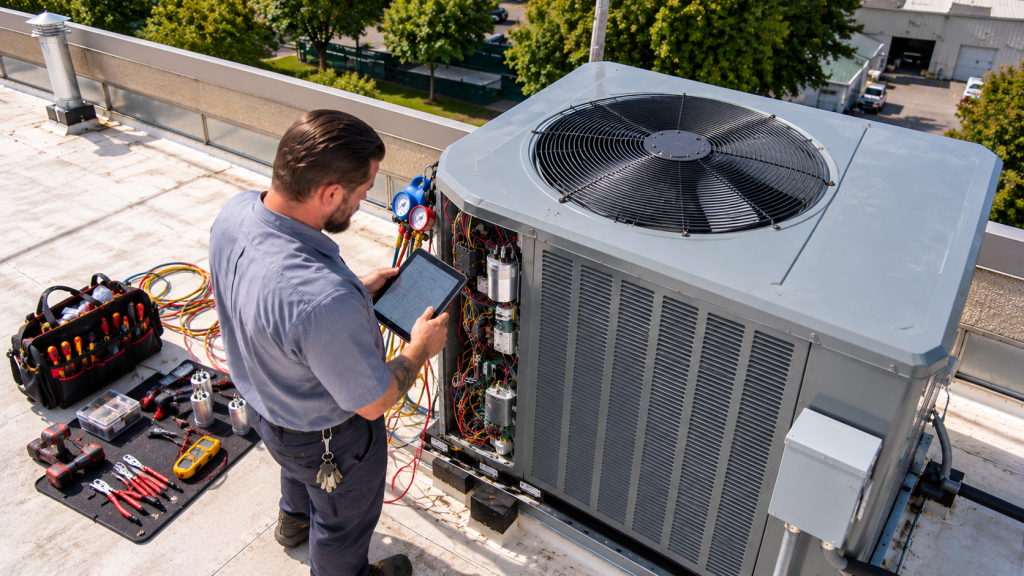
A build-out already brings crews, permits, and ceiling work. Adding a unit replacement at the same time shares those costs. In addition, the new unit can be sized for the new layout instead of the old one. Replacing later means a second permit, a second crane lift, and more disruption. So the build-out is often the right moment.
Start Sun Valley Rooftop HVAC Planning With an Assessment
First, a technician inspects each existing unit. They record age, tonnage, refrigerant, and condition. Next, they check the curbs, the roof around them, and the gas and electrical connections. In addition, the designer runs a load calculation for the new layout. Together, these facts show which units to replace and what size the new ones should be.
Sizing the New Units
Bigger is not always better. An oversized unit cycles on and off, wastes energy, and leaves the air clammy. Meanwhile, an undersized unit runs all day and still falls short. So the designer sizes each unit for the actual load, including people, lights, equipment, and sun. Warehouse offices, studios, and showrooms each have different needs.
Sun Valley Rooftop HVAC and Curb Adapters
New units rarely match old curbs exactly. So contractors use curb adapters to connect the new unit to the existing roof opening. Adapters save the cost of cutting a new hole and re-roofing. However, they add height, which may affect screening or neighbors’ views. In addition, the adapter must seal tightly to keep water out. Order adapters with the units.
Roof Structure and Weight
Newer units can weigh more or less than old ones. Older industrial roofs deserve a quick review by a structural engineer. In addition, heavier units may need extra support. Do this check before ordering, since it may change the equipment choice.
Planning the Crane Lift
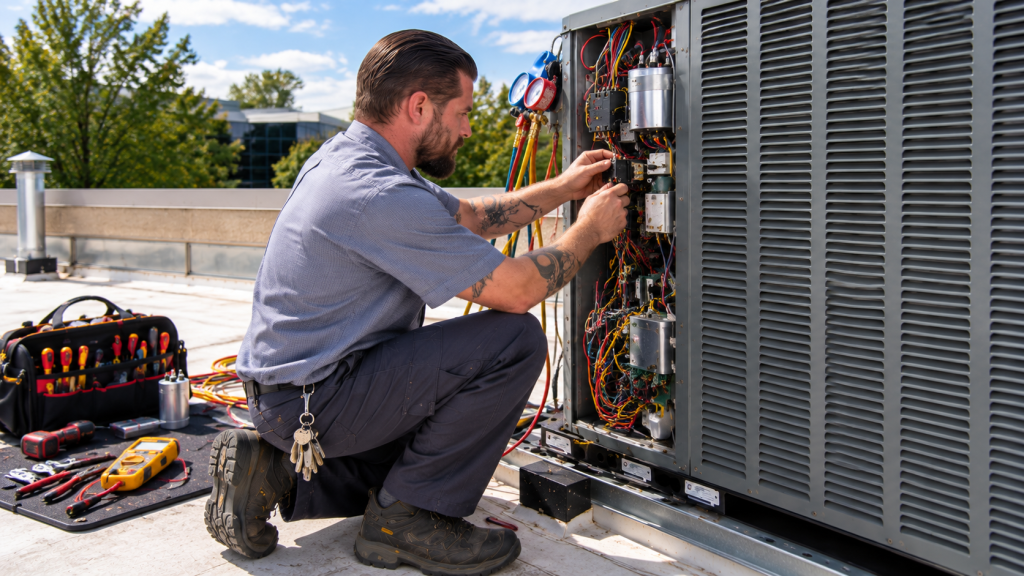
Most rooftop units arrive by crane. The crane needs a safe spot to set up, often on the street or in a parking lot. In Los Angeles, a street setup may need a permit and traffic control. In addition, nearby flight paths from the airport may limit crane height in some locations. So plan the lift date, route, and permits early. Many lifts happen on weekends to avoid traffic.
Sun Valley Rooftop HVAC and Gas and Power
New units need correct gas and electrical connections. The electrician checks the circuit, breaker size, and disconnect. Meanwhile, the gas line may need resizing for a larger heat section. In addition, some tenants switch to all-electric heat pump units. That choice removes the gas line but may need more electrical capacity. The LADWP serves electrical needs in Sun Valley.
Refrigerant Changes
New rooftop units use newer refrigerants with lower climate impact. Technicians need training and tools for these refrigerants. In addition, old units must have their refrigerant recovered properly before removal. Ask your contractor how they handle recovery and disposal. Proper handling protects the environment and keeps the job legal. Keep the recovery paperwork with your project records in case an inspector asks.
Sun Valley Rooftop HVAC and Ductwork Connections
The new unit connects to existing supply and return ducts at the curb. If the build-out changes the layout, ducts below may change too. So the HVAC contractor coordinates the unit swap with interior duct work. In addition, the connection must be sealed and insulated. Leaks at the curb waste a lot of cooling.
Sequencing With the Build-Out
Ideally, new units go in after major roof work but before interior ceilings close. That way, crews can connect ducts from below. In addition, the units can provide temporary conditioning during finish work, if protected with filters. However, construction dust can harm new units, so change filters before turnover.
Controls and Thermostats
New units often come with smart controls. Pair them with modern thermostats or a building automation system. In addition, energy code rules may require economizers and certain control features. Our page on controls and testing covers these items. Ideally, program schedules before the tenant moves in.
Permits and Inspections
Rooftop unit replacement in Sun Valley requires a mechanical permit from LADBS. In addition, the crane may need a separate street-use permit. Plans should show unit sizes, weights, curb details, and energy forms. Inspectors visit after installation. Our rooftop unit replacement page explains the full process.
Sun Valley Rooftop HVAC Costs
Costs depend on unit size, the number of units, curb adapters, crane time, and gas or electrical changes. In addition, roof repairs around old curbs add expense. Replacing several units in one lift saves crane costs. Our HVAC cost guide gives typical ranges.
Timeline
Equipment lead times can run several weeks or longer. So order units as soon as sizes are final. Permits move in parallel. The swap itself often takes one or two days per unit. Then startup, balancing, and inspection follow.
Sun Valley Rooftop HVAC for Dusty Industrial Sites
Sun Valley has recycling yards, gravel operations, and busy truck routes. Dust clogs coils and filters quickly. So choose units with good filter racks and plan for frequent filter changes. In addition, coil coatings can help in harsh conditions. Regular maintenance keeps new units running well.
Sun Valley Rooftop HVAC for Production Spaces
Sun Valley has many studios, stage shops, and post-production suites. These tenants run lights, computers, and editing gear that throw off steady heat. In addition, sound stages need very quiet air. So Sun Valley rooftop HVAC for these users may call for low-noise units, lined ducts, and careful unit placement away from recording rooms. Some studios also want backup cooling for equipment rooms. Discuss these needs before you choose equipment.
Handling the Old Units
Removed units do not simply go in a dumpster. First, a certified technician recovers the refrigerant. Next, crews disconnect power and gas and cap the lines. Then the crane lifts the old unit down, often during the same visit that sets the new one. Finally, metal recyclers take the old equipment. Ask your contractor to include disposal in the bid.
Tips for Tenants
- Assess existing units early
- Size new units for the new layout
- Order curb adapters with the equipment
- Plan crane permits and lift days
- Protect new units from construction dust
Sun Valley Rooftop HVAC Checklist
- Unit assessment and load calculation
- Structural check
- Equipment and curb adapter order
- Gas, power, and controls
- Permits and crane lift
- Startup, balancing, and inspection
Fresh Equipment for a Fresh Start
Coordinating Sun Valley rooftop HVAC replacement with your build-out saves money and gives your new space reliable cooling for years. With good planning, the swap goes smoothly. Learn about our build-out HVAC services, or plan your unit replacement.