
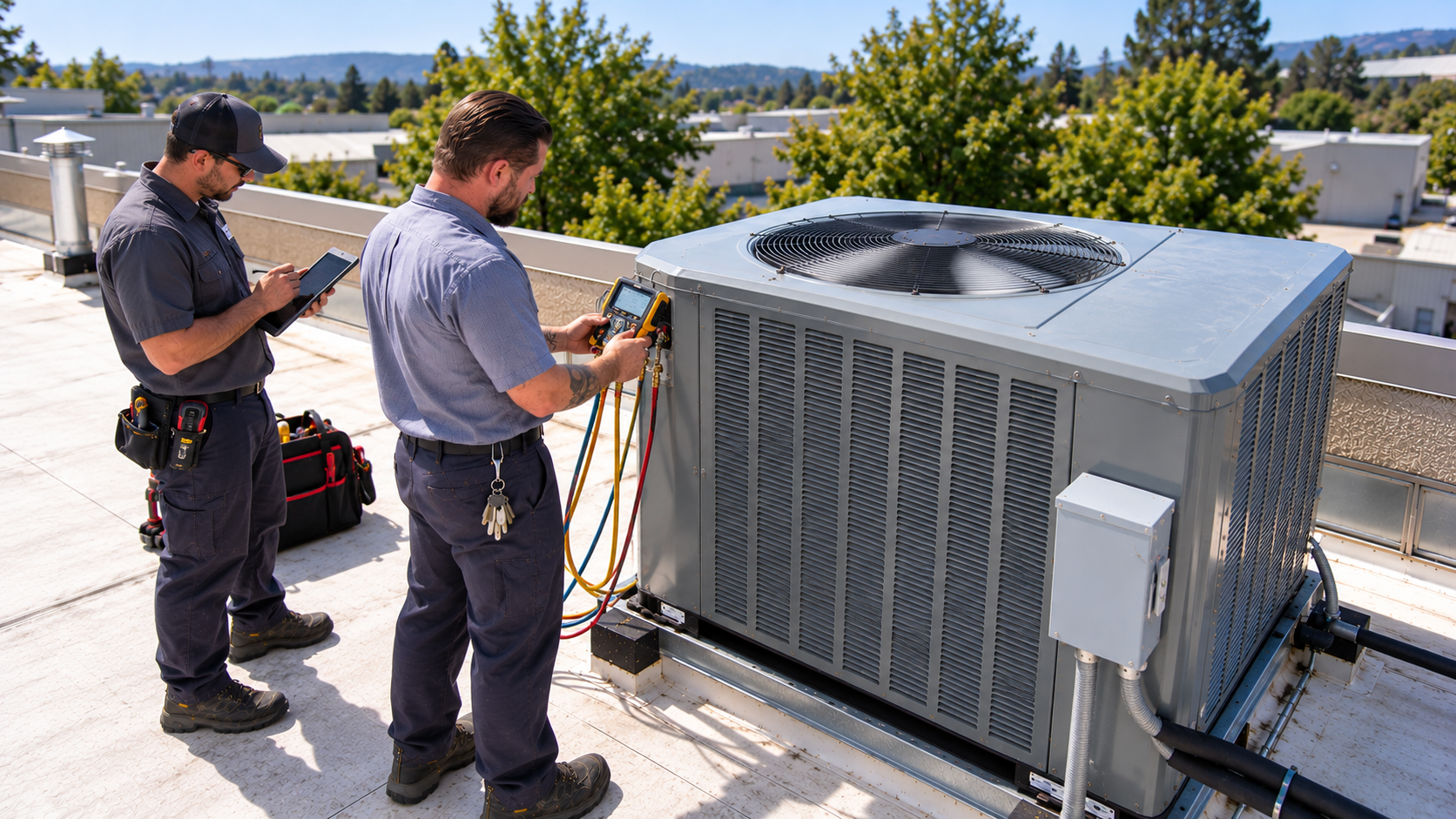
Tujunga restaurant HVAC planning has to handle hot summer kitchens, chilly foothill nights, and the occasional smoky sky from nearby wildfires. Sunland-Tujunga sits in the far northeast corner of Los Angeles, tucked between the San Gabriel Mountains and the Verdugo Hills. Foothill Boulevard runs through its heart, lined with taquerias, diners, pizza shops, Armenian bakeries, and family restaurants. Many occupy older storefronts that were never designed for a commercial kitchen. Each time a new concept opens here, the kitchen hood, exhaust fan, and makeup air system must be planned from scratch. This guide explains how.
Restaurant owners, chefs, and builders will find the key decisions laid out below.
How a Kitchen Ventilation System Works
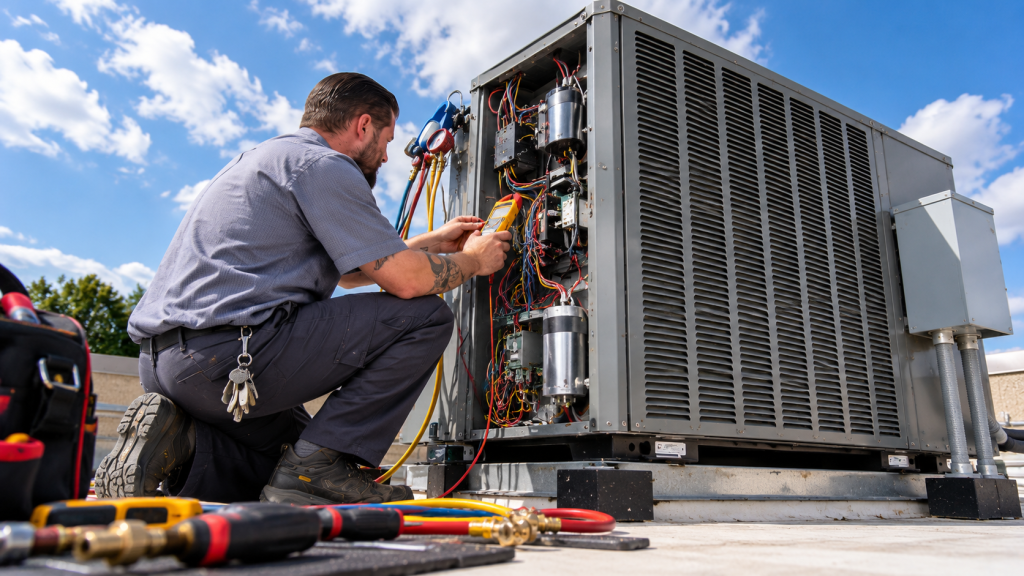
Cooking releases heat, smoke, grease vapor, and steam. A hood above the cook line captures them. Then an exhaust fan on the roof pulls the dirty air through a sealed duct and sends it outside. Meanwhile, a makeup air unit brings fresh outdoor air back into the building. Without that replacement air, the hood cannot pull properly. So these three parts must be sized as one system.
Start Tujunga Restaurant HVAC Planning With the Cook Line
First, list every appliance on the cook line. Charbroilers, woks, and fryers throw off thick smoke. By contrast, combi ovens and steamers give off mostly heat and steam. Next, note each appliance’s size and position. The hood must cover the whole line with proper overhang. In addition, high-heat items like charbroilers need more exhaust per foot of hood.
Choosing the Right Hood
Grease-producing appliances need a grease hood with baffle filters and a built-in fire suppression system. Dishwashers and some ovens may only need a condensate or heat hood. Wall-mounted canopy hoods are most common. However, island hoods suit open kitchens. In addition, short-cycle or proximity hoods can reduce exhaust in tight kitchens. Pick the style that fits your layout.
Tujunga Restaurant HVAC and Exhaust Fans
The exhaust fan sits on the roof and pulls air through the hood. Its size depends on hood length and cooking type. Upblast fans throw grease-laden air away from the roof. In addition, the fan needs a hinged base for cleaning and a grease containment box. Place it well away from fresh air intakes and neighboring windows.
Makeup Air in Foothill Weather
Foothill weather swings widely. Summer afternoons can climb past one hundred degrees, while winter nights can dip near freezing. So makeup air often needs both heating and cooling. Untempered air makes cooks miserable and stresses the dining room system. Many restaurants deliver makeup air through perforated panels near the hood to keep drafts off guests.
Tujunga Restaurant HVAC and Wildfire Smoke
The hills around Sunland-Tujunga have seen major wildfires. During fire season, smoke can drift into the valley for days. Makeup air units pull that smoky air straight into the kitchen. So better filters on the makeup air unit help. In addition, controls that reduce outdoor air when the kitchen is idle limit smoke intake. Check AirNow for local air quality during fire season.
Routing the Exhaust Duct
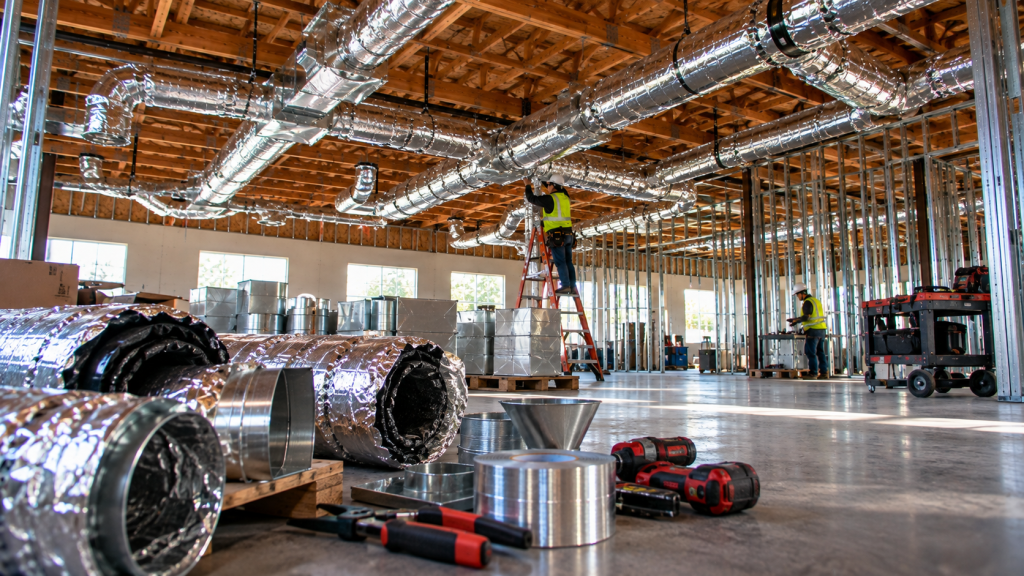
Kitchen exhaust duct must be welded steel, sealed against leaks. It also needs cleanout access and, in most buildings, a fire-rated enclosure. In older one-story Foothill Boulevard buildings, a straight vertical run is often possible. However, two-story buildings may need a shaft through the upper floor. Plan the route before framing starts.
Fire Protection
Grease hoods include automatic fire suppression. When heat triggers it, the system sprays agent over the appliances and shuts off gas. In addition, the makeup air unit should stop while the exhaust fan keeps running to pull smoke out. The Los Angeles Fire Department inspects these systems. The NFPA sets the national standard for commercial cooking safety.
Tujunga Restaurant HVAC and Air Quality Rules
Southern California’s air district regulates some cooking emissions. For example, certain charbroilers need catalytic controls. So check the rules before buying equipment. The South Coast AQMD lists current requirements. In addition, odor control units may help if homes sit close behind the restaurant.
Cooling the Dining Room
The dining room needs its own rooftop unit. Heat from the kitchen, sun through front windows, and crowds all add load. In addition, Valley-style summer heat reaches the foothills too. A well-sized unit and good diffuser layout keep guests comfortable. Keeping the dining room slightly positive helps stop kitchen odors from drifting out.
Approvals in Los Angeles
Restaurant HVAC work needs several approvals. LADBS reviews mechanical plans. County environmental health reviews the kitchen. The fire department reviews hood suppression. Submit plans early and keep them consistent so reviewers do not send them back.
Tujunga Restaurant HVAC Costs
Price drivers include the length of the hood, the size of the fan, whether makeup air is heated and cooled, the duct shaft, and roof work. Charbroilers and woks raise exhaust needs. In addition, older buildings may need structural support for rooftop equipment. Our restaurant HVAC page explains common scopes.
Timeline
Hood fabrication and makeup air units can take several weeks to arrive. Plan review runs in parallel. Installation follows rough framing. Then testing, suppression certification, and inspections finish the job. Build in time for the health department’s final visit.
Daily Care
Clean baffle filters often, weekly or more in busy kitchens. Schedule professional hood and duct cleaning on a regular cycle. In addition, check fan belts and makeup air filters each month. Good care prevents fires and keeps the system pulling smoke properly. Keep a simple log of each cleaning and inspection, because inspectors and insurers often ask to see it. In addition, the log shows when filters clog faster than usual, which can signal a menu change or a fan problem.
Tujunga Restaurant HVAC for Bakeries and Cafés
Not every Foothill Boulevard tenant runs a full cook line. Bakeries rely on deck ovens, proofers, and mixers. Meanwhile, cafés may cook little beyond panini presses and espresso. Even so, ovens add a lot of heat, so a heat hood or extra cooling may be needed. In addition, flour dust calls for good filters on the dining room unit. Tujunga restaurant HVAC for these lighter kitchens still needs a careful load review. Matching the system to the menu keeps the budget sensible.
Neighbors on the Hillside
Homes climb the slopes right behind many Foothill Boulevard storefronts. As a result, rooftop fans can sit level with bedroom windows. So choose quieter fans and point discharge away from houses. Also, run exhaust fans on schedules that match kitchen hours. Good choices here keep complaints away and help the restaurant become a welcome neighbor.
Tips for Restaurant Owners
- Finalize the cook line before sizing the hood
- Temper makeup air for hot days and cold nights
- Add better filters for wildfire season
- Check air district rules before buying charbroilers
- Plan the duct route before framing
Tujunga Restaurant HVAC Checklist
- Appliance list and hood type
- Exhaust fan and duct route
- Makeup air with heating and cooling
- Fire suppression and interlocks
- City, county, fire, and air district approvals
- Testing and maintenance plan
A Kitchen Ready for Every Season
Thoughtful Tujunga restaurant HVAC planning keeps your cooks comfortable, your guests happy, and your kitchen safe through every season. With the right design, smoke and heat leave the building quickly. Visit our Los Angeles HVAC page, or map out your hood and fans with us.