

Scottsdale rooftop unit replacement is a big job on its own. It gets harder when it lands in the middle of a remodel. South Scottsdale, from Old Town down through the McDowell Road and Scottsdale Road corridors, is full of older retail centers, office buildings, and restaurants getting new life through remodels. Many still run rooftop units that are 15 or 20 years old. If the renovation is the right time to replace them, the work must be planned around everything else happening inside and on top of the building. This guide explains how.
Building owners, tenants, and general contractors will find practical steps below.
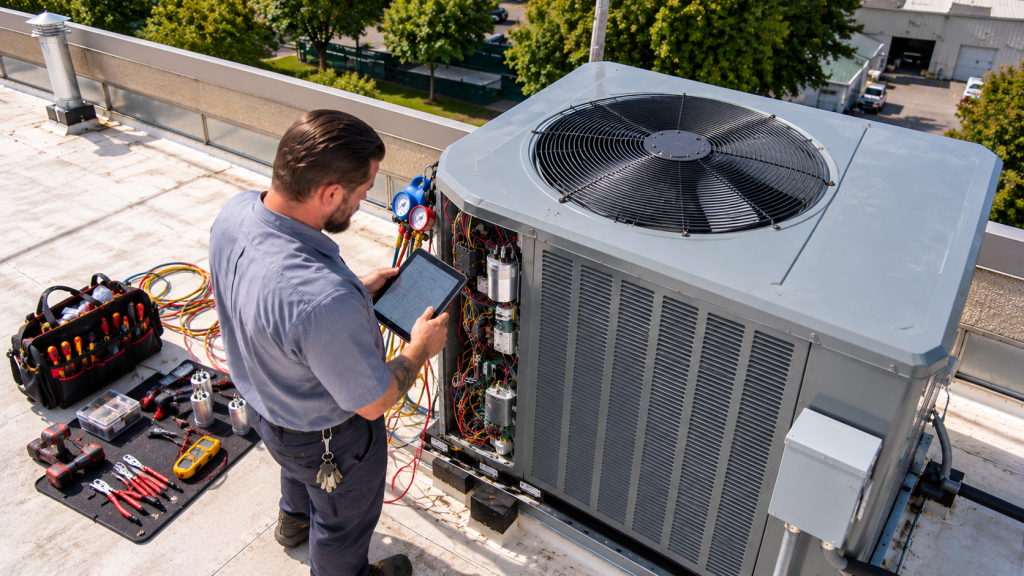
Why Replace During a Renovation?
A remodel is often the best time to swap old roof units. The ceiling may already be open, ducts may be changing, and the electrical system may be getting upgrades. In addition, the business is often closed or partly closed, so a short HVAC shutdown causes less disruption. Replacing an old unit now also avoids a failure right after the new space opens, which could mean emergency costs and unhappy customers.
Signs a Rooftop Unit Needs Replacing
Not every old unit must go. However, replacement usually makes sense when you see:
- Age beyond about 15 years in the desert climate
- Frequent repairs and rising service bills
- Refrigerant leaks or an outdated refrigerant type
- Rusted cabinets, coils, or drain pans
- Poor cooling on hot summer afternoons
A technician’s inspection helps you decide with real data.
Scottsdale Rooftop Unit Replacement: Sizing the New Unit
Do not just match the old unit’s size. The renovation may change how the space is used, how many people occupy it, and how much heat equipment and lighting add. So your designer should run a new load calculation. In some cases, a smaller, more efficient unit works. In others, a restaurant or gym may need more capacity than before. Sizing right avoids short cycling, humidity problems, and wasted energy.
Curbs in a Scottsdale Rooftop Unit Replacement
Rooftop units sit on curbs, which are frames attached to the roof. New units often have a different footprint than old ones. So installers may use a curb adapter to fit the new unit on the old curb. In other cases, a new curb is needed, which means roof work. Checking the curb early helps the roofer and HVAC crew plan together.
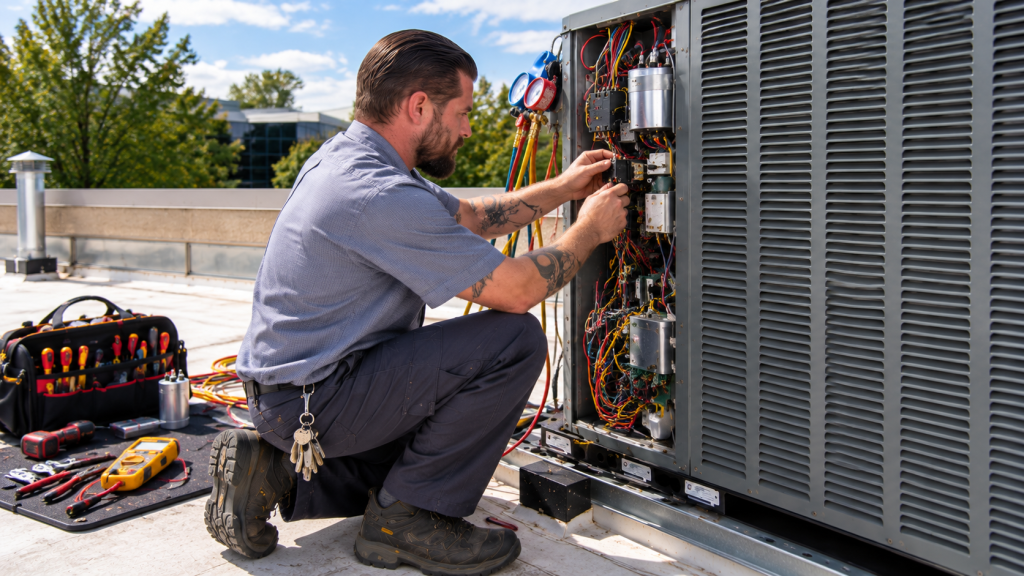
Scottsdale Rooftop Unit Replacement and Crane Lifts
Most roof units go up and come down by crane. The lift needs a clear area for the crane, permits for street or lane use if needed, and a plan to protect people below. Lifts often happen early in the morning or on weekends to reduce disruption. In addition, the crane schedule should line up with the renovation, so the roof and ceiling are ready when the unit arrives.
Roof Repairs During Scottsdale Rooftop Unit Replacement
Removing an old unit often reveals roof damage underneath. So plan for the roofer to inspect and repair the area before the new unit goes in. If the renovation includes a new roof, coordinate the timing so the unit sits on fresh, sealed roofing. Poor coordination here is a common cause of leaks after the job.
Wiring and Gas for a Scottsdale Rooftop Unit Replacement
A new unit may need different electrical service than the old one. For example, a larger unit may need a bigger breaker or new wiring. Gas-fired units also need gas lines sized for the new burner. So the HVAC contractor should work with the electrician and plumber before ordering equipment. This avoids last-minute surprises on lift day.
Scottsdale Rooftop Unit Replacement Timing and Summer Heat
Scottsdale summers are brutal, and HVAC demand peaks from May through September. Wait times for new units grow, and crews get busy. In addition, a hot roof is hard on workers. For those reasons, the mild months are the sweet spot for a swap. If summer work cannot be avoided, plan temporary cooling and order the unit early.
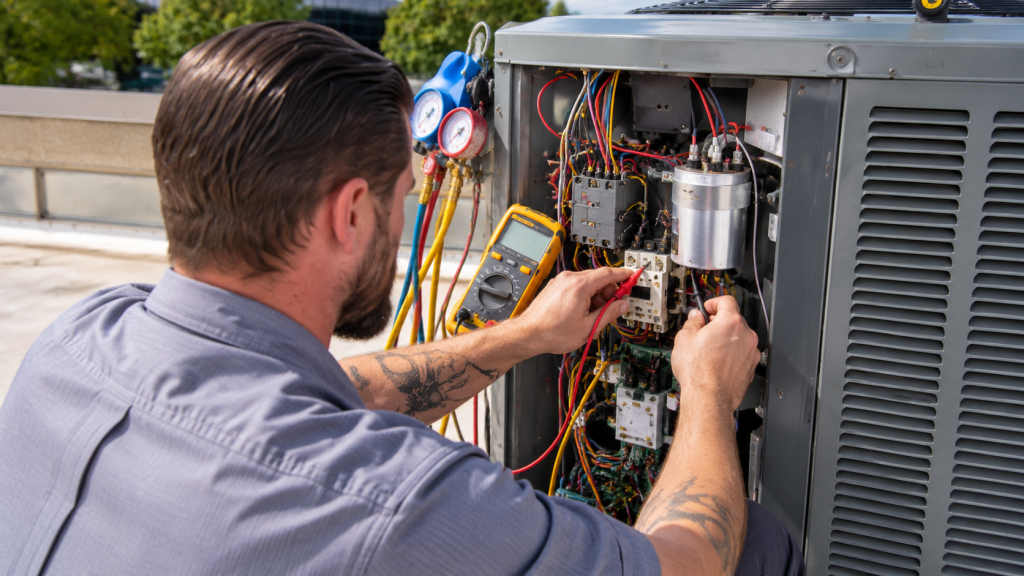
Keeping the Business Cool During the Swap
Some businesses stay open during the remodel. If the old unit comes off on a hot day, the space can heat up fast. So plan the swap for early morning, and set up temporary cooling if needed. Portable units or a rental rooftop unit can bridge the gap. In addition, tell staff and customers ahead of time. A short, planned outage is far better than a surprise one.
Old Units and Refrigerant
Many aging units still run on a refrigerant that federal rules have cut back. Each year, that gas gets harder to buy and more costly to add. When the old unit comes off, a certified tech must recover the refrigerant before disposal. New units use newer refrigerants that are better for the environment. This change is another good reason to replace an aging unit during a remodel.
Smaller Units Versus One Big Unit
Sometimes one large unit is replaced with two smaller ones. Two units give backup if one fails, and they can serve different zones. On the other hand, one unit may cost less to install. Your designer will weigh these choices based on the space, the roof, and the budget.
Coordinating With the Renovation Schedule
A unit swap touches many other trades. Ductwork connections inside the building must line up with the new unit. Ceiling work must wait for ducts. Roofing must be complete before or right after the lift. So include the HVAC replacement in the master schedule, not as a separate project. Regular coordination meetings help everyone stay on track.
Efficiency and Utility Savings
New rooftop units use much less energy than older ones. Features like economizers, variable-speed fans, and smart controls cut costs even more. The U.S. Department of Energy offers background on commercial equipment efficiency. In addition, utility rebates may lower the upfront cost.
Permits and Inspections
Rooftop unit replacement in Scottsdale usually needs a mechanical permit and inspection. Structural review may be needed if the new unit is heavier. Your contractor should handle permits and coordinate inspections with the rest of the renovation. The City of Scottsdale lists mechanical permit details.
Budgeting the Replacement
Cost depends on unit size, how efficient it is, the crane, curb work, and wiring. Bundling the replacement with the renovation can save money, since crews and permits overlap. Our rooftop unit replacement page explains common options.
In short, a well-timed swap pays off for years in lower bills and fewer calls.
Replacement Planning Checklist
- Inspect existing units and service history
- Run a new load calculation
- Check curbs, roof condition, and structure
- Coordinate electrical and gas changes
- Schedule the crane lift with the renovation
- Plan around summer demand and heat
- Get permits and inspections
Also, keep the old unit data sheet. It helps the next crew see what was there and why it changed. Ask for photos of the roof before and after the swap, too.
Common Mistakes
- Matching the old unit size without new calculations
- Ignoring roof damage under the old unit
- Ordering equipment too late for summer
- Forgetting electrical upgrades for larger units
- Scheduling the lift before the roof is ready
Replace With Confidence
Careful Scottsdale rooftop unit replacement planning keeps your renovation on schedule and your space cool for years. For help with your project, visit our Scottsdale HVAC upgrades guide or contact our team.