Otay Mesa air balancing is the final check that proves a new HVAC system actually delivers what the drawings promised. Otay Mesa sits in the southern tip of San Diego, right along the border, with large industrial parks, logistics hubs, cross-border trade offices, and growing retail near Brown Field and the port of entry. Build-outs here range from warehouse offices to call centers, clinics, and showrooms. After the ducts, units, and controls go in, someone must measure the air in every room. This guide explains how testing and balancing works and why it matters after a build-out.
Tenants, general contractors, and facility managers will find the key steps below.
What Happens During TAB
TAB is hands-on field work, not paperwork. A trained technician reads the airflow at every supply outlet and return opening. Next, they compare those readings to the design values. Then they tweak dampers and blower settings until every room lands near its target. In addition, they confirm outdoor air rates and check that equipment runs as designed. The result is a written report.
Why Otay Mesa Air Balancing Matters
Even a well-designed system rarely works perfectly on day one. Ducts may run longer than planned, dampers may sit half closed, and fans may ship with factory settings. As a result, some rooms get too much air while others get too little. In addition, Otay Mesa’s warm, dry inland days expose any weak spots quickly. Balancing fixes these problems before employees start complaining.
When TAB Happens in a Build-Out
Balancing comes near the end of construction. Ceilings must be closed, diffusers installed, and equipment running. However, the work should finish before furniture arrives and staff move in. So the general contractor schedules TAB after the controls contractor finishes startup. In addition, some projects need TAB before final inspection, especially when energy code acceptance tests apply.
Preparing for Otay Mesa Air Balancing
Preparation saves time. First, the mechanical contractor confirms all ductwork is complete and sealed. Next, filters are clean, belts are tight, and dampers are open. In addition, the controls must respond to commands. The balancing technician also needs the latest drawings and airflow schedules. A ready site lets the technician work quickly.
Measuring Airflow Room by Room
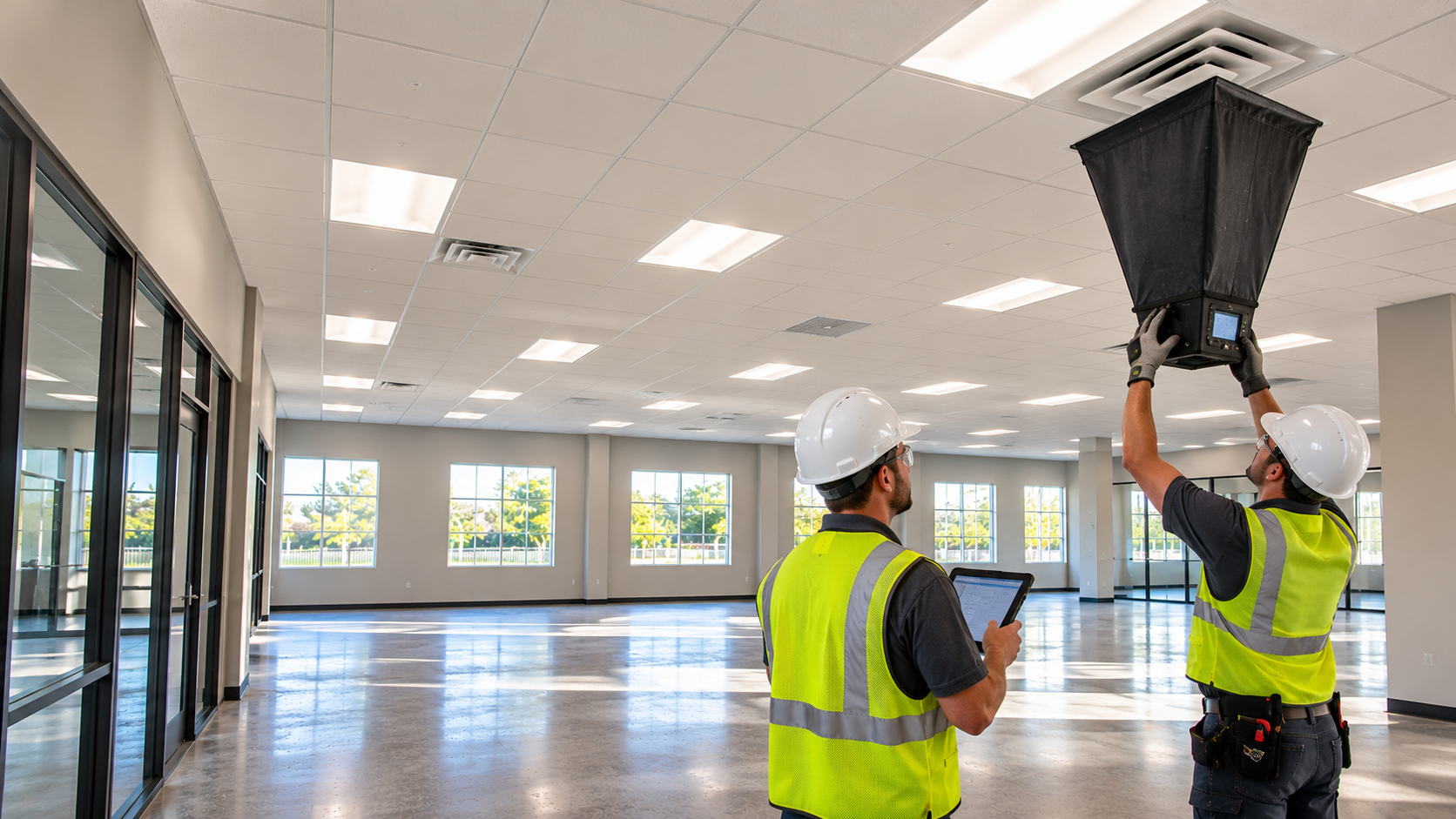
The technician uses a flow hood over each diffuser to read cubic feet per minute. They record each reading on a form. Then they adjust the branch dampers to bring each room close to its design value. Usually, readings within ten percent of the target pass. Rooms far off may need duct changes.

Checking Outdoor Air
Fresh air keeps people healthy and alert. So the technician measures outdoor air at each rooftop unit or air handler. In addition, they confirm that economizers open and close properly. Otay Mesa can see dusty days and Santa Ana winds, so outdoor air dampers must seal tightly when closed. Good filters help too.
Otay Mesa Air Balancing for Warehouse Offices
Many Otay Mesa tenants run a warehouse with an air-conditioned office attached. The office may share a wall with a hot, open warehouse. So the office system must hold steady pressure to keep warm, dusty air out. In addition, doors between the two spaces should close tightly. The balancing report shows whether the office stays slightly positive.
Building Pressure
If exhaust outpaces supply, the suite sucks in outside air through every crack. Doors drag, and dust from nearby truck yards finds its way inside. On the other hand, too much positive pressure makes doors whistle. So the technician balances supply, return, and exhaust. A slight positive pressure usually works best.
Otay Mesa Air Balancing for Clinics and Call Centers
Medical clinics and call centers fill rooms with people and equipment. Clinics may need certain rooms at negative pressure for infection control. Meanwhile, call centers pack many workers into open areas that need lots of cooling. In each case, the balancing report confirms the system meets these needs. Share special room requirements with the balancer early.
Water and Hydronic Balancing
Some larger buildings use chilled water or hot water coils. These systems need water balancing too. The technician measures flow through each coil and adjusts valves. In addition, pump speeds may need tuning. Water balancing is less common in small tenant spaces, but it matters in larger campuses.
Who Should Do the Work
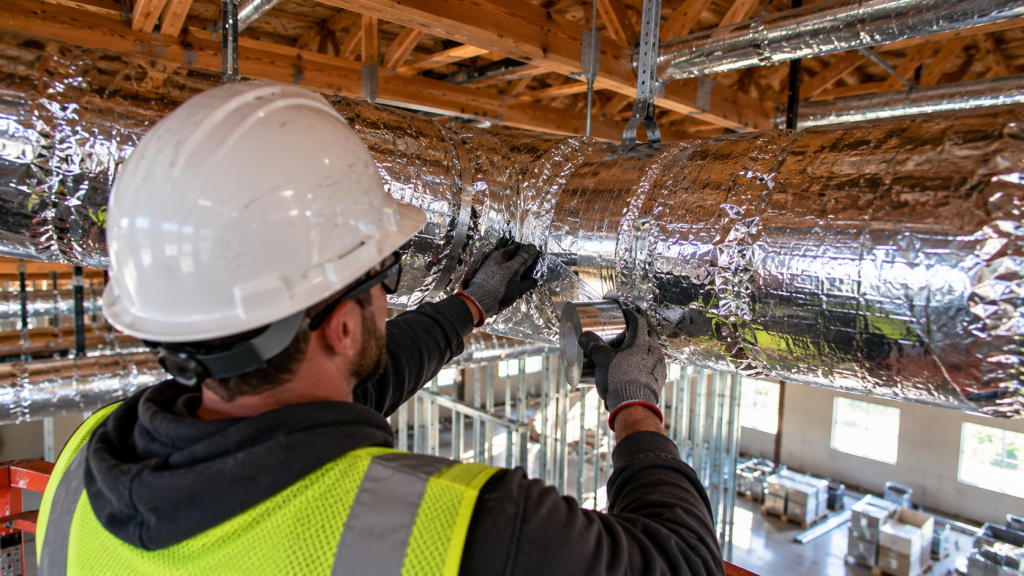
Independent balancing firms often do the best work, since they do not install the equipment they test. Look for technicians certified by NEBB or the Associated Air Balance Council. These groups train and certify balancers. In addition, ask for sample reports from past jobs.
Reading the TAB Report
The report lists every diffuser, its design airflow, and the measured airflow. It also shows fan speeds, outdoor air rates, and equipment data. In addition, it notes any problems the technician could not fix. Keep the report with your building records. It helps diagnose comfort complaints for years.
Otay Mesa Air Balancing and Energy Code
California’s energy code requires acceptance tests for certain controls and equipment. These tests check economizers, demand ventilation, and other features. Often the balancing firm handles them too. So include acceptance testing in the balancing scope. The city’s Development Services Department may ask for the forms at final inspection.
Common Problems Found During TAB
Balancers often find crushed flex duct, missing dampers, and diffusers connected to the wrong branch. They may also find units running at the wrong fan speed. In addition, thermostats sometimes control the wrong zone. Fixing these issues early avoids months of complaints.
Costs and Timeline
TAB costs depend on the number of diffusers, units, and special rooms. A small office may take one day. In contrast, a large clinic or call center may take several. Our build-out cost guide shows how balancing fits the total HVAC budget. Schedule it early so the balancer has time to return after fixes.
Otay Mesa Air Balancing for Logistics Offices
Customs brokers, freight forwarders, and logistics firms near the port of entry often run long shifts. Their offices pack desks, monitors, and printers into tight rooms. As a result, heat loads run higher than in a typical office. In addition, dock doors on the warehouse side open and close all day. So Otay Mesa air balancing for these tenants should check the office during a busy shift, not on a quiet weekend. Some firms also schedule a second visit after the first hot month. That follow-up catches rooms that drifted once real operations began.
When a Room Still Fails
Sometimes a room cannot reach its target even after damper changes. In that case, the balancer notes it in the report and explains the likely cause. For example, the branch duct may be too small, or a diffuser may sit too far from the trunk. Then the mechanical contractor returns to correct the duct. Finally, the balancer retests that room and updates the report.
Tips for Tenants
- Include TAB in the HVAC contract
- Hire a certified, independent balancer
- Finish ductwork and controls before testing
- Share special room needs early
- Keep the final report on file
Otay Mesa Air Balancing Checklist
- Confirm the system is complete and running
- Measure airflow at every diffuser
- Check outdoor air and economizers
- Set building pressure
- Run energy code acceptance tests
- Review and file the report
Prove Your System Works
Careful Otay Mesa air balancing turns a newly built HVAC system into one that keeps every room comfortable. It protects your investment and your team. Learn more about our testing and balancing services, or schedule a balancing visit.