North Hills commercial HVAC deserves a close look before you sign a lease, because San Fernando Valley summers punish weak cooling. North Hills, known as Sepulveda until 1991, sits in the central Valley along Sepulveda Boulevard, Roscoe Boulevard, and Plummer Street. Its commercial strips and small office buildings house clinics, markets, restaurants, auto businesses, schools, and service offices. Many of these buildings carry rooftop units that have served several tenants already. Valley afternoons often top one hundred degrees in July and August. So a tenant who skips the HVAC check can inherit a costly problem. This guide explains how to evaluate cooling before leasing a space.
Business owners, brokers, and tenant representatives can use these steps during due diligence.
Why Check Cooling Before Signing
Many leases make the tenant responsible for HVAC repairs and even replacement. If a rooftop unit fails in your first summer, the bill may land on you. In addition, a unit that runs but cannot keep up leaves customers and staff sweating. So knowing the real condition of the system helps you negotiate. It may also change which space you choose.
Start North Hills Commercial HVAC Due Diligence With the Lease
First, read the HVAC section of the lease. Who repairs the units? Who replaces them when they fail? Is there a maintenance contract requirement? Next, ask the landlord for service records and the age of each unit. In addition, ask whether any units were recently replaced. These answers set the stage for the physical inspection.
Inspecting the Rooftop Units
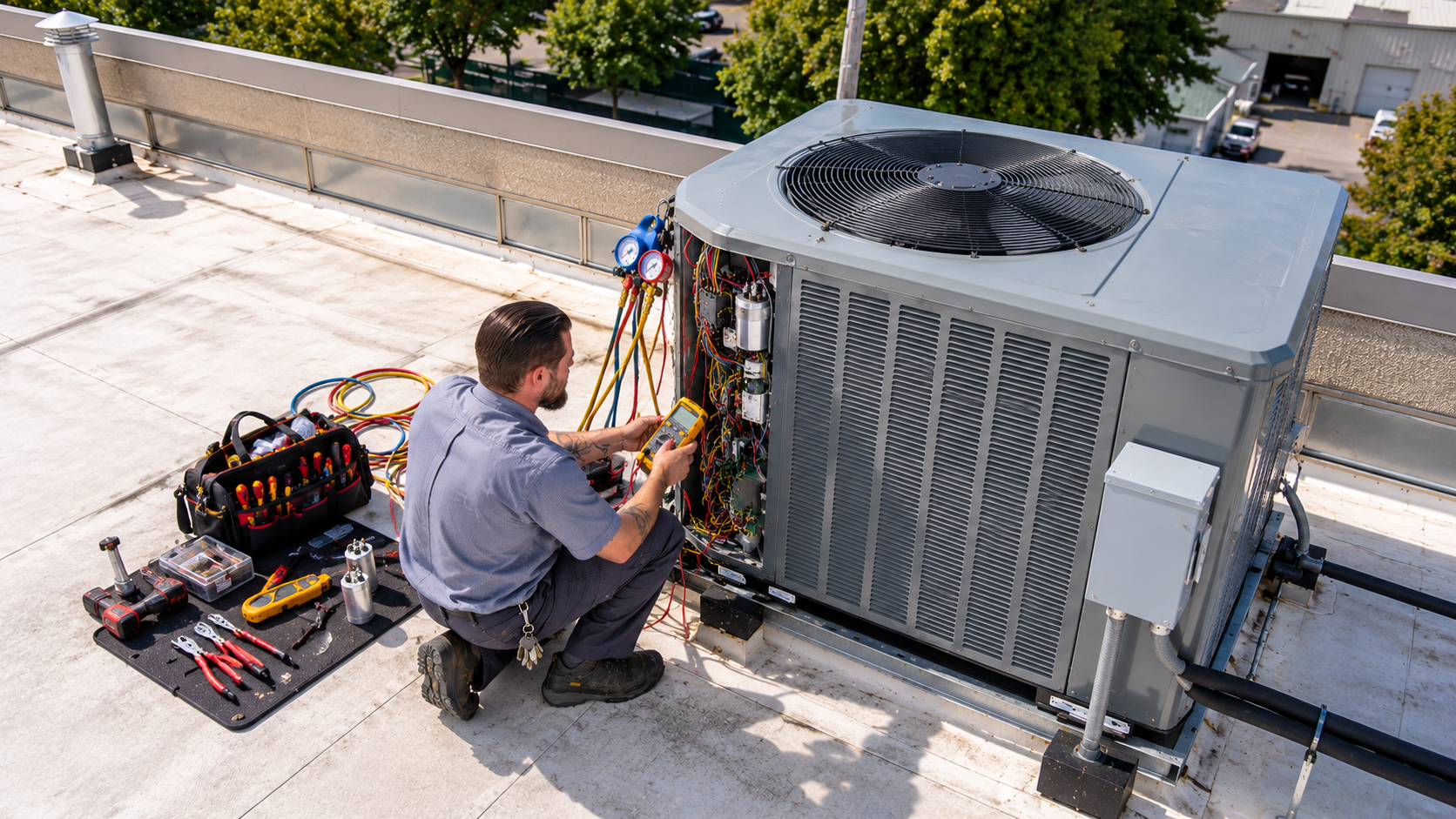
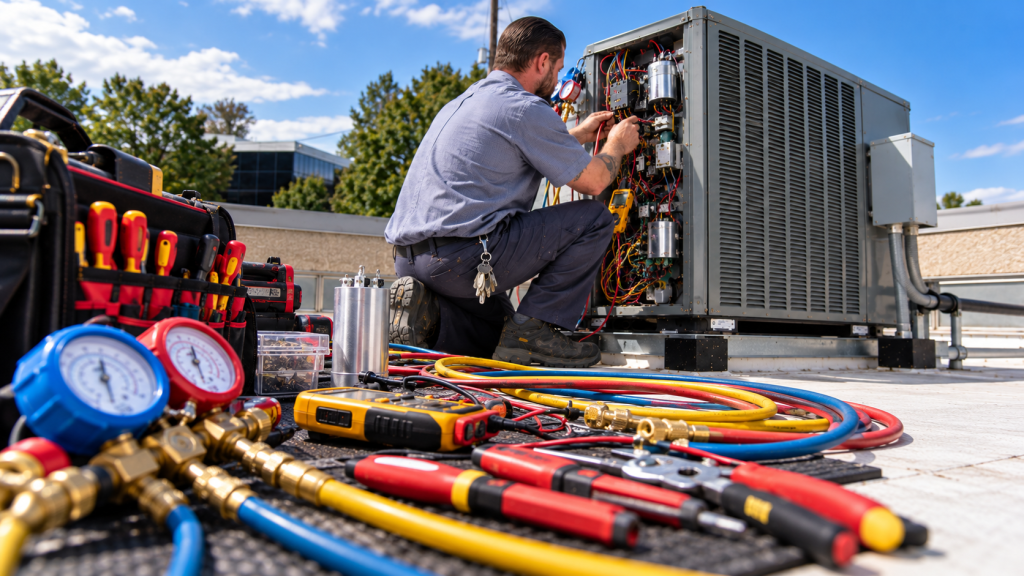
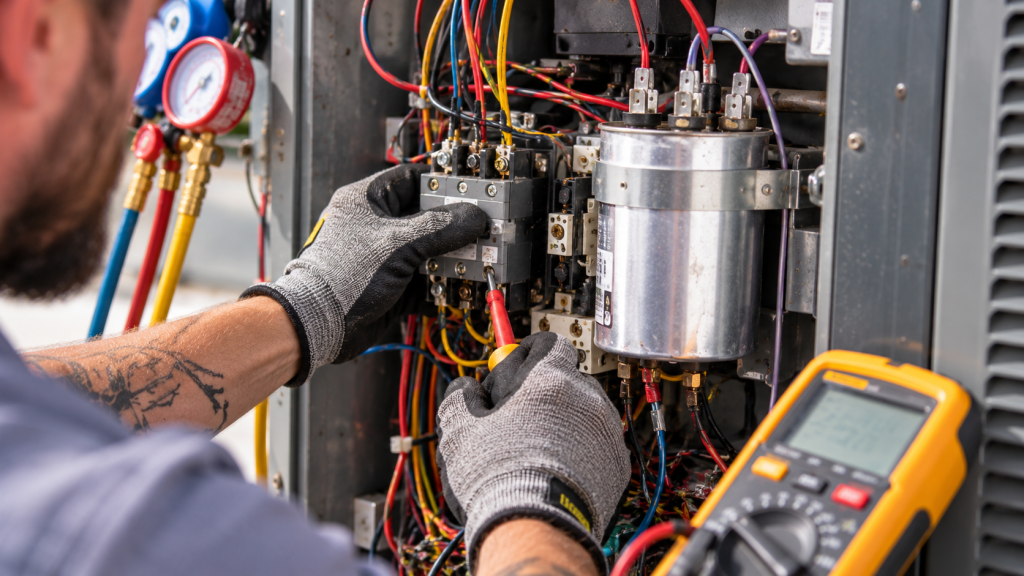
Then hire a licensed technician to inspect each unit. They read the nameplate for age and refrigerant, then test the compressor, inspect the coils, and check contactors and wiring. In addition, they look for rust, oil stains, and damaged cabinets. Older units using phased-out refrigerants cost more to repair. A written report with photos makes the findings clear.
North Hills Commercial HVAC and Cooling Capacity
A healthy unit can still be too small. The technician compares unit tonnage to the floor area and planned use. For example, a former storage space turned into a busy clinic needs much more cooling. Meanwhile, large west-facing windows add heat. So the designer may run a quick load estimate. If capacity falls short, plan for a larger unit or an added system.
Checking the Ductwork
Next, look above the ceiling. Ducts may be crushed, disconnected, or poorly insulated. In older buildings, ducts in hot attic spaces lose a lot of cooling before it reaches the room. In addition, the layout may not match your planned walls. So note duct condition and how much rework the new layout needs.
Thermostats and Controls
Old thermostats may run units poorly or not at all. Check whether each unit has its own thermostat and where it sits. In addition, look for programmable or smart controls. Upgrading controls is usually affordable. However, it should be part of your budget from the start.
North Hills Commercial HVAC and Electrical Service
If you need bigger units, the electrical service must support them. So check the panel size and available capacity. In addition, LADWP supplies electricity in North Hills, not only water. Service upgrades through the utility take time. Ask early if your plan needs more power.
Testing Performance on a Hot Day
If possible, visit the space on a hot afternoon. Run the system and feel the air at each diffuser. A technician can measure supply air temperature and compare it to the return. A small temperature drop suggests low refrigerant or a failing compressor. This simple test reveals more than any spreadsheet. If you cannot visit in summer, ask the technician to measure refrigerant pressures and motor amperage instead. Those readings still expose a tired compressor. In addition, ask the landlord for recent utility bills, since a sudden jump in summer power use often points to a struggling unit.
Ventilation and Air Quality
Cooling is only part of the picture. Each space also needs outdoor air for the people inside. Many older units have outdoor air dampers that are stuck closed. In addition, filters may be dirty or the wrong size. Check these items, since poor air quality affects health and comfort. The EPA indoor air quality pages offer useful background.
North Hills Commercial HVAC for Restaurants and Clinics
Restaurants and medical clinics are common along Sepulveda and Roscoe. These uses need far more than basic cooling. A restaurant needs a hood, exhaust fan, and makeup air unit. A clinic may need extra fresh air, special filtration, and tight zone control. So if you plan one of these uses, the evaluation must go deeper. Bring the kitchen or medical equipment list to the inspection.
Turning Findings Into Negotiation
The inspection report gives you leverage. If a unit has only a few summers left, ask the landlord to replace it before move-in. Or negotiate a tenant improvement allowance to cover the work. In addition, ask for a cap on your HVAC repair costs during the first years. Many landlords agree when they see a clear report.
Budgeting for Upgrades
If upgrades fall to you, build them into your budget. Replacement units, crane lifts, curb adapters, ductwork changes, and controls all add up. In addition, permits and testing add soft costs. Sample budgets appear on our HVAC pricing by square foot page.
Permits in Los Angeles
Replacing units or changing ducts in North Hills requires a permit from the city’s building department, LADBS. Plans must show equipment, ducts, and energy compliance forms. In addition, restaurants need county health review. Allow time for review in your opening schedule.
North Hills Commercial HVAC and Energy Costs
Old units waste energy. A new high-efficiency unit can cut cooling bills noticeably in the hot Valley climate. In addition, utility rebates may offset part of the cost. So compare the long-term energy savings with the upfront price. Over a five- or ten-year lease, efficiency often pays off.
Timeline
An HVAC inspection usually takes a day or two, with a report soon after. Negotiations follow. If replacement is needed, equipment orders and permits may take several weeks. So start due diligence early, well before your planned move-in date.
Questions to Ask the Landlord
Before you sign, ask a few direct questions. When was each unit last serviced, and by whom? Has any unit had a compressor replaced? Are there open warranty claims? In addition, ask whether the roof over the units has leaked. Finally, ask whether past tenants complained about comfort. Honest answers, paired with a technician’s report, give a full picture of North Hills commercial HVAC conditions in that building. If the landlord avoids these questions, treat that as a warning sign.
Tips for Prospective Tenants
- Read the lease HVAC clauses carefully
- Request unit ages and service records
- Hire a technician for a written inspection
- Test cooling on a hot afternoon
- Use findings to negotiate repairs or allowances
North Hills Commercial HVAC Checklist
- Lease responsibility review
- Rooftop unit inspection
- Capacity and load check
- Ductwork and controls review
- Electrical capacity check
- Budget and negotiation plan
Lease With Confidence
A careful North Hills commercial HVAC evaluation protects you from surprise repair bills and uncomfortable summers. With the facts in hand, you can negotiate a better lease and plan a smoother build-out. Visit our Los Angeles HVAC tenant improvement page, or book a pre-lease HVAC inspection.