Vista HVAC costs for a tenant build-out come down to three big buckets: equipment, ductwork, and controls. Vista is an inland North County city with one of the largest business parks in Southern California, plus a lively downtown full of breweries, restaurants, and shops. Tenants here range from manufacturers and labs in the Vista Business Park to offices on Melrose Drive and retail along Sycamore Avenue. Each build-out has a different HVAC budget. This guide compares the three main cost areas so you can plan with confidence.
Tenants, brokers, and project managers can use these comparisons to set realistic budgets and ask better questions of bidders.
How an HVAC Budget Breaks Down
Most tenant HVAC budgets split into equipment, ductwork, controls, and soft costs like design, permits, and testing. On many jobs, equipment takes the largest share. Ductwork often comes second, especially when walls move. Controls usually cost less but can grow fast with complex zoning. However, every space is different. So treat these shares as a starting point, not a rule.
Vista HVAC Costs for Equipment
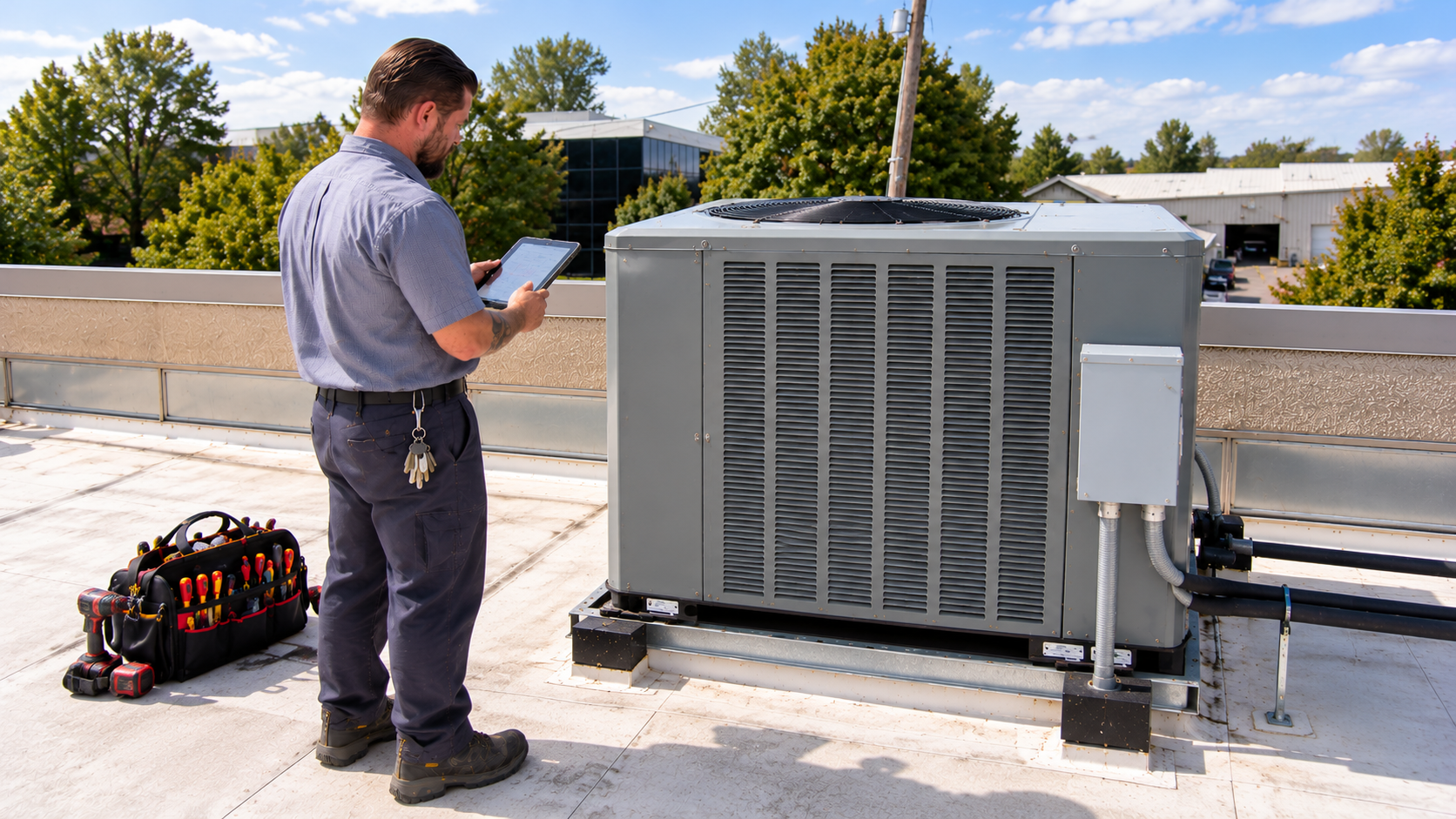
Equipment includes rooftop units, split systems, heat pumps, exhaust fans, and makeup air units. If the existing units are young and the right size, you may reuse them with minor service. By contrast, old or undersized units need replacement. In addition, a crane lift, new curbs, and electrical upgrades add to the price. Equipment lead times also affect cost, since rush orders may carry premiums.
Reusing vs. Replacing Units
First, have a technician check each unit’s age, refrigerant, capacity, and condition. Units older than fifteen years often cost more to keep than to replace. Meanwhile, newer units may only need cleaning and new controls. In addition, the energy code may require upgrades when you replace equipment. Weigh repair costs against the price of new, efficient units.
Vista HVAC Costs for Ductwork
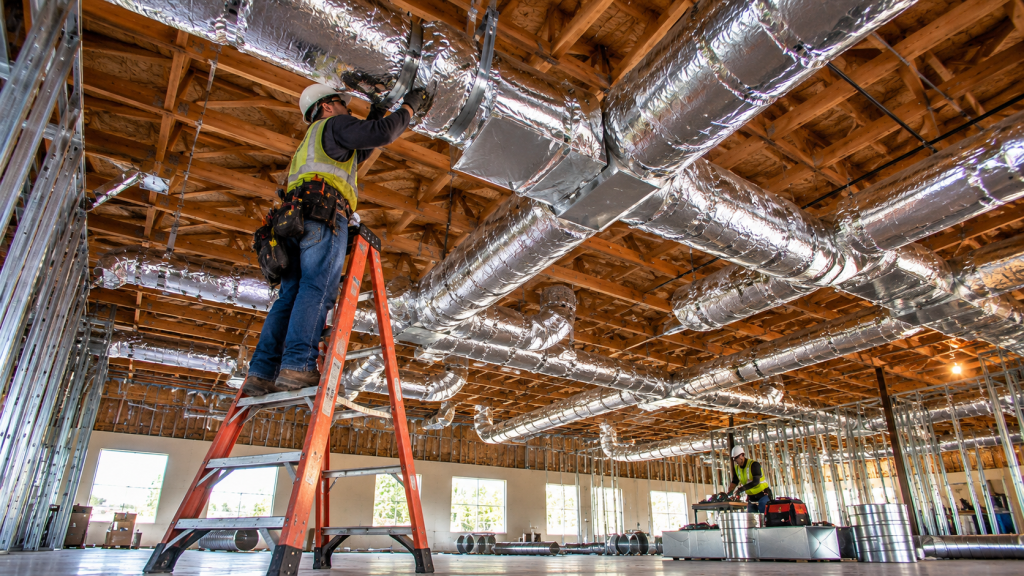
Ductwork costs depend on how much the floor plan changes. An open office that keeps the old layout may need only a few new diffusers. On the other hand, a suite carved into many private offices needs new branches, dampers, and returns. In addition, ducts left visible in an open ceiling need neater work, which raises labor. Long runs and tight ceilings add labor too.
Ductwork in Industrial and Lab Spaces
Vista Business Park hosts manufacturers, labs, and warehouses. These spaces may need large ducts, high ceilings, and special exhaust. For example, a lab may need fume hood exhaust with dedicated fans. Meanwhile, a warehouse office may need ducts that cross long open spans. These needs raise ductwork costs. Share your process needs early so bidders price them correctly.
Vista HVAC Costs for Controls
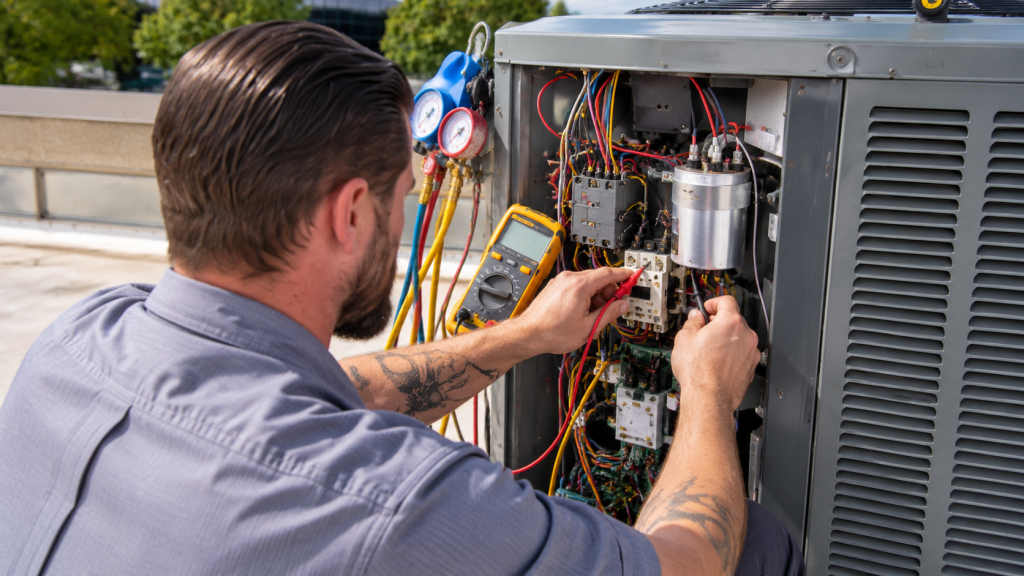
Controls include thermostats, zone dampers, sensors, and building automation. A simple office with a few programmable thermostats costs little. However, VAV boxes with a building automation system cost much more. In addition, energy code rules may require certain control features, like setbacks and demand ventilation. Our page on HVAC controls describes common options.
Smart Thermostats and Remote Access
Many tenants now want to adjust temperatures from a phone. Smart thermostats make this easy and often cost little more than standard ones. In addition, they track run times and alert staff to problems. For multi-site businesses, remote access saves trips. Consider this upgrade during the build-out. The added cost is small compared to the hours saved on service calls and site visits over a long lease.
Soft Costs
Design, permits, testing, and commissioning add to the budget. Mechanical engineering fees vary with project size. Permit fees depend on the scope. In addition, balancing and energy code acceptance tests are required for many jobs. Plan for these items, since they often surprise first-time tenants.
Vista HVAC Costs and Permits
Vista runs its own building division, which reviews mechanical plans and inspects work. Plan review time affects your schedule and carrying costs. So submit complete drawings the first time. In addition, the landlord may review plans before submittal. Fewer review rounds mean lower soft costs.
Electrical Upgrades
New or larger HVAC units may need more electrical capacity. That can mean a new circuit, a bigger breaker, or even a panel upgrade. In addition, the utility may need to upgrade service. SDG&E serves Vista and handles service changes. Electrical work often lands in the HVAC budget, so ask bidders to include or exclude it clearly.

Comparing Bids Fairly
Bids only compare well when they cover the same scope. So give every bidder the same drawings and equipment list. Then check that each bid includes equipment, ductwork, controls, crane, permits, and testing. In addition, read the exclusions. A low bid that leaves out the crane or balancing is not really low. So ask each bidder to walk you through their numbers line by line.
Vista HVAC Costs Saving Tips
You can trim costs without cutting quality. For example, reuse good equipment and duct trunks. Keep new rooms close to existing ducts. Choose standard diffusers instead of custom ones. In addition, order equipment early to avoid rush fees. Finally, look into utility incentives for efficient equipment.
Utility Incentives
Efficient equipment may qualify for rebates or incentives. Programs change often, so check with your contractor and the utility. The ENERGY STAR label can help you find efficient models. Incentives can offset part of the upfront cost and lower bills for years.
Contingency
Every build-out holds surprises. Hidden duct damage, roof repairs, or code changes can raise costs. So set aside a contingency, often around ten percent of the HVAC budget. In older buildings, a larger contingency makes sense. Our cost per square foot page explains typical budget ranges.
Timeline and Cost
Time is money in a build-out. Long equipment lead times or slow permits delay opening and add rent costs. So order long-lead items early and keep design moving. In addition, coordinate HVAC with other trades to avoid rework. A smooth schedule protects the budget.
Vista HVAC Costs by Tenant Type
Different tenants land in very different price ranges. A plain office that reuses its rooftop unit and adds a few diffusers sits at the low end. Next comes retail, which often needs extra cooling near storefront glass. Restaurants climb higher because hoods, exhaust fans, and makeup air units add major equipment. Labs and specialty manufacturing usually top the list, since they need dedicated exhaust and tight control. So compare your project to similar tenants, not to a generic average. Your contractor can share recent Vista HVAC costs for spaces like yours.
Maintenance After Move-In
Build-out costs are only the start. New equipment still needs filter changes, coil cleaning, and seasonal checkups. In addition, many leases require a service contract. Budget for this early, because skipping maintenance shortens equipment life. A modest yearly plan protects the money you spent on new units.
Tips for Tenants
- Have existing units evaluated before budgeting
- Give bidders identical scopes
- Check bids for crane, permits, and testing
- Set a contingency for surprises
- Ask about incentives for efficient equipment
Vista HVAC Costs Checklist
- Equipment: reuse or replace
- Ductwork: layout changes and materials
- Controls: thermostats, zones, automation
- Electrical upgrades
- Design, permits, and testing
- Contingency and schedule
Plan Your Budget With Confidence
Understanding Vista HVAC costs helps you make smart choices about equipment, ductwork, and controls. With a clear budget, your build-out can move forward without nasty surprises. Learn about our build-out HVAC services, or request an HVAC budget review.