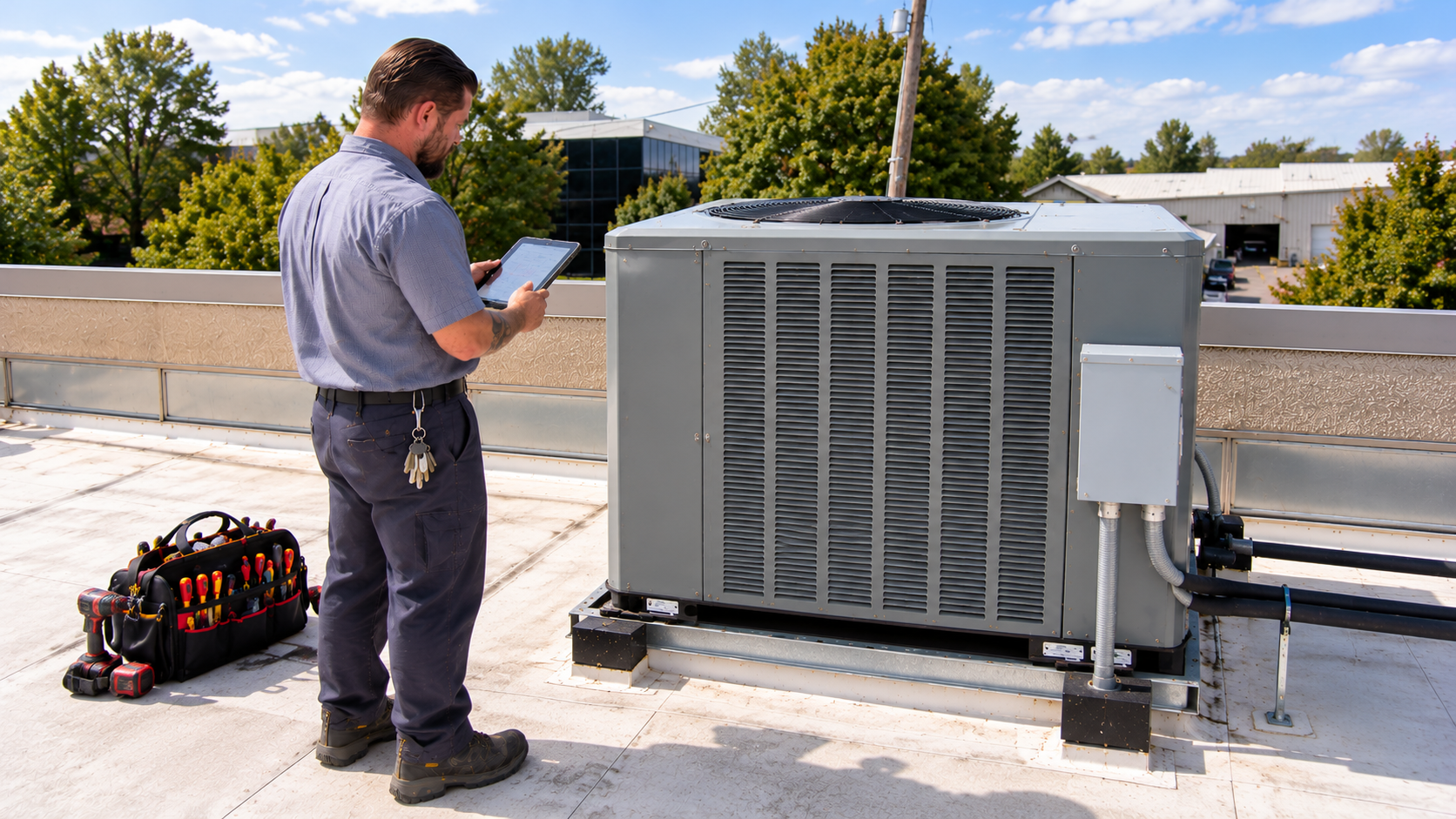
Falcon Field office HVAC projects usually begin with a hard look at the equipment already on the roof. The Falcon Field area in northeast Mesa, around the airport and the business parks along McKellips and Greenfield Roads, has many office and flex buildings from the 1980s, 1990s, and 2000s. When a new tenant moves in, the existing rooftop units, ducts, and controls may still work, or they may be near the end of their life. Choosing which parts stay and which go can make or break the budget. This guide explains how to evaluate existing HVAC equipment for an office tenant improvement.
Office tenants, landlords, and project managers can use it as a step-by-step guide.
Why Evaluation Comes First
New HVAC gear costs a lot, and it can take weeks to show up. On the other hand, keeping a failing unit can lead to breakdowns right after move-in. So a careful evaluation at the start helps you make smart choices. In addition, it gives you facts to use in lease talks with the landlord.
Falcon Field Office HVAC: Rooftop Unit Age and Condition
First, look at the rooftop units. Check the nameplate for the age and model. In Mesa’s hot climate, many units last about 12 to 18 years with good care. Then look for:
- Rust or damage on the cabinet and base
- Dirty or bent condenser coils
- Signs of refrigerant leaks, like oily spots
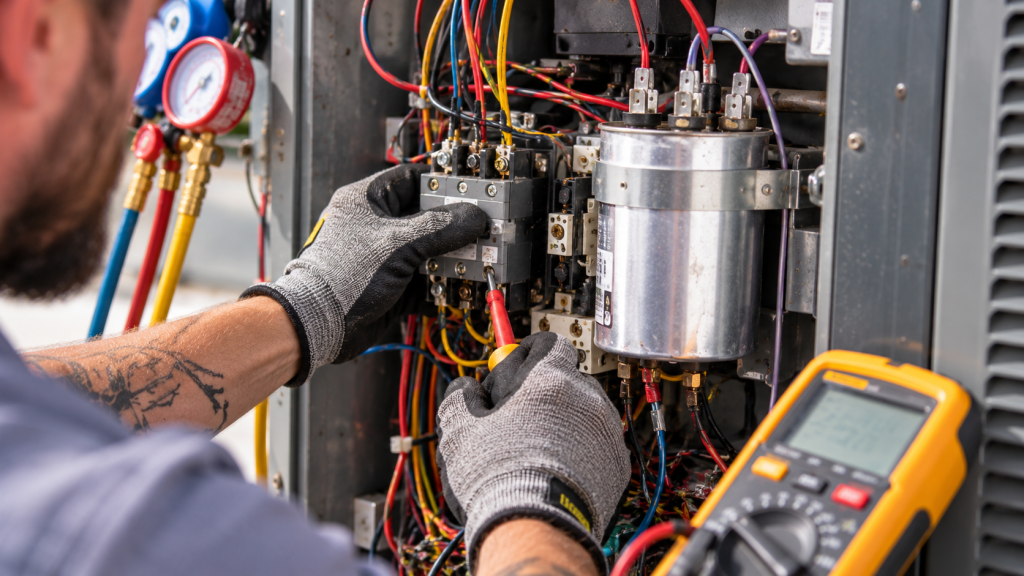
- Worn belts, fan motors, and contactors
- Noisy compressors or frequent short cycling
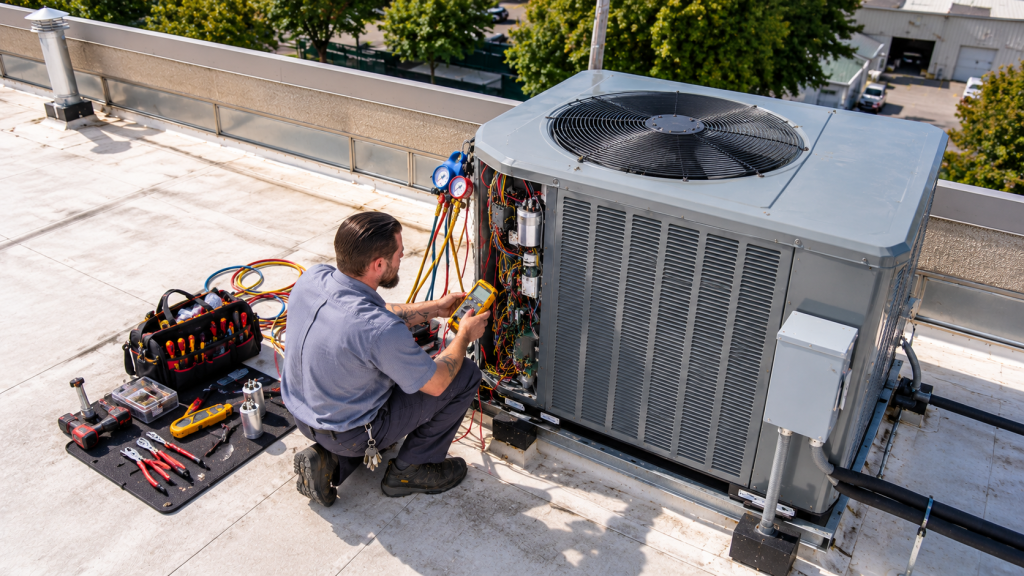
A licensed technician can test performance and estimate how much life remains.
Service Records Tell the Story
Ask the landlord or previous tenant for maintenance records. Regular filter changes, coil cleaning, and checkups extend unit life. In contrast, gaps in service or a long list of repairs suggest trouble ahead. Records also show whether major parts, like compressors, have already been replaced. That history helps you judge whether the unit is worth keeping.
Falcon Field Office HVAC and Cooling Capacity
Even a healthy unit may be too small for a new use. For example, an office with more staff, more computers, or a large conference room may need more cooling than the old tenant did. So ask the designer to work out the cooling load for the new plan. Then compare the result to the existing equipment. If the numbers fall short, plan for added capacity.
Falcon Field Office HVAC Ducts and Airflow
Next, look above the ceiling tiles at the duct runs. Look for crushed flex duct, loose connections, and missing insulation. Leaky ducts waste cooling and make rooms uneven. In addition, the duct layout may not match the new floor plan. A contractor can test airflow at diffusers to see how well the system delivers air today.
Falcon Field Office HVAC Controls
Older buildings may have basic thermostats with no scheduling. Upgrading to programmable or networked controls is usually affordable and saves energy. In addition, the new layout may need more zones and thermostats. So review the control system along with the equipment.
Falcon Field Office HVAC for Flex and Hangar-Adjacent Spaces
Some buildings near the airport mix offices with hangars, shops, or warehouses. The office area may have its own unit, while the shop has evaporative coolers or no cooling at all. If a new tenant expands the office, cooling must extend into the new area. Evaluating Falcon Field office HVAC in these buildings means looking at both spaces and how they connect.
Repair, Upgrade, or Replace?
After the evaluation, you will usually fall into one of three paths:
- Repair: the unit is healthy and sized right, so service and small fixes are enough
- Upgrade: the unit works but needs better controls, economizers, or duct changes
- Replace: the unit is old, too small, or costly to keep running
Our guide to retrofit versus replacement explains how to weigh these choices.
Air Quality and Filters
Mesa dust and airport activity can load filters fast. A packed filter starves the unit of air and drives up run time. So pull a filter and look at it during the evaluation. If they are dirty or the wrong size, that is a sign of poor upkeep. In addition, better filters can improve the air your team breathes, but the fan must be strong enough to push air through them. Ask the tech which filter grade the unit can handle.
Getting a Second Opinion
A unit swap can cost a lot. So it is fair to ask for a second opinion before you decide. Compare what two techs say about age, condition, and capacity. If they agree, you can move ahead with confidence. If they do not, ask each one to show you the test numbers and photos.
Planning for Summer
Mesa summers are long and hot. A weak unit that limps through spring can fail in July. So if the evaluation shows a borderline unit, plan a backup. That might be a service contract, a spare parts plan, or a scheduled swap before the heat peaks. Thinking ahead keeps your team cool when it matters most.
Lease Terms and Responsibility
Leases handle HVAC differently. A few owners guarantee the units will run on day one. Plenty of others lease the suite with no promises at all. Many leases make the tenant responsible for repairs and sometimes for replacement. So read the lease carefully. If the evaluation shows an aging unit, ask the landlord to replace it or share the cost before you sign.
Power Bills and Falcon Field Office HVAC
Older units use far more energy than new ones. In a Mesa summer, that difference shows up quickly on the power bill. So compare the operating cost of the old unit with a new, efficient one. Over a five- or ten-year lease, the savings may help justify replacement. For model comparisons, browse the ENERGY STAR product finder.
Falcon Field Office HVAC Timeline
If replacement is needed, order equipment early. Rooftop units can take weeks to arrive, especially before summer. Meanwhile, duct and control work can happen inside. A crane lift will also need scheduling. Planning these steps early keeps the move-in date on track. Our article on equipment lead times explains why.
Permits in Mesa
Replacing equipment or changing ducts usually needs a mechanical permit through the City of Mesa. Your contractor should prepare the drawings and schedule inspections. In addition, any structural changes for a heavier unit may need engineering review.
Also, ask whether the building has a preferred HVAC service company. A firm that already knows the units can spot issues fast.
Evaluation Checklist
- Inspect unit age, condition, and performance
- Review maintenance and repair records
- Run a cooling load for the new layout
- Check ducts, airflow, and insulation
- Review controls and zoning
- Compare repair, upgrade, and replacement costs
- Negotiate HVAC terms in the lease
Common Evaluation Mistakes
- Skipping a technician’s inspection
- Assuming the old unit fits the new use
- Ignoring duct condition above the ceiling
- Signing a lease without HVAC terms
- Ordering new equipment too late
Make Smart HVAC Decisions
A careful Falcon Field office HVAC evaluation helps you spend money where it counts and avoid summer breakdowns. For help with your space, see our tenant improvement HVAC services or schedule an evaluation.