Superstition Springs air balancing is the final step that turns a new HVAC install into a space people actually enjoy working in. Superstition Springs, the busy East Mesa area around the mall and the US 60 and Loop 202 interchange, has retail centers, medical offices, and office buildings that see steady tenant turnover. After every build-out, a crew needs to test and tune the ducts, diffusers, and controls before tenants arrive. When that step gets skipped, comfort complaints usually follow within weeks. This guide explains what testing and balancing involves and how to prepare for it.
Contractors, landlords, and tenants will see why it matters and what to expect.
What Testing and Balancing Means
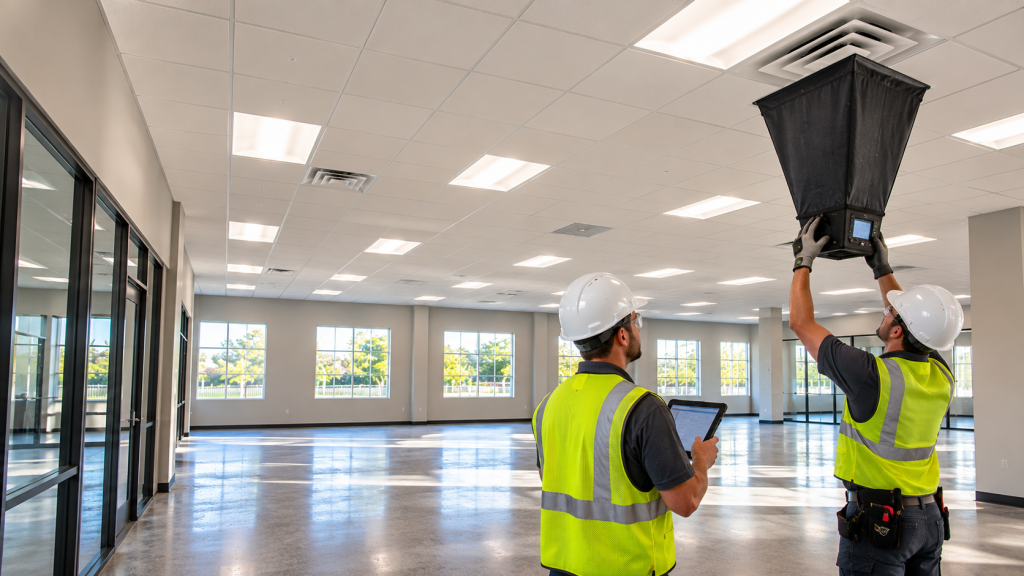
Testing, adjusting, and balancing, often called TAB, is the process of measuring how much air flows out of each diffuser and back through each return. A TAB technician compares those numbers to the design. Then they adjust dampers, fan speeds, and settings until every room hits its target. In the end, air goes where the designer meant it to go, not just wherever it drifts.
Why Balancing Matters After a Build-Out
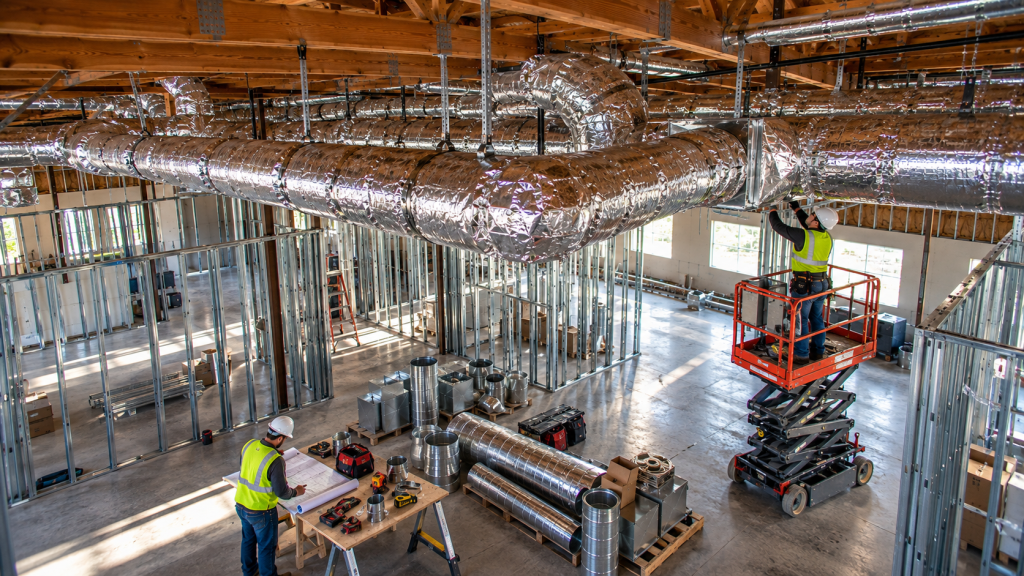
During a tenant improvement, crews move, cut, and extend ducts. They also add new rooms and tear out old ones. As a result, air no longer flows the way it once did. Some rooms near the unit may get too much air, while rooms at the end of long ducts get too little. Balancing fixes these problems before anyone moves in.
Superstition Springs Air Balancing: Getting Ready
The TAB crew can only do its job if the system is complete. Before they arrive, make sure:
- All ducts, diffusers, and grilles are installed
- Ceilings are in place and doors are hung
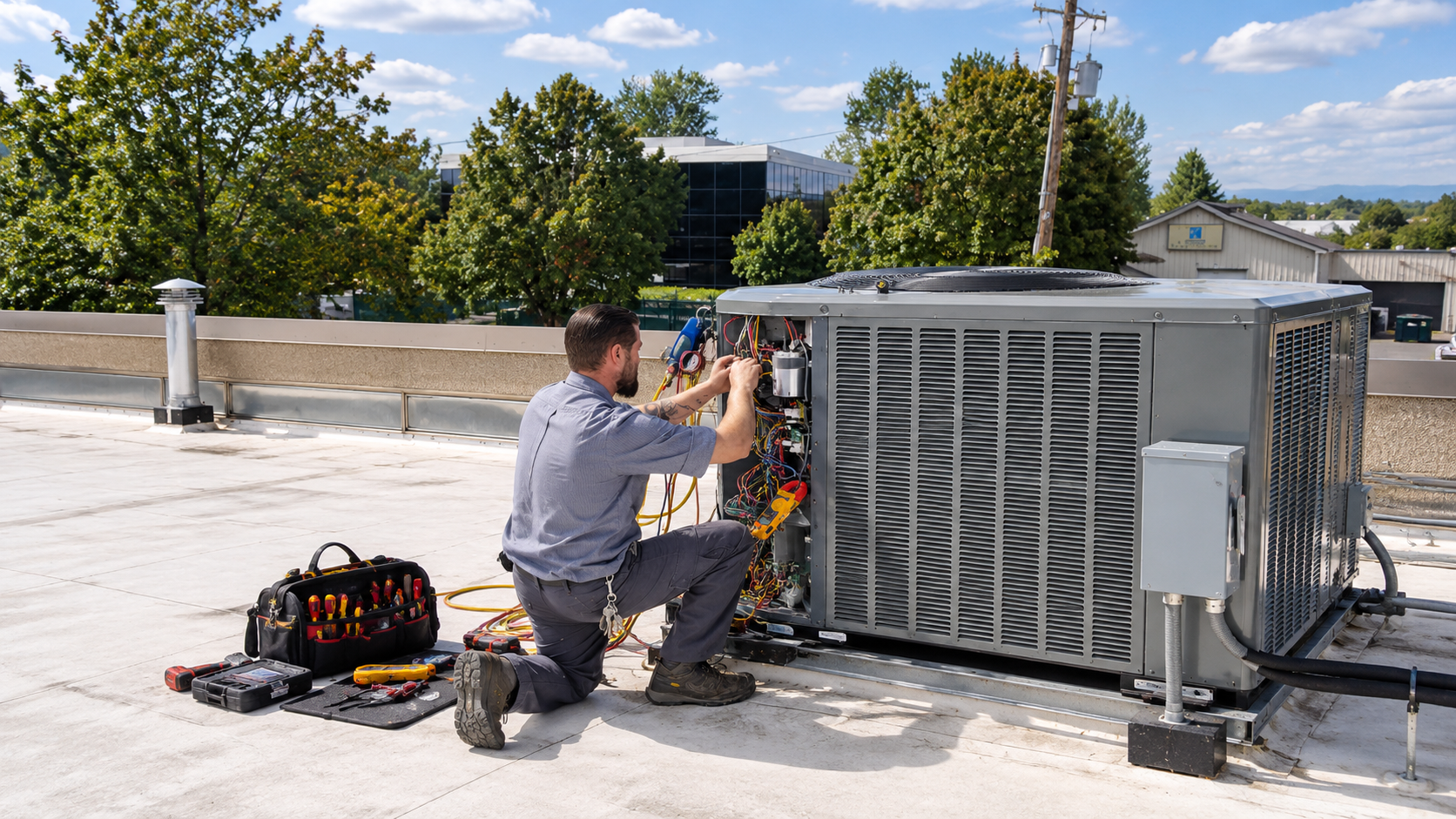
- Rooftop units run and controls are programmed
- Filters are clean and in place
- Dampers are open and accessible
Starting too early wastes time and leads to repeat visits.
Measuring Airflow During Superstition Springs Air Balancing
TAB technicians use tools like flow hoods and anemometers to measure air at each diffuser and grille. They record each reading and compare it with the design value. In addition, they measure total airflow at the rooftop unit. These numbers show where the system delivers too much or too little.

Superstition Springs Air Balancing: Dampers and Fans
Once readings are in, the technician adjusts balancing dampers in branch ducts to shift air from rooms with too much to rooms with too little. They may also change fan speeds at the unit. The tech keeps adjusting until each room lands inside the target range. It takes patience, but it makes a big difference in comfort.
Superstition Springs Air Balancing for Medical Offices
Medical and dental offices near Banner Gateway and the mall corridor often have special air needs. Exam rooms, procedure rooms, and labs may need set air changes or pressure relationships. For example, some rooms must stay at negative pressure to keep odors or contaminants from spreading. TAB confirms these settings before patients arrive. So medical tenants should share their requirements with the balancing team early.
Checking Outside Air and Exhaust
Balancing also covers fresh air and exhaust. The TAB crew measures how much outside air enters the system and how much air restroom and kitchen fans remove. Codes set minimum fresh air amounts based on occupancy. Too little fresh air leads to stuffy rooms. Too much wastes energy in the Arizona heat. The ASHRAE standards guide many of these targets.
Verifying Controls
Modern systems rely on controls to run well. During testing, technicians check that thermostats read correctly, schedules work, and dampers or VAV boxes respond as designed. In addition, they test economizers and safety shutoffs. Catching control errors now prevents complaints later.
Superstition Springs Air Balancing Reports
At the end, the TAB contractor delivers a report. It lists every diffuser and grille with its design and measured airflow, plus fan and unit readings. This report is valuable for the landlord, the tenant, and future contractors. In addition, inspectors or commissioning agents may ask for it before final approval.
Superstition Springs Air Balancing for Retail Stores
Stores near the mall see big crowds on weekends and holidays. Front doors open constantly, letting hot air in. So balancing for retail often puts extra air near the entrance and the checkout. Fitting rooms and stockrooms also need careful checks, since they sit behind doors. In addition, display lighting adds heat that the design must cover. A good Superstition Springs air balancing visit makes sure the sales floor stays cool on busy days.
Rebalancing After Changes
Layouts change over time. A tenant may add a wall, turn an office into a storage room, or move a break room. Each change can throw off the airflow. So plan a quick rebalance whenever the layout shifts. It costs far less than living with hot and cold rooms for years.
Comfort Complaints After Move-In
Even after a good balance, people may say a room feels off. First, check the thermostat setting and schedule. Then look for blocked vents, such as boxes or furniture. If the problem stays, the TAB report helps the tech compare today’s readings with the original numbers. That makes the fix faster.
Who Performs TAB?
Balancing is often done by an independent firm rather than the installing contractor. Independent firms bring an unbiased view. Many are certified through groups like the NEBB or the AABC. Ask for credentials when choosing a balancing contractor.
Scheduling Superstition Springs Air Balancing
TAB usually happens near the end of construction, after the system is complete but before the tenant moves in. Allow a few days on site for a typical suite, plus time for fixes if problems turn up. Building it into the schedule from the start avoids a last-minute rush. Our controls and testing page explains how it fits into a build-out.
What Tenants Should Ask
Before you move in, ask the landlord or contractor for a copy of the TAB report. Check that every room is listed and within range. If a room is marked low, ask how it was fixed. In addition, ask when the system was last balanced if you are taking over an older space. These simple questions protect your comfort and your lease.
Common Problems TAB Uncovers
- Disconnected or crushed flex ducts
- Dampers stuck closed above the ceiling
- Diffusers installed in the wrong rooms
- Thermostats wired to the wrong zone
- Rooftop units set to the wrong fan speed
Finding these before move-in saves time and frustration.
In short, balancing turns good equipment into a space people actually like. It is a small cost compared with a summer of complaints.
Preparation Checklist
- Finish ducts, ceilings, and doors
- Start and program all equipment
- Install clean filters
- Open and label dampers
- Share design airflow data with the TAB crew
- Plan time for fixes after testing
Common Mistakes
- Skipping TAB to save time
- Scheduling it before the system is complete
- Ignoring the TAB report’s findings
- Forgetting to rebalance after layout changes
- Not sharing special room requirements
Move In With Confidence
Careful Superstition Springs air balancing makes sure every room in your new space is comfortable on day one. Getting ready to open a suite near the mall? See our East Valley HVAC services, or contact our team.