A Palms air conditioning installation has to fit tight lots, close neighbors, and older buildings that were not designed with modern cooling in mind. Palms is one of the oldest neighborhoods on the Westside of Los Angeles, tucked between Culver City, Mar Vista, and Cheviot Hills. Its commercial strips along Venice Boulevard, Motor Avenue, National Boulevard, and Overland Avenue hold small restaurants, tutoring centers, dental offices, dry cleaners, and neighborhood shops. The Expo Line stops nearby, bringing steady foot traffic. When a tenant renovates one of these spaces, new cooling is often part of the plan. This guide explains how to plan it well.
Whether you run a shop, a clinic, or a small office, the steps below will help you choose and install the right system.
Why Cooling Needs Have Grown on the Westside
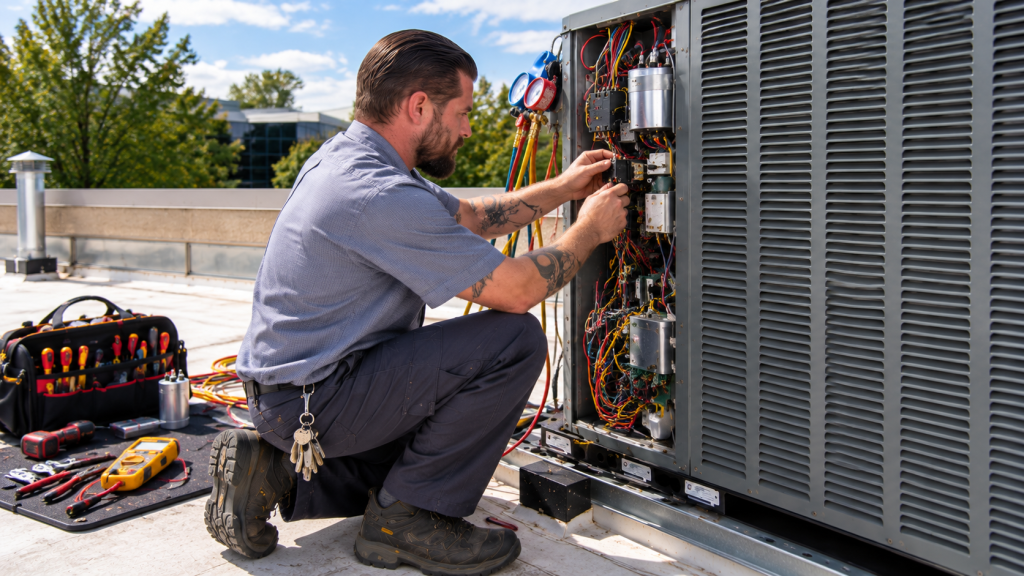
Palms once relied on ocean breezes and open windows. However, summers have grown warmer, and late-summer heat waves now push indoor temperatures well past comfortable. In addition, modern businesses fill rooms with computers, screens, and equipment that add heat. Customers also expect a cool, comfortable space. So many older suites now need real air conditioning, not just a fan.
Start Palms Air Conditioning Installation With a Load Calculation
First, the designer calculates the cooling load. It counts the size of the room, its glass, its walls, its people, and its gear. For example, a dental office with several operatories and X-ray gear needs more cooling than a quiet tax office of the same size. A proper calculation prevents an oversized unit that short-cycles or an undersized one that never catches up. Never pick equipment by square footage alone.
Choosing a System Type
Several system types work in Palms storefronts. Packaged rooftop units put everything in one box on the roof and connect to ducts below. Split systems place a condenser outside and an air handler inside. Ductless mini-splits use small wall or ceiling heads with no ducts at all. Meanwhile, heat pump versions of each type provide both heating and cooling with electricity. Your building, floor plan, and budget point to the best fit.
Palms Air Conditioning Installation on Flat Roofs
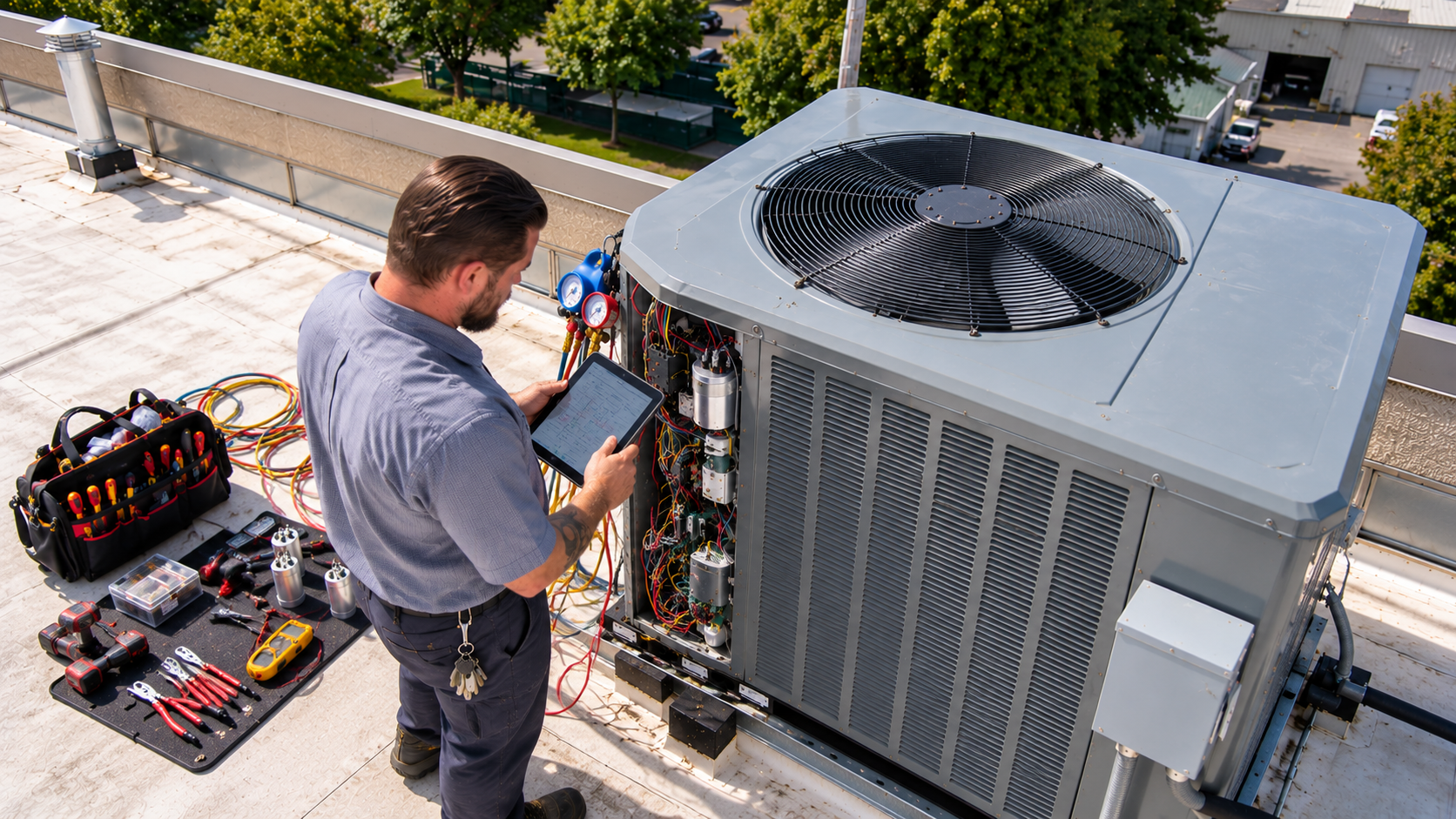
Many Palms commercial buildings have flat roofs that can hold a rooftop unit. However, the roof must carry the weight, and the unit needs a curb and flashing. In addition, a crane usually lifts the unit into place. On busy streets like Venice Boulevard, the crane may need a street-use permit and traffic control. So plan the lift date early and coordinate with neighbors.
Ductless Options for Small Suites
Small offices and shops often do well with ductless systems. Each indoor head serves one room or zone and has its own controller. Installation is quick because crews only run a small refrigerant line and a drain. In addition, ductless systems avoid tearing out ceilings in older buildings. They work especially well for tutoring centers and offices with several small rooms.
Where to Put the Outdoor Equipment
Condensers and rooftop units make noise. In Palms, apartments and homes often sit right behind commercial buildings. So place outdoor equipment away from bedroom windows and property lines where possible. Pick low-noise models, and add a sound wall when needed. In addition, the city’s noise rules limit how loud equipment can be at the property line.
Palms Air Conditioning Installation and Ductwork
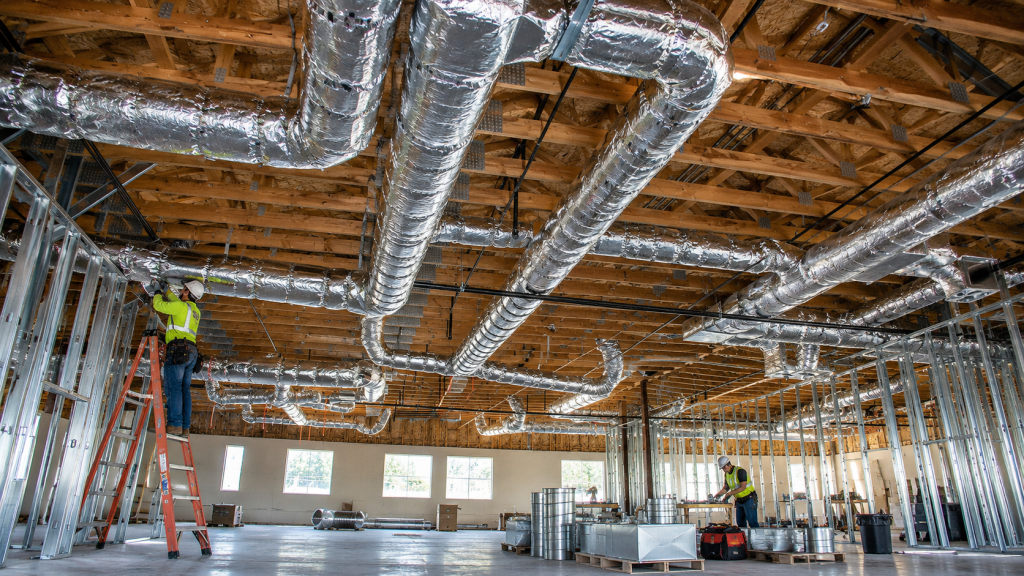
If the system uses ducts, the layout must serve every room. Older suites may have ducts that fit a previous floor plan or no ducts at all. So the designer draws new supply branches and return paths for the renovated layout. In addition, ducts in hot attic spaces need insulation and sealing. Good ductwork matters as much as the equipment itself.
Electrical Capacity
Air conditioners draw a lot of power. Older Palms buildings may have small electrical panels that cannot carry new equipment. So an electrician checks the service early. If more capacity is needed, LADWP handles utility-side upgrades. Because those upgrades take time, ask during design rather than after equipment arrives.
Condensate and Drainage
Cooling equipment removes moisture from the air, and that water must go somewhere. Rooftop units drain onto the roof or into a drain line. Indoor air handlers and ductless heads need condensate lines to a proper drain. In some cases, a small pump lifts the water. Plan these lines with the plumber so leaks do not stain new ceilings.
Fresh Air and Filtration
Every occupied space needs outdoor air. Rooftop units often have outdoor air dampers built in. However, ductless heads only stir the air already in the room. So you may need a small fresh air unit too. In addition, better filters help with dust from busy streets and the nearby freeway. The EPA indoor air quality pages explain why ventilation matters.
Palms Air Conditioning Installation Permits
LADBS issues the mechanical permit for this work in Palms. Your drawings should show the equipment, its location, ducts or refrigerant lines, electrical connections, and energy compliance forms. In addition, rooftop units may need structural details. Inspectors visit after rough-in and at final. Submitting complete drawings keeps review moving.
Energy Efficiency and Rebates
New equipment must meet California’s efficiency rules. High-efficiency heat pumps can lower energy bills and replace old gas heaters. In addition, utility programs sometimes offer rebates for efficient models. Look for ENERGY STAR labels when comparing equipment. Over a multi-year lease, efficiency can pay back much of its cost.
Coordinating With the Renovation
The HVAC work should fit the renovation schedule. Ducts and refrigerant lines go in after framing but before ceilings and walls close. Rooftop units often arrive during the middle of construction. Meanwhile, ductless heads mount after paint. A shared schedule keeps the HVAC crew from waiting on other trades.
Palms Air Conditioning Installation Costs
Costs depend on system type, capacity, ductwork, electrical upgrades, and crane needs. Ductless systems often cost less in small suites with few rooms. Rooftop units make sense for larger open spaces. In addition, electrical upgrades can add a lot. For sample budgets, check our cost per square foot guide.
Timeline
Design and load calculations take a week or two. Permit review may take several more. Equipment can take weeks to arrive, especially during summer. Installation itself often takes a few days to two weeks. Then startup, balancing, and inspection finish the job. Plan to finish before the hottest months.
Palms Air Conditioning Installation for Small Clinics
Palms has many dental and medical offices. They need steady, cool air. Patients sit still in a chair for a long time, so small swings in heat feel big. Each exam room should get good airflow. In addition, X-ray and sterilizer rooms run warm. A small ductless head can help in those spots. Ask your designer about quiet units, since patients notice noise. Good cooling makes every visit feel calm.
Tips for Tenants
- Run a real load calculation
- Compare rooftop, split, and ductless options
- Place outdoor units away from neighbors
- Check electrical capacity early
- Plan fresh air for ductless systems
Palms Air Conditioning Installation Checklist
- Load calculation and system choice
- Equipment location and noise plan
- Ducts or refrigerant lines
- Electrical and condensate
- Permits and energy forms
- Startup, balancing, and inspection
Stay Cool on the Westside
A well-planned Palms air conditioning installation keeps your customers and staff comfortable through every heat wave. Pick the right system, plan it well, and the renovation will stay on track. Explore our commercial HVAC tenant improvement work, or plan your cooling upgrade.